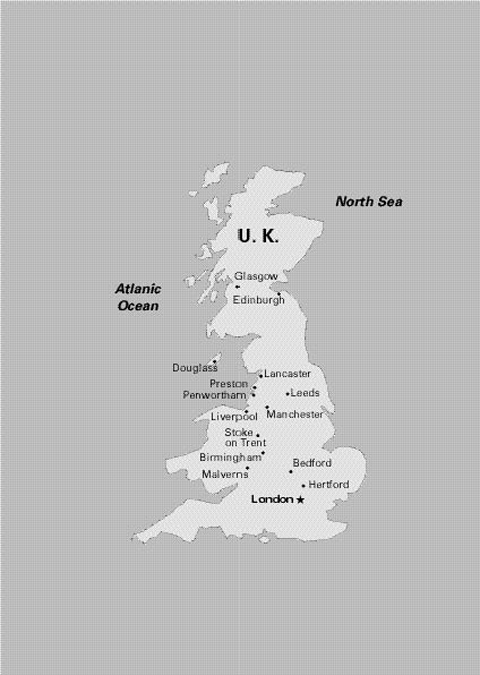
Thomas Clayton was a school teacher in Penwortham, England, and on July 17, 1814, his wife, Ann, proudly presented her husband with their first child, William. Every second or third year after that, for the next twenty-six years, she would present him with another, until the Claytons became the parents of fourteen children. Three of them died in infancy, but the rest lived to see their entire family uprooted from the soil of Lancashire and transplanted to America by the peculiar message and promises of the Mormon missionaries.1
The little village of Penwortham was located southwest of Preston, one of the major factory towns in the northern industrial county of Lancashire. In 1840, when the Church was beginning to blossom there, Preston had a population of over forty-nine thousand people, while Penwortham boasted fewer than fourteen hundred in the township and fifty-five hundred in the entire parish.
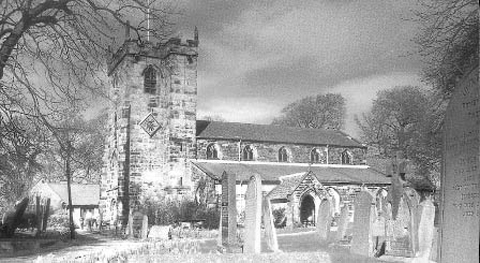
Little is known of William’s early life in Penwortham, except that he was tutored by his father, was particularly gifted in music, and learned to play both the violin and the piano. He became, in fact, a member of an instrumental group known as Ballou’s Band. He was also a member of the Church of England, though he apparently found no particular interest in it. If and when he attended services, it was in the small, fifteenth-century St. Mary’s church (illus. 1-1), said to be narrow, gloomy, and rather plain on the inside, though fairly attractive from the outside as it stood on a hill overlooking the valley of the River Ribble.2 Young Clayton also developed an appreciation for fine craftsmanship and even, it is said, refused to carry a watch that would not run accurately. This may have been one manifestation of the meticulous, methodical nature that he revealed throughout his adult life. When the gospel message caught up with him, he was employed as a bookkeeper in a Penwortham factory.
Illus. 1-1. William Clayton likely attended services at St. Mary’s church in Penwortham, England. Courtesy Penwortham St. Mary’s Parish Church
William Clayton grew up during a time of rapid economic change. The population of industrial centers was growing as people flocked from the countryside in search of employment. The Claytons may have felt it providential that their family roots were in the Preston-Penwortham area, for at least they already had work before the great migration came pouring in. Penwortham’s population apparently did not change much, but that of Preston more than doubled between the time Clayton was born and when the Latter-day Saint missionaries arrived twenty-three years later. During the next few years it grew even faster, at a rate of over eighteen hundred annually between 1838 and 1851. The principal employment was in Preston’s fifty cotton-goods factories, though a few flax mills, three foundries, a machine shop, and a steam-powered sawmill also provided work. There were also other signs of the rapidly changing age. When Clayton was two years old, for instance, Preston became the first city in the United Kingdom, outside London, to install gas lighting. The Preston Gas Company was founded in 1815, and the following year it began providing service. However, gas meters were not installed until 1830.3
The River Ribble was about seventy miles long and, on its way to the sea picked up the waters of the Hodder, the Calder, the Darwen, and the Douglas. Once known for its fine salmon fishing, the river itself succumbed to the realities of the new age as it became polluted by industrial waste along with Preston’s sewage, and its fish life suffered accordingly. The river, nevertheless, was an important economic lifeline for the area, and vessels of up to 150 tons burden and twelve-foot draught could navigate its course to Preston to deposit and take on cargo. As Clayton grew up, he could hardly help but observe such signs of the industrial age, for he must have crossed the Ribble frequently on the sturdy, five-arched stone bridge that spanned the river. Preston was only about a two-mile walk from Penwortham.
Young William might also have been intrigued with some of the amusements that characterized the area. Until 1830 a week of cockfighting took place in Preston every year, and the Cockpit on St. John’s place, near the parish church, was where that grisly sport took place. Though the rabble was not admitted to the arena, the masses showed their interest by crowding around the building during the fights and waiting for spectators to shout results down to them from the high, arched windows. The Cockpit was closed to fighting in 1830, and when the missionaries later came to town, they began renting it for preaching services. Clayton may even have seen a horse race during his young life, for this, too, was popular in Preston until 1833. Equally popular, at least into the 1820s, was the annual affair called the “trail hunt.” About fifty dogs would scamper through the streets of Preston, following a strong smell set out for them and leading them directly to town hall. There the hunt would end in a general melee of men and dogs. Such activities were largely the province of the upper classes, but the common folk could hardly help but show an interest.
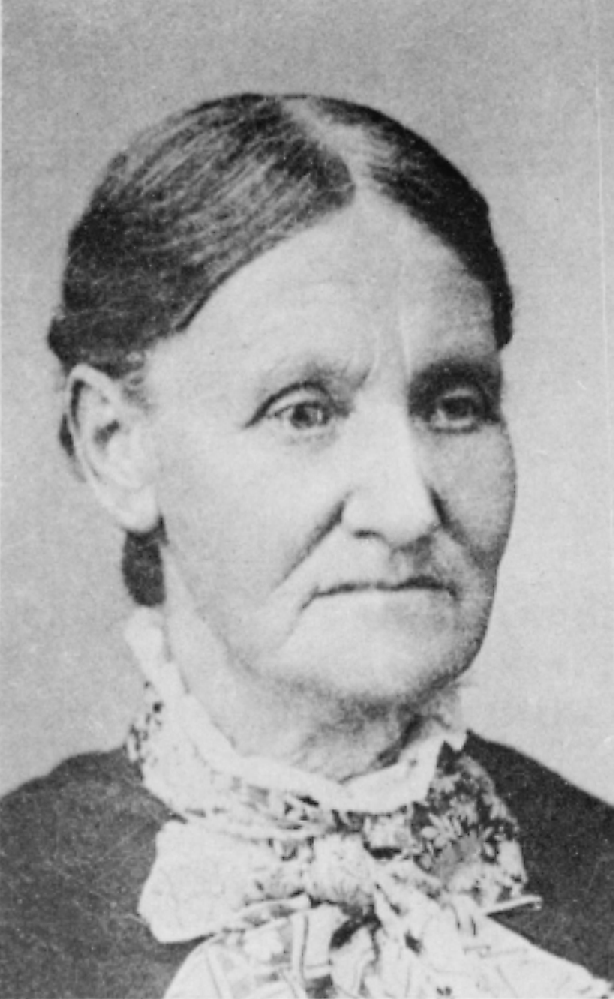
Ruth Moon, the oldest daughter of Thomas and Lydia Moon, also grew up in Penwortham, and she also eventually saw her entire family join the Church and move to America (illus. 1-2). Three years younger than William Clayton, she probably knew him from childhood. In any case, they fell in love, and on October 9, 1836, they were married in St. Mary’s church in Penwortham.
The economic changes in the Preston-Penwortham area reflected the fact that Great Britain was enjoying the exhilaration of becoming the most important industrial nation in the world. Coal mines, iron mines, smelters, and factories had been booming for years, and English inventors were producing a seemingly unending stream of technological advances. British-manufactured goods could be sold more cheaply than those of almost any competitor, a fact that not only drove other nations from the market but also gave England the greatest commercial fleet in the world. The cotton mills of Lancashire clothed much of the world (including many Americans), and British capital soon began to build railroads in France and the United States. England was so far beyond the rest of the world in industrial capacity that by mid-century it would be dubbed “the workshop of the world.”4
But the industrial revolution brought mixed blessings to William Clayton and his contemporaries. With industrialization came urbanization, human dislocation, unemployment, and a mass migration of workers from the countryside to factory towns such as Preston and Manchester. Overcrowded cities, low wages, long working hours, environmental pollution, filth, and disease within the heart of many manufacturing centers were all bad enough, but when high unemployment struck, the lot of workers was nearly unbearable. Despite the wealth of the nation in general, large segments of its population, especially in the cities, led lives of poverty and great uncertainty as they were subject to the whims of the economic cycle.
Illus. 1-2. William Clayton married Ruth Moon, his first wife, on October 9, 1836. The next year, Ruth joined the Church and William soon followed.
Queen Victoria’s early years were troubled times. Beginning in 1837, industry entered a severe, though temporary, period of depression. Unemployment among the industrial workers soared, destitution hit many, and starvation was not uncommon. Between 1835 and 1842, the purchasing of goods in Manchester dropped by 40 percent, while in 1841–42 the unemployment rate in nearby Bolton was over 50 percent. When several of the Twelve Apostles came to England for missionary work in 1840, they were struck with the pitiable conditions among the working classes and often wrote about it. Said George A. Smith, for example, “So many of the poor are begging that it would astonish the Americans. England is in distress and I pray the Lord for deliverance of the Saints from the coming ruins.”5 “The poor,” wrote Wilford Woodruff, “are in as great Bondage as the children of Israel in Egypt,”6 and Brigham Young declared with disgust that the factory owners “care little for their manufacturers, and have reduced the workers wage to almost the lowest extremity.”7 He was especially dismayed at the heavy taxes:
Now after paying 2 or 3 shillings rent per week, 1/1 shilling for coal, beside taxes of every kind, we might say, for smoke must not go up the chimney in England without a tax, Light must not come in at the window without paying duties, many must pay from 1 penny to 6 pence per week for water, & if we should attempt to tell all we should want a government list. . . . Add to this the tax on cor. . . . and what is left but starvation, leaving out of account all seasonings, such as Peppers, Spices, and etc. which by taxation is four times the value it is in the United States. . . . The poor are not able to keep dogs, & if they were they would have to pay from 8 shilling to 1 £ per head per annum tax. There are taxes for living and taxes for dying, inasmuch that it is very difficult for the poor to get buried anyhow, and a man may emigrate to America & find a grave, for less money, than he can get a decent burial for in old England. We scarce recollect an article without a tax except cats, mice & fleas.8
The economic distress of the times began a great migration, not only from the countryside to the city, but also out of England itself. By the 1830s, over fifty-five thousand people annually were leaving the country, usually bound for Canada or the United States, and by mid-century the number jumped to over two hundred fifty thousand. Emigration agents, emigration propaganda, and a general attitude that emigration was good for the mother country were commonplace. Emigration was a sort of “safety valve” that siphoned off the worst effects of economic dislocation or discontent.
The importance of all this to Church history, and to the life of William Clayton, is that it was among the urban, industrial workers of England that the early American missionaries made most of their converts. In 1840 nearly half the Latter-day Saint congregations in England, which included 61.5 percent of the total Church membership in that country, were located in industrial centers.9 The Church in Britain was in large part an urban church, and it was among the urban Saints that William Clayton began his career as a Latter-day Saint and was introduced to the responsibilities of leadership.
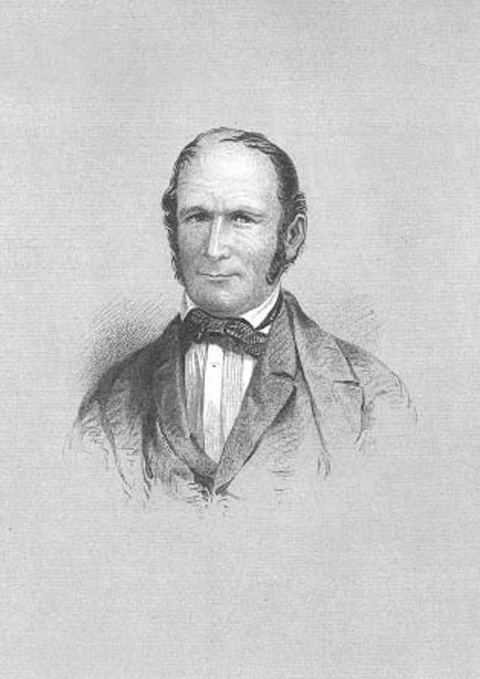
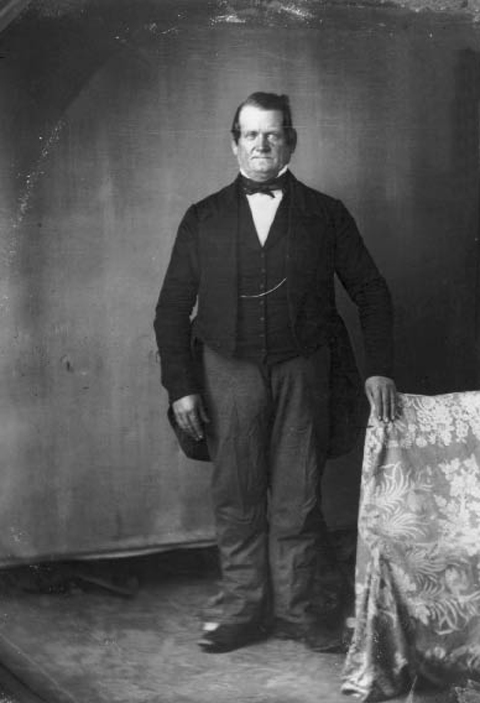
In July 1837, the year Queen Victoria ascended the throne, the gospel arrived in England. It came with two Apostles, Heber C. Kimball (illus. 1-3) and Orson Hyde (illus. 1-4), and several other missionaries who had crossed the Atlantic from America. These included Willard Richards of Massachusetts, Joseph Fielding (a Canadian who had originally emigrated from England), John Goodson, Isaac Russel, and John Snyder.10 Officially they identified themselves as members of The Church of the Latter-day Saints (the designation “The Church of Jesus Christ of Latter-day Saints” was not adopted until after a revelation given to Joseph Smith on April 26, 1838), but they were usually called Mormons.
The message William Clayton and his fellow converts heard from the American missionaries was voiced in powerful terms, calculated in part to strike fear in the hearts of the people of England but also to speak peace to their souls with the message of the Restoration. All about them the missionaries saw wickedness, and Orson Hyde, their pamphleteer, used this as a springboard into their message. “God will soon begin to manifest his sore displeasure to this generation, and to your own country,” he warned. Famine would strike, trade would be cut off, war would arise on every side, and the rulers would be dismayed at their inability to avert calamity. Judgments were about to be rained down upon all the ungodly of the earth, including those preachers who perverted the ways of the Lord, “except they speedily repent.” Earthquakes, “strange things and fearful sights,” and the sea heaving beyond its bounds would all contribute to the tragedy of the times. And why all this? Answered Hyde, “The apostasy of the church is the prime cause of the earth being visited by the judgements of God.”11
Illus. 1-3. Apostle Heber C. Kimball opened the Latter-day Saint mission in England in 1837, the year Queen Victoria ascended the throne. He baptized Clayton on October 21, 1837, at 11 p.m. Courtesy Church Archives
However, calamity was not the main message of the missionaries from across the ocean. They devoted more time to explaining the Restoration of the gospel and the hope for personal salvation that came with it. Their leader, Heber C. Kimball, was a simple New England potter, with little formal education. He was an effective speaker, nevertheless, with an infectious spirit that made him popular among the common folk of Lancashire. “Simple, sincere, and personal,” as he has been characterized by his biographer, Kimball had his greatest effect in intimate gatherings rather than in large public meetings. This likeable elder warmed his way into the hearts of many, and it was largely through his efforts that the foundation was laid for the growth of the Church in England.12
The missionaries immediately ran into opposition, especially from certain ministers who accused them of “sheep stealing.” One was James Fielding, brother of Joseph, who wrote in dismay to his brother: “I do not believe at all that you were sent of God to rend my little church to pieces. Were I to speak as ‘plain’ as you do I should boldly declare that it was not
God but Satan as an angel of light sent you here.”13 On the other hand, many workers in the industrial communities of Victorian England found God in the gospel message, and it was from among them that the bulk of the early converts came. The missionaries began their work in Preston, and by April 1838 they had netted over four hundred converts in that city alone, and over fifteen hundred throughout the country.
Among the early converts were William and Ruth Clayton. They had been married less than a year when they heard the missionary message, and they were particularly impressed by the warm and dynamic personality of Heber C. Kimball. Ruth was baptized first, on September 4, 1837,14 but it took nearly seven more weeks and many evenings of intense discussion with Elder Kimball before her husband was convinced. When the young factory worker finally made up his mind, however, he acted with the quick decisiveness of a Saul who had just been struck with a sign while on the road to Damascus. Whatever happened on the night of October 21 so affected William that he allowed Heber Kimball to take him out to the River Ribble and baptize him at 11 p.m.
This was the first of a series of new beginnings for William Clayton, all related to his acceptance of the new American religion and his determination to follow its prophets, no matter where they led. The immediate change in his life was profound, for even though he was not at that moment called upon to leave his home or possessions for the sake of the gospel, it was his nature to throw himself wholeheartedly into preparing for whatever might come. Firmly convinced that the Millennium was near, he was not about to be unprepared or to leave his neighbors without warning.
Illus. 1-4. Orson Hyde, along with Heber C. Kimball, led the first mission to England. One of the pamphlets written by Elder Hyde may have contributed to Clayton’s decision to be baptized. Courtesy Church Archives
Clayton moved ahead rapidly, and in two months after his baptism, he was ordained a priest in the Aaronic Priesthood.15 Less than four months later, on April 1, 1838, he was ordained to the office of high priest and, with the approval of a Church conference held in Preston, was set apart as second counselor in the British Mission presidency.16 The Apostles were returning home, and it was necessary that they leave the work in the hands of a responsible presidency. Joseph Fielding was made president, and Willard Richards became the other counselor. As the only new convert in the group, the disciple from Penwortham had progressed at a unique pace in gaining stature in the Church and finding favor among its leaders.
When the Apostles left in 1838, the Church in England consisted of slightly over fifteen hundred converts. But the new mission presidency had a difficult task. Fielding, Richards, and Clayton not only had to do missionary work, but they also found themselves facing problems within the Church itself and struggling simply to hold it together. Even though Elder Kimball later reported that there were eight or nine hundred people baptized between 1838 and 1840, the membership did not actually increase. Some may have been converted too quickly, and others may have become disillusioned when they did not find everything perfect among the Saints. Years later, Joseph Smith’s History of the Church described the period as “a general time of pruning in England. The powers of darkness raged, and it seemed as though Satan was fully determined to make an end of the work in that kingdom.”17
Before he left the mission in the hands of Elders Fielding, Richards, and Clayton, Heber C. Kimball and Orson Hyde had clear forebodings of at least one man’s upcoming apostasy. On April 13, 1838, they wrote the following to the Saints in Preston:
Dear Brothers and Sisters in Preston:
It seemeth good unto us and also unto the Holy Spirit to write a few words which cause pain in our hearts and will also pain you wen they are fulfilled before you; yet you shall have joy in the end. Brother Webster will not be abide in the Spirit of the Lord, but will reject the truth, and become the enemy of the people of God, and expose the mysteries which have been committed to him, that a righteous judgement might be executed upon him, unless he speedily repent.
When this sorrowful prediction shall be fulfilled, this letter shall be read to the Church, and it shall prove a solemn warning to all to beware.
Concerned that enemies of the Church might later charge that this troubling prophecy was fabricated after the fact, the Apostles sealed it in the presence of Joseph Fielding and Willard Richards, and charged them with its care. These two, in turn, asked Arthur Burrows, a deacon, and William Clayton to examine it carefully, date it, and mark it in such a way that, if necessary, they could later testify that it had remained unopened.
Sadly, the prediction was fulfilled. Thomas Webster was a popular and seemingly faithful member of the Preston branch of the Church, but several months after the Apostles left, he began to make unfounded charges against the new mission leaders. After refusing to acknowledge his error, he met on Sunday in a private home and administered the sacrament to six of his followers. One of these had already been excommunicated and another was not even a member of the Church. Because of his rebellious spirit and his unauthorized administration of the sacrament, Webster was excommunicated. At that point, fearing that his popularity would lead others to follow him, the Church leaders produced the letter. Clayton and Burrows testified that the seal had not been broken, the prediction was read, and whatever influence Webster may have had was effectively short-circuited. Webster soon turned totally against the Church and began giving lectures on the “mysteries of Mormonism.”18 Unfortunately, Clayton and his associates had to deal with such internal difficulties all too often.
Clayton preached and proselytized in Penwortham, Longton, Preston, and nearby areas, but one can easily imagine his frustration as his responsibilities unfolded. Totally committed to his new faith and, as a member of the mission presidency, responsible for both holding the Church in England together and trying to expand it, he was still employed full-time as a clerk in a Penwortham factory. Who or what suggested his next momentous decision is not clear, but by October 19, he had made it and acted upon it. He “quitted his temporal business in England,” the record says, “and gave himself wholly to the ministry.”19 As the disciples of old were sent “without purse or scrip,” so Clayton took upon himself the burden of building up the Kingdom in England with no apparent means of support. For the most part, the next two years were spent in full-time Church service, depending for his livelihood upon divine aid and the goodwill of the people among whom he worked. In a sense, it was another new beginning.
But what about his family? He had a twenty-one year old wife and a little daughter, Sarah, thirteen and a half months old. Moreover, Ruth was pregnant with their second daughter, who would be born the following April. His only choice was to leave his wife and child with her mother, Lydia Moon, in Penwortham. He wrote them frequently over the next two years, but had little opportunity to visit. It was no easy sacrifice either for the young couple or for the mother. As Clayton wrote in his journal on February 12, 1840, while he was on one of his infrequent visits home: “My mother came this A M to say that she thought my wife was dissatisfied on account of my being from home and it was hard for Moon’s to keep her and children.”20
Almost immediately after entering his full-time ministry, Clayton was assigned to Manchester, approximately fifty miles from Penwortham. It usually took him two and a half hours to make the trip by train. He was the first missionary to work in that city and his success was remarkable. By January 1840, he had built a branch of 164 members, soon to become the second largest in England. It was exceeded only by Preston.
The city where Clayton spent most of his next two years was located in southeastern Lancashire. Some three-fifths of the nation’s spinning and cotton weaving factories were located in that county, with over a hundred in the city of Manchester alone. Manchester was, in fact, the chief city of Lancashire, and its other industries included more textile works (such as flax and wool), chemical manufacturing, dyeing, brewing, coal mining, sawmills, iron works, hatmaking, and machine making. In 1840 the city had a population of one hundred seventy thousand, and nearly 70 percent of its workers were factory operatives. Parts of Manchester were attractive and appealing to live in. Wilford Woodruff called it “the metropolis of the manufacturing Districts in England” and “a beautiful borough,” and after Church offices were established on Oldham Road, Parley P. Pratt found his home and office comfortable.21 The main industrial section of town, however, had problems. Most of its streets were small and narrow. The city’s chief commercial arteries were its canals and railroads, on which coal, cotton, and other raw products were brought to factories by the boatload and carload. Smoke and other pollutants created both an unsightly and an unhealthy environment, and the houses lining the streets in the industrial section were usually of a uniform, drab architectural style.
At the very time Clayton arrived, Manchester was the scene of a number of important political and social reforms. The Chartists, who advocated reforms that would make the government more responsive to the people, were strong. So also was the Anti-Corn Law League, which eventually succeeded in repealing the taxes that the urban dwellers believed were the cause of high food prices. Manchester was also the home of Richard Cobden, an enlightened textile manufacturer and statesman who led the fight for the city’s incorporation as a borough. The old manorial court system, he was convinced, simply could not respond adequately to the needs of a large industrial community. His efforts were rewarded with the incorporation of Manchester the same year William Clayton came to preach.
There were other reforms afoot that Clayton and his followers could easily relate to. A community mission established for the benefit of the poor promoted scripture reading, religious worship, and education. More important to Church members, the Manchester and Salford Temperance Society was formed in 1830 and began regular public meetings in 1835. By 1839 the society boasted twelve branch associations in the two communities and approximately eight thousand members. Because of the Church’s emphasis on refraining from spiritous liquors, the missionaries often were able to use local temperance halls for their preaching, and on occasion Clayton used the hall in Manchester.
Manchester also had problems with public health, sanitation, and general moral and economic well-being; all were associated in one way or another with its rapid industrialization.22 A board of health survey in the 1830s revealed many poorly ventilated dwellings, numerous streets piled deep with refuse, many dwelling places in need of privies, and extremely crowded conditions (sometimes three or four families in a house) in tightly packed residential areas. In 1840 poverty was commonplace, half the babies were born in charitable institutions, crime was growing rapidly, and prostitution was rampant. When Woodruff first visited the city he commented with horror on the poverty he witnessed. “This morning,” he noted on January 20, 1840, “about 3000 souls is flung out of employ at the factories because of the pressure of times & the lowering of the wages & they are standing in every corner of the Streets in groups counciling what to do, & there are at the present time (I have been informed) thousands of Souls [that] are almost in a State of uter [sic] starvation.”23
On the other hand, the city was the home of a number of important charitable and educational institutions that helped make life better for some. These included a royal dispensary, a royal infirmary, several hospitals, a humane society, poor asylums, a number of elementary schools, a college, a medical school, libraries, and certain scientific institutions.
It was a formidable challenge for the twenty-four-year-old Clayton to try to establish a branch of the Church in this industrial center. He proselytized mainly among the working classes, and within six months he had converted about seventy people.24 Among them was the Hardman family, who ran a boardinghouse at No. 2 Maria Street. Clayton himself eventually took up residence there, staying until he was released from his Church assignment. Other early converts included a coachman, James Bewshaw, and his wife, Ellen, who were particularly kind in providing meals and other help for Clayton while he was in Manchester; and Robert Booth, whose wife, Ann, later received a remarkable vision foreshadowing the introduction of the doctrine of baptism for the dead.25 There was also Sarah Crooks, a young working girl with whom Clayton became particularly good friends; Sarah Duckworth, an indigent woman who eventually ended up in a Manchester poor house; Elizabeth Holden, who poured out her soul to Clayton when she found herself in love with another convert, Arthur Smith, while she was still unsure whether her absent husband was dead or alive; and Henry Royale, who sometimes assisted in preaching and baptizing.
Many of Clayton’s converts came from the Church of England, which claimed over half the people of Manchester who belonged to any religion. Others were from prominent dissenting groups, such as the Methodists and the United Brethren. Perhaps as many as 80 percent of the Manchester Saints were not married, and there were considerably more women than men.26 Many of the women had migrated to Manchester to find work in the factories and were living in places like the Hardman boardinghouse. Most of these early converts were young, generally in their 20s or early 30s. Most were of the working class, and a number of them suffered from severe financial problems as well as other anxieties. Over 62 percent of the 1840 membership soon migrated to America. Of the remainder, about half eventually left the Church.
Clayton and the other two mission leaders soon found themselves spending a great deal of time dealing with the moral, spiritual, and economic welfare of the new converts. In July 1839, Heber C. Kimball wrote words of counsel from America. Their responsibility, he told the presidency, was to “feed the hungry, cloth the naked, and visit the widow and fatherless and turn not the stranger away empty, feed thine enemy do good to them that revile you, and say all manner of evil if it be false great is your reward in heaven.”27 They took the advice seriously.
By January 1840, Clayton was so impressed with the solemn magnitude of his calling that he decided to keep a record of it. On New Year’s Day, he began a missionary diary, which is now one of the most intimate and important accounts extant of life among the early British Saints. “Dei Gratia” (By the grace of God), he wrote, he intended impartially to record “all particular incidents and events which transpire,” and he earnestly prayed for the ability to discern the truth in all cases with which he must deal.28 Undoubtedly he expected his diary to be read by future generations, for it portrays in marvelous detail the concerns and problems as well as the brotherhood and spirituality felt among the Saints in Manchester. Most important, it reveals the tender, sensitive nature of young Clayton, and the firm yet selfless way in which he conducted his responsibilities as a Church leader in his native land. Typical entries: “I led this afternoon meeting and spoke on the necessity of the Saints dealing honestly with each other and showed the order of the church with regard to cases of poverty”; “Spoke to the saints about being faithful and praying”; “Her mother has been cross with her and etc. She wept much. I felt to weep”; “Prayed with little Ann and Sarah Isherwood”; “Had conversation with Mary Durrah. She says she cannot believe the testimony. She has long seen baptism to be a duty. She asked if God was no respecter of persons why had he not sent an angel sooner and etc. I talked a good deal to her. She wants to be baptized if she could believe—but she does not want to be a hypocrite. I told her she would be an L.D.S. She burst into tears and said if she thought she must not she would be miserable”; “Baptized Mary Durrah and Mary Johnson.”29
Perhaps the most eloquent testimony to the good feelings the Saints in Manchester had for William Clayton was their willingness to give of their meager means to support him. It is unclear whether he paid for his lodging at the Hardman boardinghouse, but chances are that he did not. Clayton was deeply grateful for whatever kindness he received and, having no better way to repay, frequently recorded for posterity even the most simple kindnesses and gifts. He made note of not only where he took his meals but also when and from whom he received such gifts as cake, fruit, drinks, clothing, and money. On Sunday, January 26, for example, he had breakfast at the Hardman’s, then spent the day preaching. Two of the young women of the branch provided him with cocoa at the evening services, two people gave him money, and Sarah Crooks gave him oranges and raisins. He was back at the Hardman’s for supper. On February 5, he told of having breakfast at the Hardman’s and dinner at the Bewshaw home, and during the day Sarah Perkins gave him a cup of red wine, five people gave him money for Willard Richards, Amby Sands gave him some “optical dye” for his baby daughter, and Sarah Crooks gave him some raisins, an orange, and some articles for his wife. Other gifts included figs, various drinks, cakes, “eggmilk,” oysters, sweets, coach fare, various items of clothing, shoes, a comb, a new watch guard, repairs to boots and clothing, and a “smelling bottle.” He even on occasion made note of taking water from his friends. The fact that he recorded these gifts with such regularity suggests not only his deep gratitude for the generosity of the Saints, but also his recognition that at times they could ill afford it. In some cases he tried to dissuade his friends from giving him money, but was unable to do so.
The religious ideas and practices of the Manchester Mormons in 1840 made up a fair amalgam, undoubtedly, of the whole British Latter-day Saint community. They knew little or nothing about the new ideas Joseph Smith would introduce in Nauvoo, which helps account for the fact that their religion was different in some ways from that of the modern Church. At the same time, there were certain central themes taught then that have remained constant over the years. They went something like the following: Joseph Smith was a prophet of God raised up to restore the ancient Church of Christ, the only true church on the earth; the Book of Mormon was a new witness for Christ; the essentials of salvation included faith in Christ, repentance, baptism by immersion for the remission of sins, and the laying on of hands for the gift of the Holy Ghost; the latter ordinance could be performed only by those holding the priesthood, which was exclusive to the Church; Jesus Christ was literally the Son of God; the Resurrection of Christ was a literal reality, and his Atonement provided not only for a real and universal resurrection of all mankind but also the opportunity for all people to be forgiven of their sins; individual salvation was dependent upon both faith and works—neither was efficacious without the other; the Second Coming of the Savior was imminent, and the Church, or earthly Kingdom of God, was established to prepare a core of faithful Saints to receive him when he established his millennial reign; the gifts of the spirit, including visions, dreams, healings, and speaking in tongues, may be freely expected among the Saints.
William Clayton preached of such things often. On Sunday, February 2, 1840, for example, he went to nearby Stockport, where at a morning service he preached on the Resurrection, in the afternoon he talked about the problems of evil speaking, and that night he preached on the establishment of the Kingdom. The next week he preached in Manchester on the Resurrection, perfection, how to obtain the gifts of the spirit, putting on the armor of God, and charity. The faith of the Saints in Clayton’s domain was a simple faith, more concerned with the fundamentals necessary to personal salvation and Christian living than with complicated theological disputations.
If there were differences “then and now” on these central themes, they were differences largely in emphasis. The details of Joseph Smith’s First Vision, for example, were not widely discussed, being introduced in England only in 1840, but the simple belief that Joseph had received direct revelation and personal instruction from God was fundamental from the beginning. The Millennium seemed more imminent then than now, and the Saints in Manchester seemed to expect more direct, personal communication from God than most do today. Clayton frequently mentioned dreams that had special meaning for him, and the spiritual gift of speaking in tongues seemed more commonplace in 1840 than today.30
There were also practices that reflected basic differences in interpretation between 1840 and today, including those relating to the Word of Wisdom. This important revelation, given to Joseph Smith in the temperance-laden environment of Kirtland, Ohio, in 1833, now stands as Doctrine and Covenants 89. It warned the Saints against the use of wine (except “pure wine of the grape of the vine,” of your own make), strong drink, tobacco, and hot drinks. It advocated moderation in eating meat and promoted the use of wholesome herbs and grains. Initially given “not by commandment or constraint, but by revelation and the word of wisdom, showing forth the order and will of God in the temporal salvation of the saints,” it promised health and wisdom to those who would obey.
As interpreted today, the Word of Wisdom requires active Mormons to refrain from tea and coffee (these were the “hot drinks” of Joseph Smith’s time), all alcoholic beverages, and tobacco. Violators are not dropped from Church membership, but neither are they given prominent local Church offices or allowed to participate in the sacred temple ceremonies. It took time, however, for the present policy and level of obedience to develop, so that in Clayton’s day the Word of Wisdom was practiced less completely than today.31 Nevertheless it was strongly preached, and often with the same warm fervor as other topics.
Some English temperance leaders, it seems, even believed that the Mormons made individuals teetotalers faster than they did, and for that reason it was not difficult for the missionaries to obtain temperance halls for their preaching services. Heber C. Kimball observed some years later that “as soon as they obeyed the Gospel they abandoned their excesses in drinking.”32 The records show, however, that complete abstinence was not at first absolutely required. The emphasis was on avoiding excess, and in the cultural context of the time Latter-day Saint moderation was a great leap forward. In Clayton’s case, for example, porter (a kind of beer) was given to him regularly by the Saints, and when he was ill they gave him even stronger beverages, but he was not accused by the Apostles or the members of violating any rule. On May 27, 1840, Heber C. Kimball stayed with Clayton at the Hardman home and that night Clayton had a sick spell. The brandy he was given to drink was probably as good a medicine as was available in Manchester, and, he said, it “gave me ease.” It appears that obedience to the Word of Wisdom in England in 1840 meant total abstinence from the use of tobacco, great moderation in the use of alcohol (its use for medicinal purposes was common, but drunkenness was clearly frowned on), and personal choice with regard to tea, coffee, or hot chocolate.
When illness struck, the Manchester Mormons quickly called in the elders to anoint them with oil and pray for their recovery. The gift of healing was demonstrated regularly, as it is in the modern Church, but there were differences in the way the ordinance was performed. Today the consecrated oil is considered a symbol, not the healing agent, and the effectiveness of the ordinance depends upon the faith of the Saints as well as the will of God. The ceremony is performed by placing a drop of oil on the crown of the head, then sealing this anointing with an appropriate priesthood blessing. In earlier times, at least some Saints thought of the oil itself as a kind of sacred healing agent, and it was common to anoint the afflicted part of the body directly or at times to take the oil internally. The Manchester Saints believed without question in the healing power of the priesthood, and their faith was rewarded frequently. There was some feeling among them, in fact, that members should not rely on physicians and medicine. On one occasion, Clayton visited a house where there were three sick children, and the father had just arrived home with medicine from the dispensary. “They have scarce any faith,” he wrote in his diary that night.
The Manchester Saints, as well as some other English members, had another intriguing custom. They took seriously Paul’s suggestion to the Romans that they “salute one another with a holy kiss,”33 and often did so as they gathered for meetings. William Clayton frowned on the custom, recognizing that it could get out of hand and become offensive to some people, and as early as February 24, 1840, he advised the Saints to give up the practice. In April, however, it was still going on when George A. Smith, the only eligible bachelor among the Apostles who had recently come from America, visited the Hardman boardinghouse. Soon several young ladies filled the sitting room to hear what the handsome young leader had to say, and one of them, whom Elder Smith described as “decidedly a little beauty,” made a startling request. “Brother Smith,” she coyly said, “we want a kiss of you,” and her eyes “flashed like stars on a clear night.” Elder Smith was taken aback, but he summoned up resolution enough to tell her that kissing was no part of his mission to England, and after that he was never regarded by the girls of Manchester as a ladies’ man. He was dismayed that the English elders would teach that there was no harm in a “holy kiss,” and particularly upset that the missionaries themselves were setting the example. “It required a very decided course both in Manchester and other places,” he wrote later, “to prevent evil corruption growing out of this custom, which might have been firmly established had not the Twelve put it down.”34
There were other differences of note. Reflecting the general religious practice of the times, the Manchester Saints collected financial offerings in collection boxes during church services, something that quickly disappeared from the Latter-day Saint way of doing things. Members in transgression were required to confess their sins openly before the church. Church discipline, including excommunication and disfellowshipment, was decided upon by a branch council that included, at least in Manchester, both men and women. This was probably an aberration even at that time, for the basic pattern for Church courts was promulgated as early as 1834, and it clearly excluded non–priesthood holders.35 The only meetings Clayton attended were preaching services and council meetings, as opposed to the numerous other kinds of meetings that characterize the Church today. These and other practices are all apparent in Clayton’s Manchester diary and provide an important insight into the nature of the Latter-day Saint community he knew. He would see many changes in the next four decades.
Perhaps the most important event in this early period of Church activity in England was the mission of the Quorum of the Twelve Apostles. Arriving in two groups, one in January and the other in April 1840, the Apostles immediately put new life into the Church. They published the Book of Mormon as well as other Church literature, began a mission periodical, the Millennial Star, expanded the work into areas not visited before, and appointed scores of new missionaries. In addition, William Clayton’s friend and colleague, Willard Richards, was ordained an Apostle, which brought to eight the total number of Apostles in England. When all but one of the Apostles left in April 1841, the membership in Britain had jumped to over fifty-eight hundred , in addition to another eight hundred Saints who had emigrated.36
Clayton came in frequent contact with the Apostles and had some significant experiences with them. He first met Wilford Woodruff, the most successful of all the Apostles as far as baptisms were concerned, on Saturday, January 18, when Woodruff arrived in Manchester by train from Liverpool. Clayton was impressed, but so was Elder Woodruff. “I had the happy privilege of taking Elder William Clayton by the hand,” he wrote in his diary. “Elder Clayton is one of the presidents Council in England & a wise & worthy brother.” A few days later he wrote to Richards that Clayton was “a man of wisdom and of God.”37
Woodruff spent those nights in Manchester staying with Clayton at the Hardman house. “I rejoiced to see them,” said Clayton of Woodruff and the two missionaries with him. And well he might, for it turned out to be a particularly spiritual weekend. A branch member, the wife of James Lee, was ill and delirious—“possessed of a devil,” as Woodruff described it. The day Woodruff arrived, Clayton asked him to visit the Lee home, believing, said Woodruff, that “apostles could do most anything in such a case.” There Woodruff found a most distressing situation. Completely possessed, the woman was trying to tear off her clothes, and it took three men to restrain her. To add to the confusion, a number of Saints as well as several nonbelievers were gathered at the home. This dismayed Woodruff. They had come to see a miracle wrought, he observed, but his better judgment told him he should not administer to her. After all, such “signs” were only for believers, and Woodruff was always loathe to exercise his priesthood powers as a show. Nevertheless, he said, because “Brother Clayton presided over the branch, I joined him in administering to the woman.” The administration consisted of anointing with consecrated oil and praying. Elder Woodruff prayed and rebuked the evil spirits, and Clayton prayed and rebuked the pain. They also had her drink some of the oil, then washed her head with rum (a common practice at the time). At first nothing seemed to work because, as Woodruff explained it, the influence of the unbelievers was too strong. But the skeptics soon left, and at that point he reported, “We laid hands upon her head, and in the name of Jesus Christ I commanded the devil to come out of her. The devil left, and she was entirely healed and fell asleep.”38
The next day, Sunday, Clayton, Theodore Turley, and Woodruff all preached to the Manchester Saints. Elder Woodruff was impressed with the good spirit he felt in the congregation and especially with one woman who said she had seen a vision of Jesus pleading with the Father to “spare England one more year that the reapers might gather the grain for the harvest was fully ripe.” He was also impressed with the faith of the Saints, for on that day he laid hands on twenty afflicted persons, all of whom were healed. As he wrote in his journal, “The Saints in England have great Confidence in God & His Servents & their is so many apply for the laying on of hands that we need as much faith as St. Paul had that at the touch of our garments or hankerchefs that they might be healed.”39
Tuesday, the day Woodruff left, was the highlight for Clayton. One of the most personally rewarding experiences a faithful member can have is to receive his patriarchal blessing. There was no patriarch in England until April 16, when Peter Melling was so ordained, but in the meantime some of the Apostles gave such blessings themselves. On this day, Woodruff laid his hands on Clayton’s head for just that purpose. So impressed was the young missionary with the importance of the blessing that he recorded it in his diary—not verbatim, but at least the essence of it:
Dear Brother William I lay my hands upon thy head [two unclear lines] I pray that he will give thee a token of his love towards thee by letting his spirit rest upon thee. O God, wilt thou give me the spirit of revelation at this time that [I may] pronounce thy blessing upon thy servant. Brother, thou art of the blood of Ephraim. Thou art one of the house of Joseph. Thou art one of those who will stand upon the mount Zion with the 144,000. God shall give thee great wisdom. He shall make thee a wise counciller to council the saints of God. Thy life has been hid up with Christ in God and thou hast known it not, and I seal thee up with eternal life and while thou remainst faithful no power shall prevail against thee nor be able to take thy life. The Lord shall yet give thee many souls in Manchester over whom thou shalt preside. God seal these blessings. &c. &c. &c.40
Certain phrases in this blessing—“Thy life has been hid up with Christ in God” and “I seal thee up with eternal life”—must have carried special meaning for the young disciple. In later years he may well have remembered them as foreshadowings of the sure promise of eternal life he received from none less than the Prophet Joseph Smith himself.
A little over a month later, Melling also visited Manchester and gave Clayton a second patriarchal blessing. Clayton was promised that he would have a good memory, that he would maintain strong faith in God, and that he would be the means of bringing hundreds and thousands to the truth. He was also told that he would “be preserved from the hands of wicked and ungodly men and should come forth in the kingdom of God.”41 It was blessings such as these that helped the Saints maintain their sense of a personal relationship with God and sustained them when the inevitable times of discouragement came.
Woodruff’s promise that Clayton would be a wise counselor to the Saints must have struck a specially responsive cord. As branch president, he was caught up in myriad problems as he tried to help the Manchester Saints smooth out their personal troubles. Two unusual cases say much about Clayton as a leader, as well as about the nature of the Latter-day Saint community itself in Manchester of 1840.42
Betsy Holden was the wife of John Holden, a British soldier who had not been heard of for three or four years. In her loneliness, she fell in love with Arthur Smith, a tailor, and the two wanted to be married. The Manchester Mormons, including Clayton, were dismayed, for without proof that her soldier husband was actually dead it seemed grossly improper for Betsy even to see another man, let alone marry him. Clayton counseled long and patiently with the young couple and was told by Betsy that they intended to break off their relationship. But the branch council was not so sure they meant it and on November 22, 1839, summoned Arthur to appear for a hearing. Clayton had no desire to cast blame on Betsy, for, as he wrote Willard Richards, “We know the natural weakness of woman.” He finally suggested that it would be appropriate for her to give satisfaction to the church by making some sort of public statement. Distraught, Betsy was unable even to do this for, she told her Church leader, it would almost break her heart.
Arthur, meantime, became so infuriated with Church interference in what he considered a private matter that he began to withdraw himself from fellowship by refusing to take the sacrament. He rejected the counsel of the branch elders, even when Clayton threatened to disfellowship him, saying that he would wait until God personally told him what to do.
Even while this was going on, Smith gave Clayton and the branch another reason for concern. The incident seems petty today, but it suggests the seriousness with which the Manchester Saints took even small prerogatives. Sarah Duckworth was indigent, and, as a deacon, Arthur was responsible for taking up the collections to help her. His authority seemed threatened when in his absence the branch proposed to collect some needed funds. The regular collection box should have been used, he complained, and the Saints were not following proper procedure. Clayton suggested that Smith take his complaint directly to the council, though by this time he was convinced that Smith “is not one with us.”
If Smith could resent such a seemingly trivial intrusion on his rights, then the Church’s concern over his romance disturbed him even more. It is clear, however, that he was facing a trial of his discipleship not uncommon in the Church. Personal feelings went very deep, and many members found it difficult to accept Church counsel in things they considered private or that appeared to be largely temporal in nature. Smith was apparently converted to the Church in principle, but he found it hard to give unqualified obedience to Church leaders whom he also knew as fallible men. Clayton would face the same challenge to his own discipleship in later years.
The other members of the mission presidency advised Clayton to take Smith’s license from him—that is, strip him of his right to function in his Church capacity. But before that happened both problems came before the branch council. Patiently, Clayton explained the emergency nature of the Duckworth collection, and Smith was reconciled. He asked for and received the forgiveness of the council. He also agreed to partake of the sacrament, but when a new debate flared up over Betsy, he refused to break with her. The council finally decided it had no choice but to take his priesthood office from him.
Clayton later discovered that Arthur and Betsy had been secretly married, against all counsel. There was seemingly nothing left to do but cut them off from the Church, which was done. The sequel, however, was heartwarming. Smith retained his respect for William Clayton—even weeping when Clayton did not refer to him as “brother.” By May 1840, the couple were convinced that their marriage was illegal and, after taking care of proper legalities, which presumably included having her first husband legally declared dead, had it performed again in Liverpool. In October, when Clayton was preparing to emigrate, Smith even went so far as to purchase cloth and cut out clothes for him. The Smiths also reunited with the Church, and they later immigrated to Utah, where Arthur became a high priest and served nine years as a steward to Brigham Young.
A different kind of problem for William Clayton was that of James and Ann Lee. After his conversion to the Church in Bedford, Lee was sent by his employer to Leicester, where there were no other Mormons. The Lees missed the fellowship of the Church so deeply that they decided to leave Leicester and join the Saints at Manchester. But Lee’s employer soon discovered their absence and followed them to Manchester trying to collect a debt that, he said, was still owing him.
Following good Church practice, Clayton and the other mission leaders cautiously refused to allow James Lee to function in the priesthood until they could verify his Church standing. Meanwhile, about a month after their arrival in Manchester, Mrs. Lee became seriously ill, which led to the delirium and miraculous healing recorded by Woodruff on January 18. The events that followed demonstrated the warmth and compassion that could exist among the Manchester Saints. On Sunday, January 19, Clayton presented Lee to the members of the branch, who freely forgave him of any transgressions (what they were is unclear) and offered him full fellowship with them. The Saints also made the next Sabbath a day of fasting and prayer in behalf of the Lees, in the hope of their full repentance. One outcome of requiring faltering Mormons to confess their sins before the body of the Church was that the Saints then could demonstrate their brotherhood by assisting one another to overcome their problems. In this case the practice worked well, for the Lees were soon fully and happily integrated into the branch.
These examples are only representative of the many problems constantly confronting Clayton as he labored in Manchester. Family quarrels and petty jealousies, welfare cases and other financial difficulties, disagreements between branch members over finances and other matters, and unsaintly public conduct by a few branch members: all these were among the concerns he had to deal with. He worried deeply, worked long hours, came home weary and tired, and showed constant concern for the well-being of his little flock. “I feel to weep over her,” he wrote as he dealt with the problems of one woman, and he was especially grieved when hard feelings arose between Church members themselves. He made every effort to play the role of peacemaker, but sad notations regarding persistent disputes continued to appear in his daily journal. It should have been no surprise to the Saints to hear him preach on May 17 against “evil speaking and hard feelings,” or on May 31 for him to use as his text 1 Peter, chapter 3, a scriptural passage that called for unity in the home and love and harmony among the disciples of New Testament times. Clayton was in a mood to call for the same thing among the Saints of the latter days.
Clayton had other concerns as a branch leader. Responsible for missionary work, he was anxious that the Saints maintain a good image before the public and do all they could to avoid antagonizing members of other faiths. He was critical of one missionary who spoke “too much about his works and other sects,” and on at least two occasions he cautioned the elder against rashness in attacking other denominations. Missionaries, he believed, should “not speak of anything but the first principles,” and they should set proper examples before the world in every way. Preaching the basic principles of the gospel was, to him, more important than denouncing other faiths.
In spite of all of this, Clayton was not immune from criticism. Perhaps he seemed too harsh at times to some, for at least a few members of the branch expressed some bitterness toward him. One young woman called him an “abominable liar,” though she later repented her charge, and certain Protestant missionaries called him one of the “worst devils that ever came from hell.” Again, the reasons for criticism against him are unclear, but what is clear is that in spite of them he was held in high esteem by most of the Saints in Manchester.
Ironically, it was the women of Manchester who contributed to some of Clayton’s most confusing frustrations. The possibility of a second marriage never seriously entered his mind until he heard about the doctrine of plural marriage from Joseph Smith in 1843, but a curious series of dreams in January 1840 at least seemed to foreshadow the possibility and undoubtedly caused some anxieties for him as well as his faithful wife. He dreamed that he took some ripe fruit home to Ruth, but as he was leaving she ran up a hill and vanished. Later he dreamed that he was in a patch of ripe gooseberries at the home of some Penwortham friends and felt like a “single or unmarried person.” About the same time two Manchester women dreamed that Clayton was at the Hardman home with one of his children, while another dreamed that his wife was dead or dying. Sarah Crooks, for whom Clayton even then was developing a special fondness, dreamed that one of the missionaries from America was joking about Clayton having a second wife, and the dream affected her so that she thought it might really be true.43 One could read too much into this singular series of dreams, and nothing came of their dire implications, but the strange situation concerned Clayton enough that he wrote of it in his diary, even though he had no idea what to make of it.
Nothing ever seriously strained the relationship between William and Ruth, but his friendship with Sarah Crooks at least had the potential of doing so. He first mentioned Sarah in his diary on January 13, 1840, but it is clear that already he was well acquainted with her and that she was doing much to help him. On that day she gave him thirty shillings, twenty of which came from her own pocket and the rest from two other girls, to be used toward the purchase of a pair of trousers. Even though such donations from branch members were his only means of support, this time Clayton objected, for he felt these girls had done too much for him already. But, he dutifully recorded, “Sarah was grieved because I objected and said if I did not take it I must speak to her no more.”44 On several other occasions, Clayton tried to refuse money from her, accepting only after she forcefully insisted.
The attachment between William and Sarah was more than a passing fancy. They frequently wrote letters to each other, went to meetings together, dined together, and stayed up late at night conversing with each other. As branch president, he helped Sarah and her friend Rebecca Partington find a place to live. The first place proved so unsatisfactory, however, that they finally moved into the Hardman boardinghouse. When Clayton left Manchester for a short visit with his family six days later, he had with him some money and a personal letter from Sarah. He got home that night, and the next morning wrote letters to several people, including Sarah Crooks and Alice Hardman. A week later he returned to Manchester, and that night Sarah and Rebecca gave him his supper and Sarah washed his tired head with rum.
It is clear that this special friendship was open, and Clayton was careful to make it so. All the Saints in Manchester knew about it, and back home in Penwortham Ruth was fully aware of it. On occasion, Sarah even gave Clayton various gifts for his wife and family. There is no evidence that their relationship ever went beyond the bounds of propriety.
As their friendship deepened, however, Clayton soon admitted to himself that the situation could easily develop into something more than he could handle. When he learned on February 27 that Sarah contemplated marriage, he suddenly found himself resisting the idea. “I don’t want Sarah to be married,” he confided in his journal. “I was much troubled and tempted on her account and felt to pray that the Lord would preserve me from impure affections. . . . I certainly feel my love towards her to increase but shall strive against it. I feel too much to covet her and afraid lest her troubles should cause her to get married. The Lord keep me pure and preserve me from doing wrong.”45 Caught in a war between his tender feelings for Sarah, on the one hand, and his love for his wife and his personal integrity, on the other, Clayton thus met another test of discipleship. This one was perhaps the most difficult of all, for it involved the temptations of the flesh that too often destroy both the reputation and the marriages of those who weaken. The attachment between Sarah and William caused inward struggles for both, but they avoided the obvious temptation.
Clayton did not spend all his time in Manchester, for on occasion he traveled to a conference or to meet some other church responsibility. One such occasion was a special conference in Preston, April 14–17, immediately after the second group of Apostles arrived in England for their important 1840–41 mission (illus. 1-5). It was at this conference that Willard Richards was ordained an Apostle and Wilford Woodruff reported on his phenomenal success in Herefordshire. Here the decision was made to pursue an ambitious publication program for the mission, and the Apostles agreed to recommend that the gathering to America begin.
Clayton left Manchester at 2:45 on April 13, joining Wilford Woodruff and Hiram Clark on the train they had taken from Burslem that morning. He arrived at his mother-in-law’s home in Penwortham that evening, where he found his family well. To his surprise, he also found
Illus. 1-5. Areas of early proselyting in England, 1837‒41.
Heber C. Kimball and Brigham Young there. The next day he attended a council meeting of the Twelve, though he apparently played no active role in it. It was enough for this young leader just to be with them. On the fifteenth the general meetings of the conference were held, and Clayton was made clerk of the conference. He was also the representative of the Manchester branch and could proudly report 240 members on the rolls. The next day Clayton spent the full day writing up the minutes of the conference. This was his first such experience, but it foreshadowed a task Church leaders would give him regularly for many years to come.
That eight living Apostles were in England so inspired and delighted Ruth Clayton’s aunt, Alice Moon, that she made it a special cause for celebration. As the Preston conference ended, the Apostles were ready to scatter to their various fields of labor, but on April 17, the day before they left, all except John Taylor visited Alice’s home in Penwortham. William Clayton and a few other Saints were also there, and Alice told them a story that made the arrival of the Twelve especially meaningful for her. Forty years earlier she had set aside a bottle of wine to be opened at her wedding, but in the rush of things she forgot about it. She then decided to save it for when her first child was born, but again it was forgotten. On other important occasions it was likewise passed over but, she believed, there was “something providential” in its preservation until that day. She then presented it to the Apostles who accepted it and blessed it, and each person in the room had a glass.46
The next day Clayton returned to his duties in Manchester. That life still was not easy for him is seen in the fact that he had to “borrow” money from his wife to pay his coach fare. When he arrived he received a warm welcome from friends who gave him presents as well as food and drink, but he also began to hear more branch problems. He was ill that night when he went to bed. Life was back to normal for the disciple from Penwortham.
On July 6, 1840, an important conference was held in Manchester. This was the end of Clayton’s stewardship so far as England was concerned, but as he looked at the results of his past two years’ work he may have felt some justifiable pride. Manchester boasted 280 members—an increase of forty since the April conference. In addition, this city had become a headquarters for the Church in England, for here Brigham Young had rented an office and was preparing to publish the Book of Mormon, and Parley P. Pratt had been publishing the Millennial Star since April. Clayton was helping with the Star, as well as with the forthcoming hymn book. The Church’s emigration program was underway, and Clayton was already making plans for his family’s passage to America. So far as he was concerned the words Heber C. Kimball wrote on April 17 were literally true:
The gospel is spreading, the devils are roaring. As nigh as I can learn, the priests are howling, the tares are binding up, the wheat is gathering, nations are trembling, and kingdoms are tottering: “men’s hearts failing them for fear, and for looking for those things that are coming on the earth.” The poor among men are rejoicing in the Lord, and the meek do increase their joy.47
At the conference, Clayton was again chosen clerk. More important, Joseph Fielding and his counselors were released from the mission presidency, and Brigham Young, president of the Quorum of the Twelve Apostles, became mission president. The new hymn book was approved and several men, including Clayton, volunteered for missionary work. In spite of the fact that he had been so long away from family and home, and in spite of the emotional stress that missionary work and branch leadership had brought him, he could think of no more necessary thing than to continue in his calling as a missionary to the people of England.
The next day Clayton was assigned, along with John Needham, to go to Birmingham as soon as his family left for America. He continued to preach in the vicinity of Manchester for about two weeks and then on July 23 returned to Penwortham to help his family get ready to go. Before he left, some of the working girls in Manchester presented him with their final gifts. Catherine Bates gave him a yellow silk handkerchief, and Elizabeth Dewsnup gave him a red one. Mary Wood gave him a new satin stock (that is, a cravat), and Sarah Crooks gave him enough money for a new pair of boots. Ann Booth gave him four pence to remember her by, and Hanna Walker gave him a pocket handkerchief. “I feel it hard to leave the saints in Manchester,” he wrote, “yet willing because it is for the best.”48 Five months later the convert-missionary was in Nauvoo, Illinois, remembering the friends he had left in Manchester, and he wrote a tender letter to them.
Many, many times have I pondered upon those happy times we spent in each other’s company, & often my heart has filled when I have reflected upon those whom I have left behind. . . . I can feel stronger attachment to those I have left behind than any I have yet found. Give my love to all the saints. They have my love and prayers. I could rather weep than write about them.49
Notes
1. See the Clayton family group sheets on file in the archives of the Genealogical Society of The Church of Jesus Christ of Latter-day Saints, Salt Lake City, Utah. See also Paul E. Dahl, William Clayton: Missionary, Pioneer, and Public Servant, 2d ed. (Provo, Utah: J. Grant Stevenson, 1964), for a rudimentary study of Clayton, and particularly for some aspects of his early life and family relations. Originally a Brigham Young University master’s thesis, this work contains useful chronology but is unsatisfactory in dealing with issues and interpretations.
2. See Samuel Lewis, Topographical Dictionary of England, 7th ed., 4 vols. (London: S. Lewis & Co., 1848), 3:553–54.
3. Most of the information on Preston and Penwortham given here and following is from Lewis, Topographical Dictionary, 3:553–54, 610–11; and Anthony Hewiston, History of Preston (Preston: The “Chronicle” Office, 1883; republished by S. R. Publishers, 1969).
4. For an in-depth discussion of England in this era, see Asa Briggs, The Age of Improvements (London: Longsmans, Green and Co., 1959). See also John F. C. Harrison, The Early Victorians (New York: Praeger, 1971).
5. George A. Smith, “History of George A. Smith,” February 15, 1840, typescript, Church Archives.
6.Wilford Woodruff’s Journal, ed. Scott G. Kenney, 9 vols. (Midvale, Utah: Signature Books, 1983–85), 1:405 (January 14, 1840). Hereafter cited as Wilford Woodruff’s Journal.
7. Brigham Young and Willard Richards to the First Presidency of the Church, September 5, 1840, Brigham Young Papers, Church Archives.
8. Brigham Young and Willard Richards to the First Presidency of the Church, September 5, 1840.
9. James B. Allen and Thomas G. Alexander, eds., Manchester Mormons: The Journal of William Clayton, 1840 to 1842 (Salt Lake City: Peregrine Smith, 1974), 13.
10. See James B. Allen, Ronald K. Esplin, and David J. Whittaker, Men with a Mission: The Quorum of the Twelve Apostles in the British Isles 1837–1841 (Salt Lake City: Deseret Book, 1992). Chapter 2 tells the story of this first mission, 1837–38. See also Richard L. Evans, A Century of Mormonism in Great Britain (Salt Lake City: Deseret News Press, 1937); Heber C. Kimball, Orson Hyde, and Willard Richards, “Mission to England, or the First Foreign Mission of the Latter-day Saints,” Millennial Star 3 (April 1841): 289–96; Stanley B. Kimball, Heber C. Kimball: Mormon Patriarch and Pioneer (Urbana: University of Illinois Press, 1981), 44–54; R. B. Thompson, Heber C. Kimball, an Elder of The Church of Jesus Christ of Latter-day Saints: Giving an Account of His Mission to Great Britain, and the Commencement of the Work of the Lord in That Land (Nauvoo, Ill.: Robinson and Smith, 1840); Orson F. Whitney, Life of Heber C. Kimball, and Apostle: The Father and Founder of the British Mission (1888; reprint, Salt Lake City: Bookcraft, 1967). For excellent insights into the religious background of the early converts in Britain, see Malcolm R. Thorp, “The Religious Backgrounds of Mormon Converts in Britain, 1837–52,” Journal of Mormon History 4 (1977): 51–66; Malcolm R. Thorp, “The Field is White Already to Harvest,” in Allen, Esplin, and Whittaker, Men with a Mission, appendix 1.
11. Hyde, A Timely Warning to the People of England, 5–6.
13. James Fielding to Joseph Fielding, August 27, 1838, Church Archives.
14. Rose Marie Hart Clayton, “History of Ruth Moon,” typescript, Wanda Clayton Thomas Papers, University of Utah. This four-page typescript contains a few inaccuracies, such as attributing to William Clayton a long quotation from a September 5, 1840, letter to the First Presidency of the Church that was actually written by Brigham Young and Willard Richards. Clayton may have once had that letter in his possession, however, for it was undoubtedly sent with Clayton’s emigrating company that left England on September 8. The typescript also contains a few quotations said to be from the diary of Ruth Clayton. If such a diary existed, however, it seems to be no longer available. Another interesting document relating to Ruth Clayton is located in the Daughters of Utah Pioneers Memorial Museum, Salt Lake City. It is a printed recommend, apparently given to all new members of the Church, with blanks for writing appropriate words. The form reads as follows (words in italics are in handwriting):
We do hereby certify that Ruth Clayton the bearer of this, is a regular member, and in good standing and fellowship, in the church of the “Latter Day Saints,” in Penwortham and is a worthy member of the same; and as a token, also, of our love and good will, we give unto her this letter of commendation to the fellowship and esteem of the “Saints” in any land or country to which she may be pleased to move.
It is dated March 14, 1838, and it is signed by H. C. Kimball and Orson Hyde, “President Elders of said Church.”
15. Dahl, William Clayton, 6. The priesthood in The Church of Jesus Christ of Latter-day Saints is a lay priesthood. It consists of two main divisions: the Aaronic, or lesser, Priesthood, which includes the offices of deacon, teacher, and priest, and the Melchizedek, or higher, Priesthood, which includes the offices of elder, seventy, and high priest. The office of high priest carries with it a presiding function.
19.History of the Church, 3:164; Millennial Star, 1:296.
20. Allen and Alexander, eds., Manchester Mormons, 98–99.
21.Wilford Woodruff’s Journal, 1:407 (January 18, 1840); Parley P. Pratt to Brigham Young, May 4, 1840, in “British Mission,” MS, Church Archives.
22. See Allen and Alexander, eds., Manchester Mormons, 15–16, and references cited therein.
23.Wilford Woodruff’s Journal, 1:409 (January 20, 1840). See also entry of January 19, 1840.
24. There are no precise figures available for this early period, but this estimate is arrived at by examining Manchester Branch, “Record of Members,” microfilm serial no. 13656, part 3, Genealogical Society of the Church. This particular record is current as of 1840. About seventy-two names on this record are listed as having been baptized between November 1, 1838 and April 30, 1839, and it is on this basis that the rough estimate is made. Some baptized elsewhere could have moved in, but some baptized in Manchester could have left before the record was made.
25. See Wilford Woodruff’s Journal, 1:475–77 (July 2, 1840), for an account of this vision.
26. Nearly 60 percent of the members brought in during the first six months were women; by mid-1840 this had jumped to nearly 77 percent. For more general comments on the Manchester Saints in the 1840s, see Allen and Alexander, eds., Manchester Mormons, 14–30. For broader studies, see Jan G. Harris, “Mormons in Victorian England” (master’s thesis, Brigham Young University, 1987); Jan G. Harris, “Mormons in Victorian Manchester,” BYU Studies 27, no. 1 (1987): 46–56.
27. Heber C. Kimball to Fielding, Richards, and Clayton, July 25, 1839, Willard Richards Papers, Church Archives.
28. Allen and Alexander, eds., Manchester Mormons, 1.
29. Allen and Alexander, eds., Manchester Mormons, 72 (January 19); 83 (January 26), 91 (February 1), 106 (February 24), 143 (April 19), 146 (April 26).
30. Clayton made several references in his journal to this practice. See Allen and Alexander, eds., Manchester Mormons, 95, 99, 157, 158, 162, 164, 165, 182, 199.
31. Throughout most of the nineteenth century, the Word of Wisdom was still not considered a “commandment” in the sense that it was a requirement for entering the Church or for receiving certain privileges. How strongly it was preached or enforced actually varied from time to time, but it did not become a written requirement for receiving a recommend to enter the temple until the 1920s. For insights into the history of the Word of Wisdom, see Paul H. Peterson, “An Historical Analysis of the Word of Wisdom” (master’s thesis, Brigham Young University, 1972); Leonard J. Arrington, “An Economic Interpretation of the Word of Wisdom,” BYU Studies 1, no. 1 (1959): 37–49; and the following articles in Dialogue: A Journal of Mormon Thought 13 (autumn 1981): Lester E. Bush Jr., “The Word of Wisdom in Early Nineteenth-Century Perspective,” 46–65; Robert J. McCue, “Did the Word of Wisdom Become a Commandment in 1851?” 66–67; Thomas G. Alexander, “The Word of Wisdom: From Principle to Requirement,” 78–88.
32. Whitney, Life of Heber C. Kimball, 152. “None of us [that is, the missionaries],” Elder Kimball continued, “drank any kind of spirits, porter, small beer, or even wine, neither did we drink tea, coffee or chocolate.” This was somewhat of an exaggeration, however, for it is clear from the records that on occasion several of them partook of some of these items. The occasions were rare, however, at least so far as any documentary evidence is concerned, and Elder Kimball’s statement well reflected the nature of their commitment and the image they were successfully attempting to portray.
33. Romans 16:16. It is interesting that in his revision of the Bible, Joseph Smith changed this passage to read “Salute one another with a holy salutation.”
34. George A. Smith, “My Journal,” Instructor 82 (June 1947): 321.
36. For the full story of the mission of the Twelve, see Allen, Esplin, and Whittaker, Men with a Mission. See also James B. Allen and Malcolm Thorp, “The Mission of the Twelve to England: Mormon Apostles and the Working Classes,” BYU Studies 15, no. 4 (1975): 499–526.
37.Wilford Woodruff’s Journal, 1:407 (January 18, 1840); Wilford Woodruff to Willard Richards, February 3, 1840, Wilford Woodruff Papers, Church Archives.
38. As cited in Matthias F. Cowley, ed., Wilford Woodruff, Fourth President of The Church of Jesus Christ of Latter Day Saints: History of His Life and Labors as Recorded in His Daily Journals (Salt Lake City: The Deseret News, 1909) 114–15. See also Wilford Woodruff’s Journal, 1:408; Allen and Alexander, eds., Manchester Mormons, 71. Clayton, in Manchester Mormons, does not give nearly the detail that Woodruff does, though he mentions that “after washing her forehead with rum she appeared better and we left her.” Curiously, Clayton does not mention in his journal another healing recorded by Wilford Woodruff two days later. On Monday, January 20 (the day he left Manchester), Woodruff was called back to the home to give a blessing to the child. As Woodruff described the event: “I was called upon with my Brethren to visit a child possessed of the Devil that endeavored to destroy the child. It was the child of the Woman that was possessed with the Devil upon whom we lade hands Saturday evening. We lade hands upon the child that was reathing under the power of the Deavil & commanded the Devil to Depart in the name of Jesus Christ & it was instantly done & the child fell asleep.” Wilford Woodruff’s Journal, 1:410.
40. Allen and Alexander, eds., Manchester Mormons, 75.
41. Allen and Alexander, eds., Manchester Mormons, 156.
42. The two cases following are summarized from Allen and Alexander, eds., Manchester Mormons, 24–30, and appropriate citations are given there.
43. Allen and Alexander, eds., Manchester Mormons, 73.
44. Allen and Alexander, eds., Manchester Mormons, 69.
45. Allen and Alexander, eds., Manchester Mormons, 110.
46. Allen and Alexander, eds., Manchester Mormons, 141–42; Eldon Jay Watson, ed., Manuscript History of Brigham Young, 1801–1804 (Salt Lake City: By the editor, 1968), 71; Smith, “My Journal,” 321.
47. Heber C. Kimball to the Saints of the United States, April 17, 1840, in History of the Church, 4:115.
48. Allen and Alexander, eds., Manchester Mormons, 168.
49. Clayton to “Beloved Brothers and Sisters,” December 10, 1840, as copied by William Hardman, January 26, 1840, Church Archives. Hardman apparently received Clayton’s letter, with instructions to copy and circulate it.