Facsimile 2 of the Book of Abraham is a type of document called a hypocephalus. “The term ‘hypocephalus’ refers to a piece of Late Period and Ptolemaic [ca. 664–30 BC] funerary equipment. It is specifically, an amuletic disc, made of cartonnage, bronze, textile, and more rarely, papyrus, or even wood, emulating a solar disc.” The name was coined by modern Egyptologists beginning with Jean-François Champollion and comes from Greek, meaning literally “under the head.” Spell 162 of the ancient Egyptian Book of the Dead specifies that these amulets were to be placed hr tp of the mummy, which has been widely rendered as “under the head” of the mummy.
Today there are 158 known hypocephali that have been catalogued or published. Based on their attested chronological and geographical distribution, “it is clear that the use of the hypocephalus never became widespread” in ancient Egypt. Instead, they “remained exclusive pieces of funerary equipment reserved for the clergy and for the members of their families who occupied also priestly positions in the pallacide of the temples,” especially the temple of Amun at Karnak, the temple of Min at Akhmim, and the temple of Ptah at Memphis. Although hypocephali themselves appear to be later creations, the mythological and cosmological conceptions contained in hypocephali have apparent forerunners in earlier Egyptian texts.
According to Spell 162 of the Book of the Dead, hypocephali served a number of important purposes: to protect the deceased in the afterlife, to provide light and heat for the deceased, to make the deceased “appear again like one who is on earth” (that is, to resurrect them), and to ultimately transform the deceased into a god. Hypocephali were also conceived of (and even sometimes explicitly identified as) the magical eye of the sun god Re that consumed enemies with fire. Their circular shape and function of providing light, heat, and protection naturally lent themselves to this conceptualization in the minds of the ancient Egyptians. Because there are so many extant hypocephali with varied features that draw on often arcane or easily misunderstood aspects of ancient Egyptian myth and religion, different methodologies have been used to try to understand this type of document with sometimes very different results. “Just as the evidence left from the past often leaves itself open to multiple interpretations, so also multiple methodologies may be used to examine and analyze that evidence. The researcher must make choices about which legitimate methods to use. Different methods sometimes yield different results.” For this reason, any modern interpretation of the meaning of the figures and texts contained on hypocephali should always leave room for the possibility of a plurality of approaches.
While these might perhaps have been the primary purposes of hypocephali, it is clear from the explanatory rubric of some copies of Spell 162 of the Book of the Dead and from other surviving evidence that they also served other roles. For example, hypocephali (or objects that served the same purpose as hypocephali) may have been used as divinatory devices in the Egyptian temple and as astronomical documents. This is especially significant since Joseph Smith’s interpretation of Facsimile 2 draws connections to modern temples and features several astronomical elements. Hypocephali also shared a conceptual link with temple gates. In this capacity, they served, among other things, to keep out enemies and admit friends into sacred space and shared a focus on creation motifs. Furthermore, hypocephali illustrate everything that the sun encircles, including the world of the living on the top and the underworld on the bottom. In this regard, hypocephali sought to capture the aspect of the cyclical rebirth of the sun, which was conceptualized as (re)creation. Once again, this parallels Joseph Smith’s explanations of Facsimile 2, which emphasize themes of creation. While hypocephali served a number of important religious and ritual purposes for the ancient Egyptians, they ultimately “point[ed] toward the Egyptians’ hope in a resurrection and life after death as a divine being.”
Finally, it is noteworthy that there appear to have been ancient connections between Abraham and the hypocephalus. For example, in one Egyptian papyrus, Abraham is referred to as “the pupil of the wedjat-eye” and associated with the primeval creator god. “Moreover, in view of the representations of Amon in the centre panel of the discs, hypocephali are properly equivalent in the Egyptian belief system with the pupil of the wedjat-eye itself.” Michael D. Rhodes has also drawn attention to a possible allusion to the hypocephalus in an extrabiblical text that prominently features Abraham.
The Apocalypse of Abraham describes a vision Abraham saw while making a sacrifice to God. In this vision he is shown the plan of the universe, “what is in the heavens, on the earth, in the sea, and in the abyss” (almost the exact words used in the left middle portion of the Joseph Smith Hypocephalus). He is shown “the fullness of the whole world and its circle,” in a picture with two sides. The similarity with the hypocephalus is striking. There is even a description of what are clearly the four canopic figures labeled number 6 in the Joseph Smith Hypocephalus. The significance of these documents is that they date from the beginning of the Christian era—they are roughly contemporary with the hypocephalus and the other Egyptian documents purchased by Joseph Smith—and they relate the same things about Abraham that Joseph Smith said are found in the hypocephalus and the other Egyptian papyri.
Besides being interesting and informative in its own right, understanding the purpose and function of the ancient Egyptian hypocephalus is therefore crucial to evaluating Joseph Smith’s interpretation of Facsimile 2 and to helping readers of the Book of Abraham better appreciate why such a document might have been recontextualized by the Prophet to illustrate Abraham’s record.
Further Reading
Gee, John. “Hypocephalus.” In The Pearl of Great Price Reference Companion, edited by Dennis L. Largey, 161–62. Salt Lake City: Deseret Book, 2017.
Nibley, Hugh, and Michael D. Rhodes. One Eternal Round. The Collected Works of Hugh Nibley 19. Salt Lake City: Deseret Book; Provo, Utah: Foundation for Ancient Research and Mormon Studies, Neal A. Maxwell Institute for Religious Scholarship, 2010.
Rhodes, Michael D. “The Joseph Smith Hypocephalus . . . Twenty Years Later.” Unpublished manuscript, [1997]. https://www.magicgatebg.com/Books/Joseph%20Smith%20Hypocephalus.pdf.
———. “A Translation and Commentary of the Joseph Smith Hypocephalus.” BYU Studies 17, no. 3 (Spring 1977): 260–62.
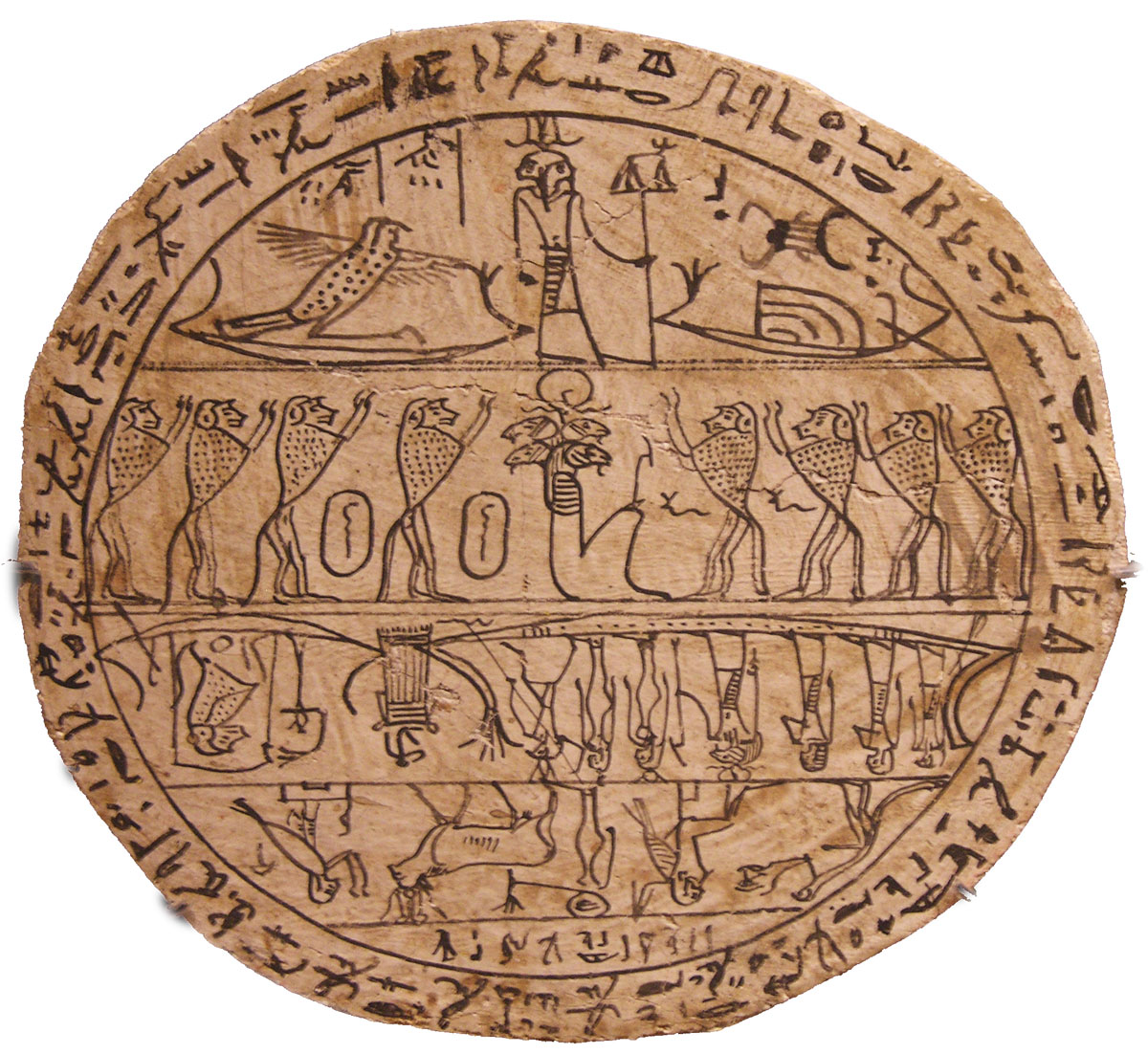
Figure 33. Hypocephalus of Tadjit (Louvre, E 6208), cartonnage drawn with black ink; Ptolemaic Period. Photograph by Stephen T. Whitlock. Courtesy Stephen T. Whitlock.
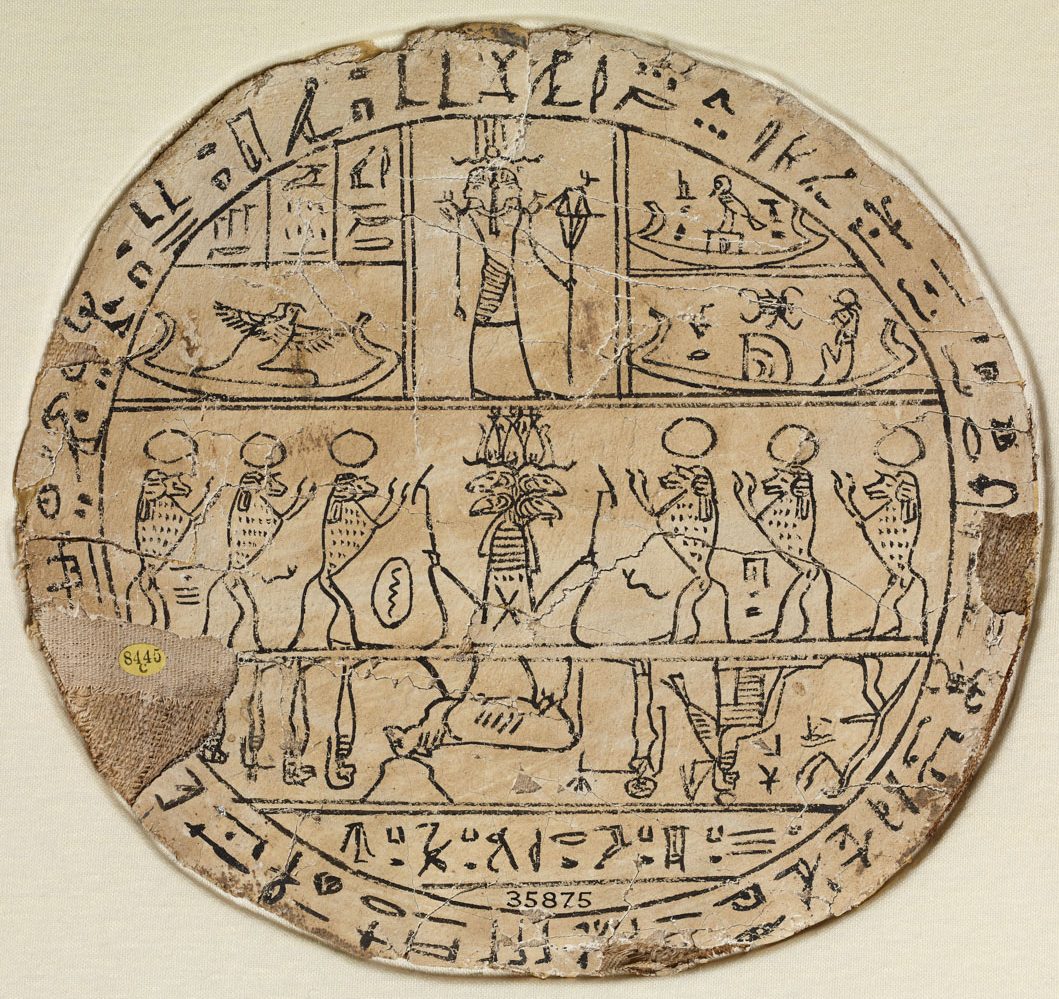
Figure 34. Hypocephalus of Hor (British Museum, EA 35875), textile based cartonnage drawn with black ink; Ptolemaic Period. Image from www.britishmuseum.org. © The Trustees of the British Museum. All rights reserved.
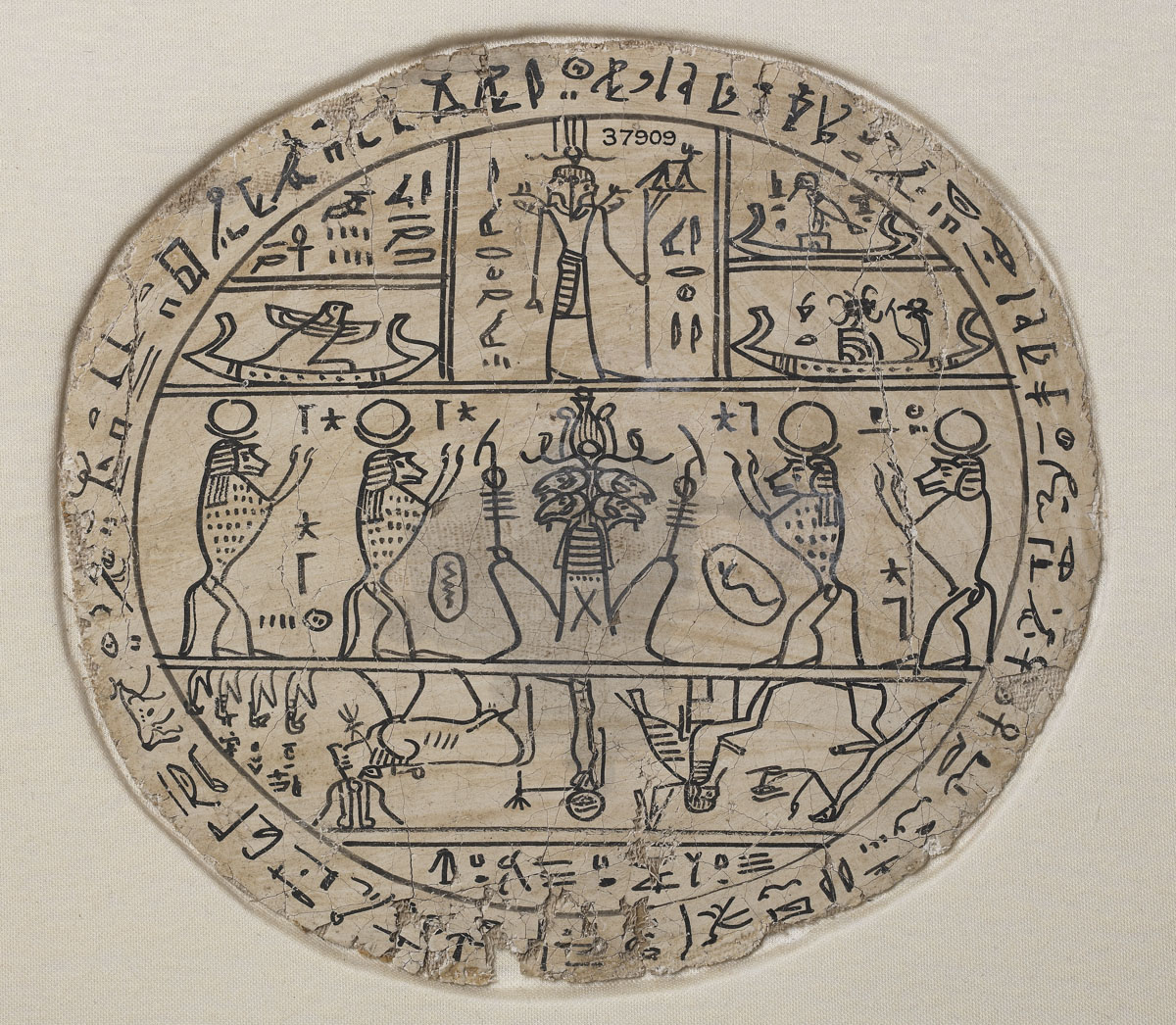
Figure 35. Hypocephalus of Tasheritkhonsu (British Museum, EA 37909), stuccoed linen drawn with black ink; Ptolemaic Period. Image from www.britishmuseum.org. © The Trustees of the British Museum. All rights reserved.
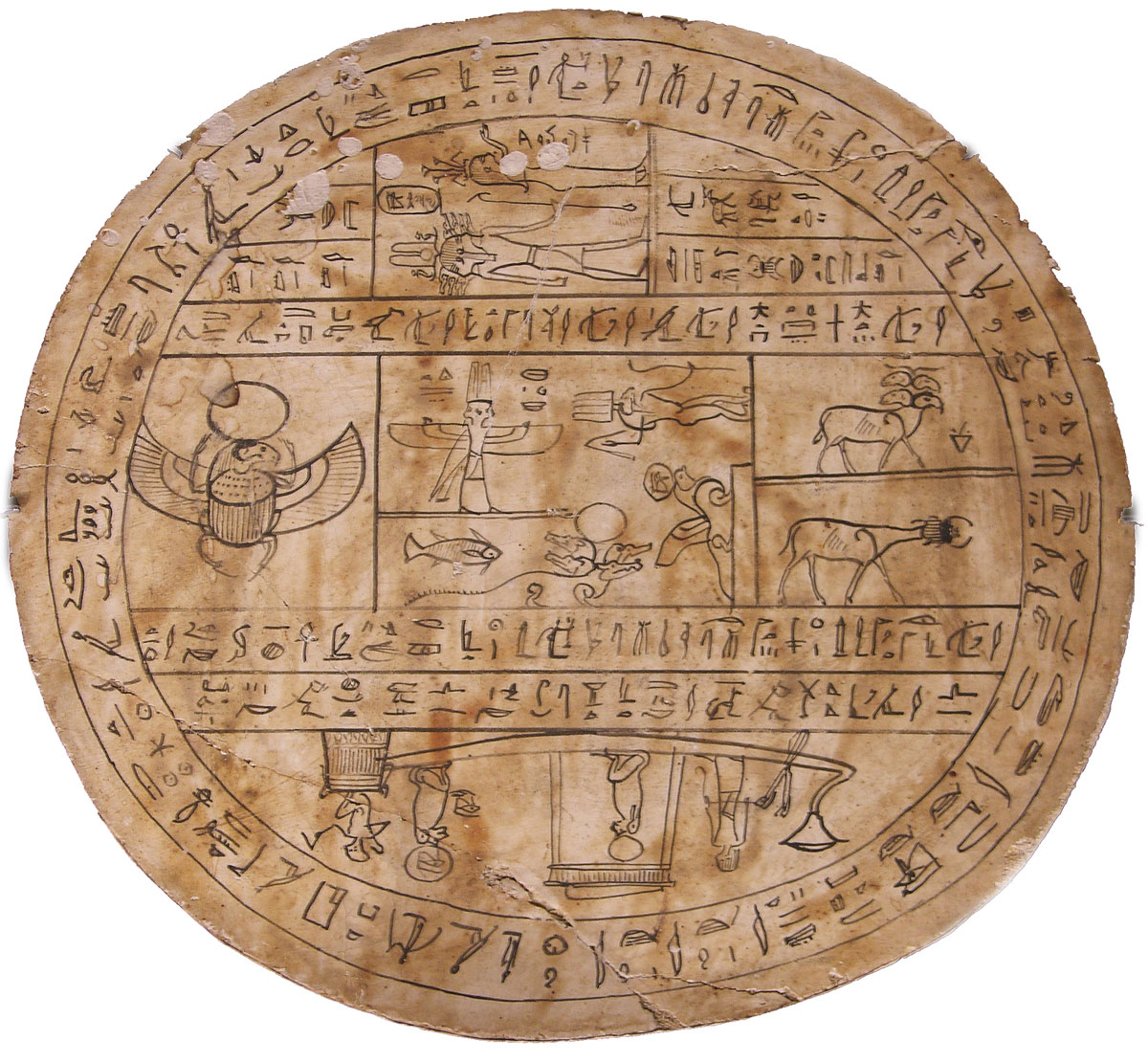
Figure 36. Hypocephalus of Iahmes (Louvre, N 3525 A), stuccoed linen drawn with black ink; Ptolemaic Period. Photograph by Stephen T. Whitlock. Courtesy Stephen T. Whitlock.
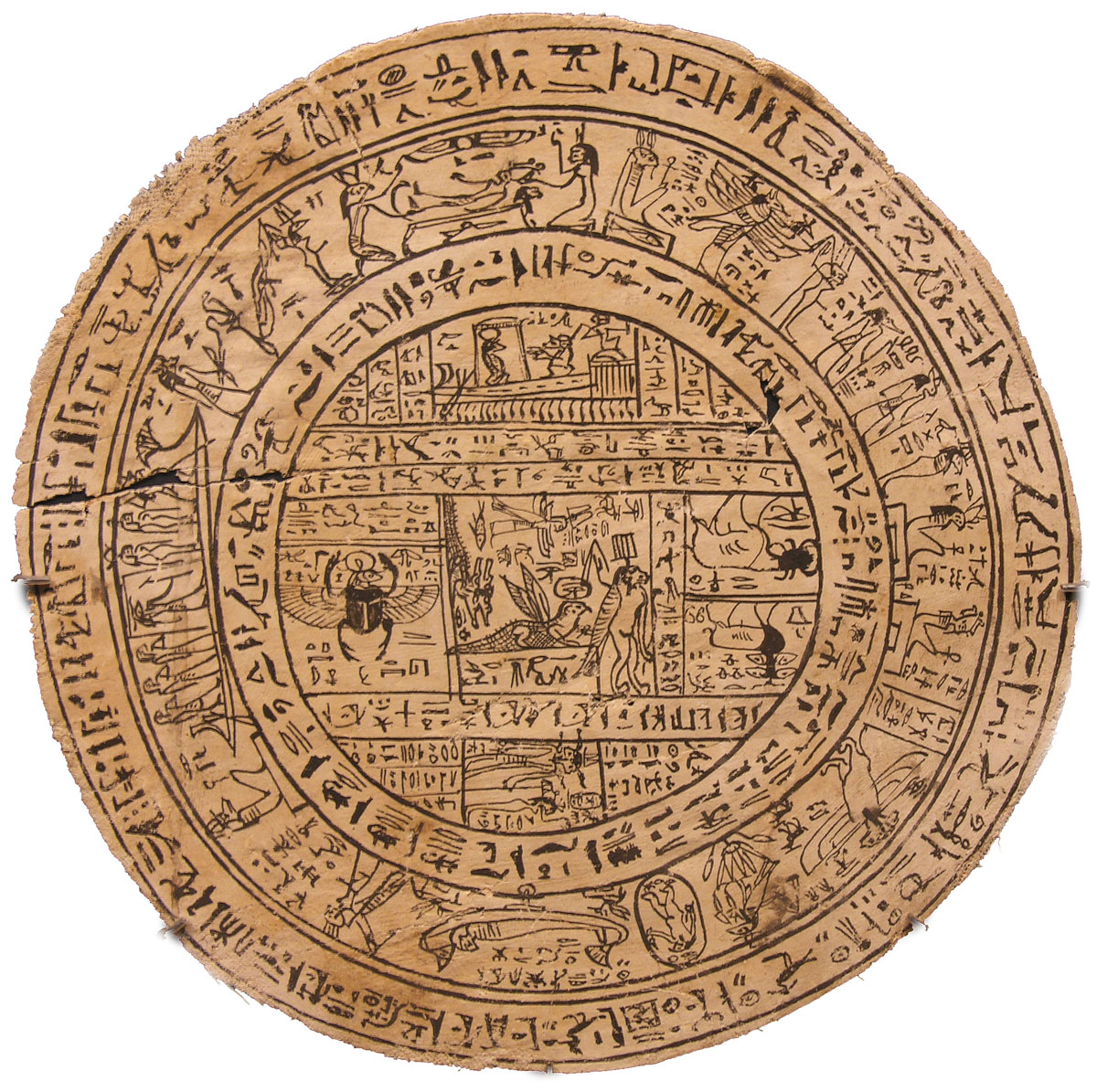
Figure 37. Hypocephalus of Osirwer (Louvre, N 3182), stuccoed linen drawn with black ink; Ptolemaic Period. Photograph by Stephen T. Whitlock. Courtesy Stephen T. Whitlock.
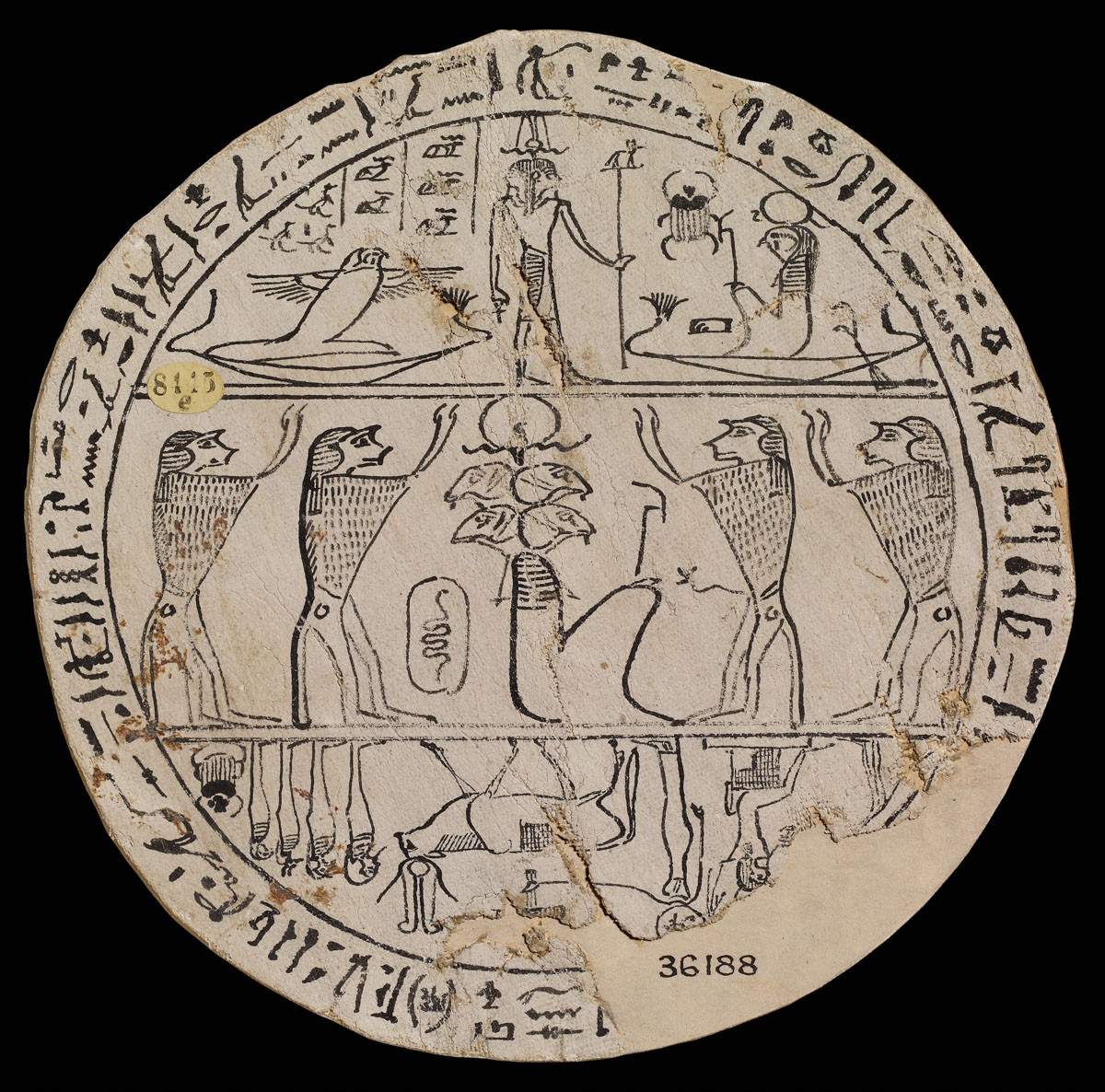
Figure 38. Hypocephalus of Neshorpakhered (British Museum, EA 36188), stuccoed linen drawn with black ink; Ptolemaic Period. Image from www.britishmuseum.org. © The Trustees of the British Museum. All rights reserved.
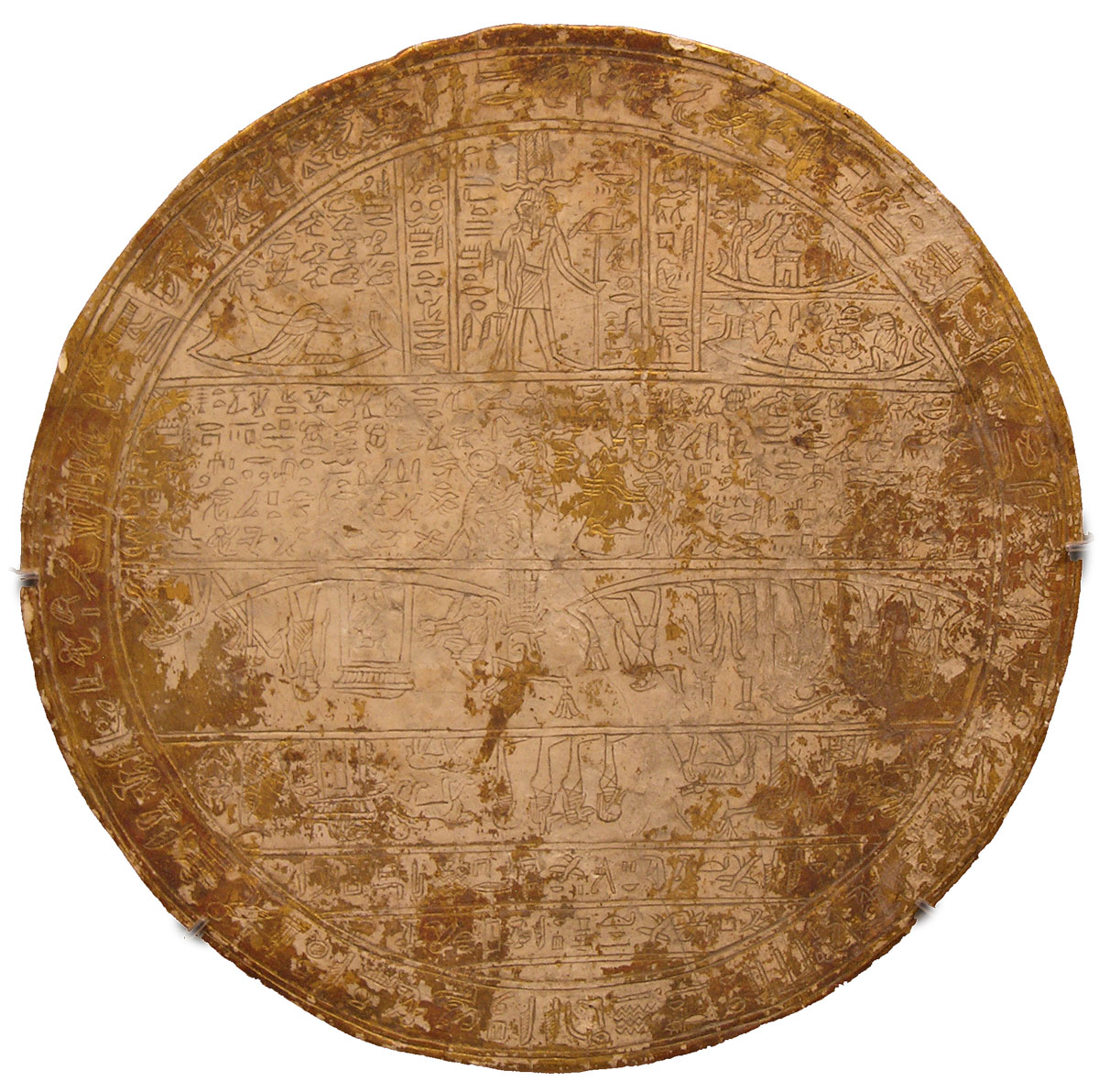
Figure 39. Hypocephalus of Istemakhbit (Louvre, N 3524), gilded textile cartonnage with engraving; Late Period. Photograph by Stephen T. Whitlock. Courtesy Stephen T. Whitlock.
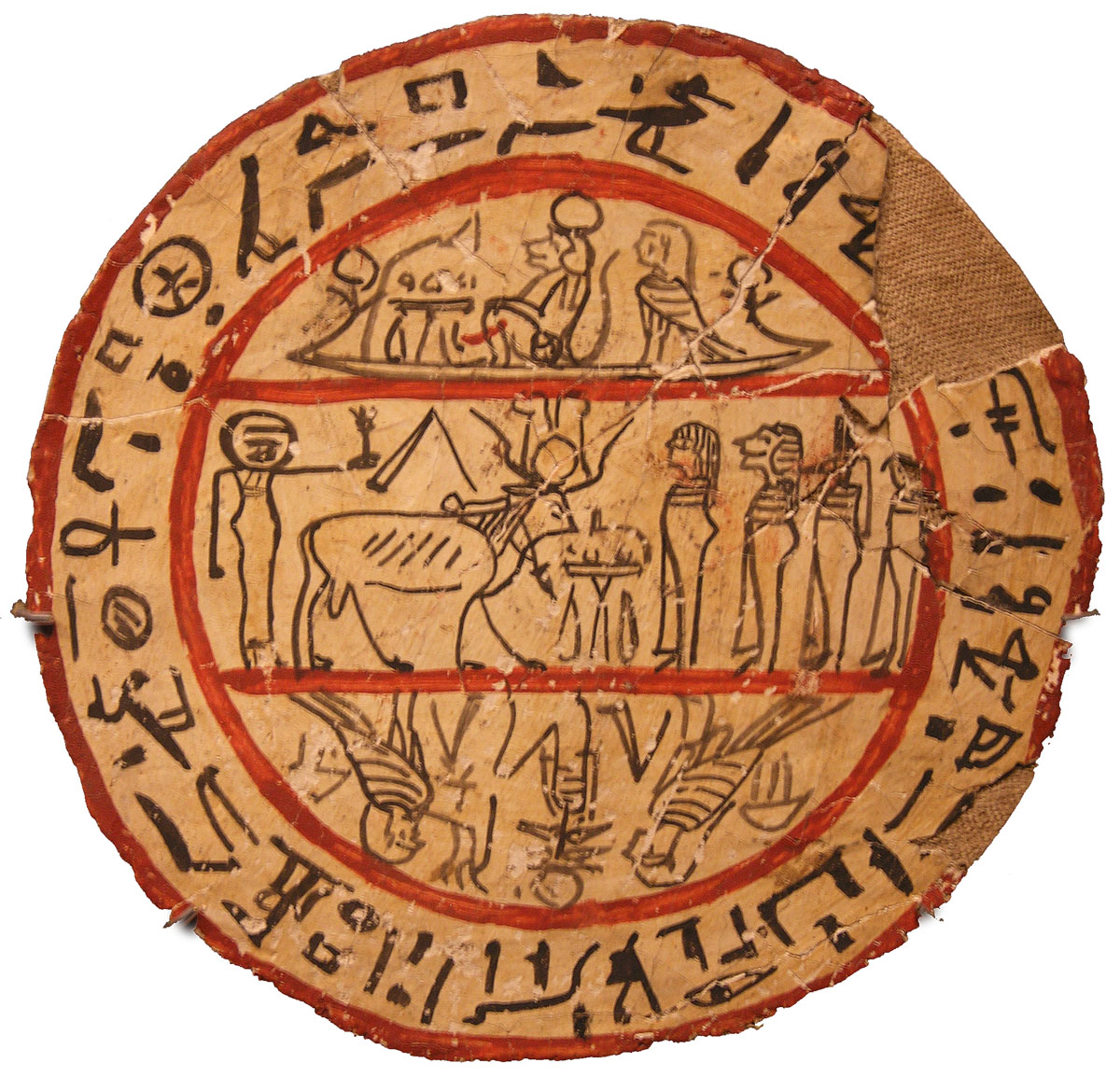
Figure 40. Hypocephalus of Padjiamunipt (Louvre, E 18940), cartonnage drawn with black and red ink; Ptolemaic Period. Photograph by Stephen T. Whitlock. Courtesy Stephen T. Whitlock.
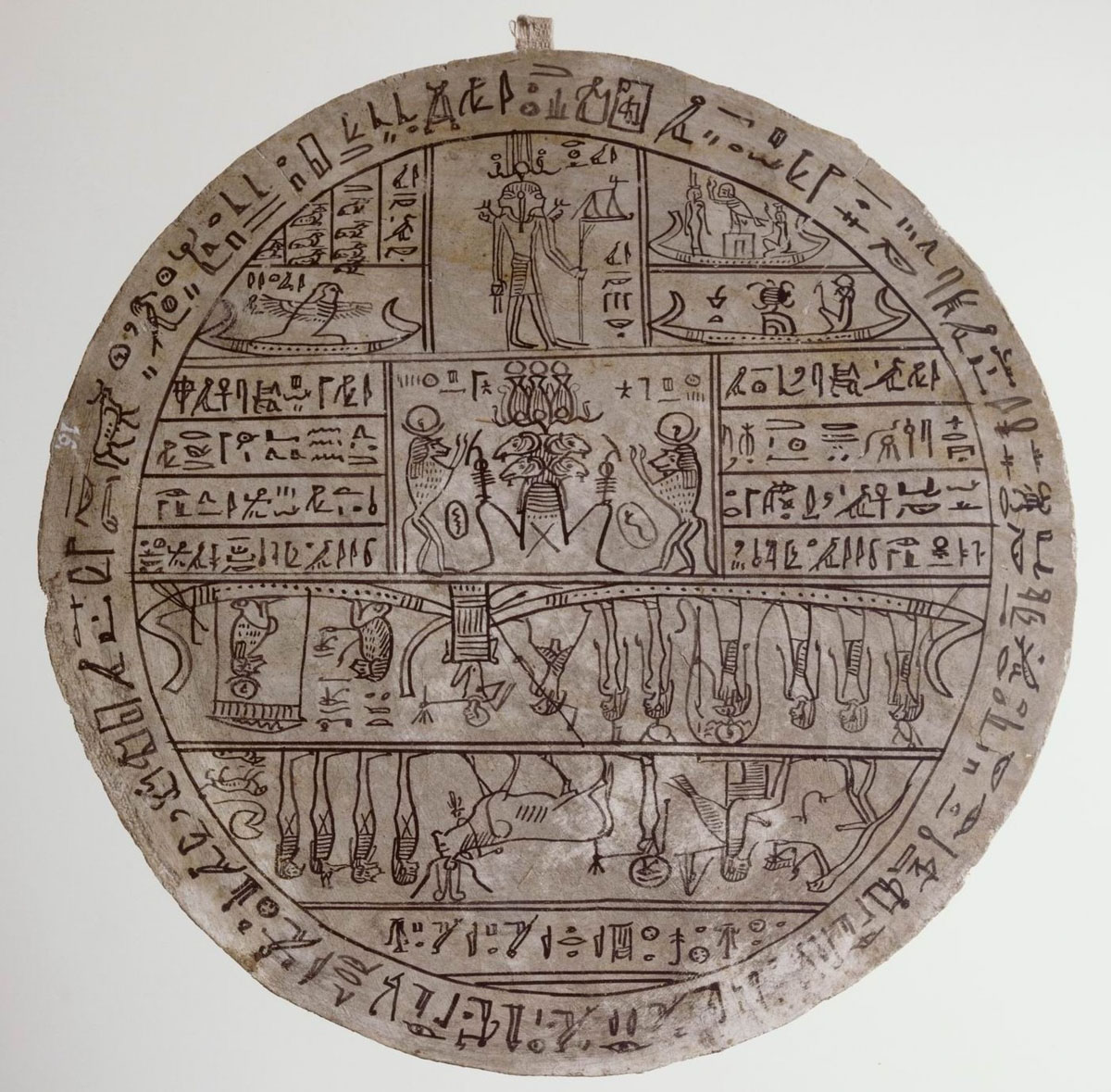
Figure 41. Hypocephalus of Tanetirit (Rijksmuseum van Oudheden, AMS 62), cartonnage drawn with black ink; Ptolemaic Period. National Museum of Antiquities, Leiden, Netherlands; CC0 license.
About the Authors
Stephen O. SmootStephen O. Smoot is a doctoral student in Semitic and Egyptian languages and literature at the Catholic University of America. He previously earned a master’s degree from the University of Toronto in Near and Middle Eastern civilizations, with a concentration in Egyptology, and bachelor’s degrees from Brigham Young University in ancient Near Eastern studies, with a concentration in Hebrew Bible, and German studies. He is currently an adjunct instructor of religious education at Brigham Young University and a research associate with the B. H. Roberts Foundation.
John GeeJohn Gee is the William (Bill) Gay Research Professor in the Department of Asian and Near Eastern Languages at Brigham Young University. He has published extensively on scripture and ancient studies. He has served on the boards of national and international biblical and Egyptological organizations and as the editor of an international multilingual peer-reviewed Egyptological journal.
Kerry MuhlesteinKerry Muhlestein is a professor of ancient scripture and ancient Near Eastern studies at Brigham Young University. He received his bachelor’s degree from BYU in psychology with a Hebrew minor. He received an MA in ancient Near Eastern studies from BYU and a PhD from UCLA in Egyptology. His first full-time appointment was a joint position in religion and history at BYU–Hawaii. He is the director of the BYU Egypt Excavation Project. He was also a visiting fellow at the University of Oxford for the 2016–17 academic year. He has served as the chairman of a national committee for the American Research Center in Egypt and serves on their Research Supporting Member Council. He is the senior vice president of the Society for the Study of Egyptian Antiquities and has served as president. He has published and researched on Egyptological topics and Book of Abraham topics for over two decades.
John S. ThompsonJohn S. Thompson obtained his BA and MA in ancient Near Eastern studies (Hebrew Bible) from BYU and UC Berkeley, respectively, and completed a PhD in Egyptology at the University of Pennsylvania. After more than twenty-five years as an employee of Seminaries and Institutes of Religion—most recently as the coordinator/institute director in Cambridge, Massachusetts—he currently researches and writes for Scripture Central.


