In his BYU Studies article “Building an Innovative ‘Latter-day Saints without Borders’ Organization,” Warner Woodworth recounts both his own and his students’ extensive work to better the lives of the poor, but he gives credit to many other Latter-day Saint groups who are carrying out similar efforts. All One People, an organization located in Manti, Utah, is one of these groups. Woodworth says that these groups “[act] as ‘social entrepreneurial’ Christians who draw on their faith, rely on scriptural values, harness their educations, and call forth their business skills in designing and launching effective humanitarian services.” These are exactly the values that have motivated the leaders of All One People over the years of its existence.
The current directors, Joan and Fred Johnson and Fred’s sister Vickie Anderson, did not found the organization but became involved a few years after it came into being. Fred, having served a mission for The Church of Jesus Christ of Latter-day Saints in South Africa as a young man, was very interested in returning to help Africans, especially after the 1978 revelation giving the priesthood to all worthy men. He decided with his family to go to Mozambique. They even began studying Portuguese so they would be able to speak the language. But Fred received a clear impression that he should go to Kenya, so he went home, told his family, and spread maps of Kenya all over their dining table.
The very next day, Richard Armstrong, the director of All One People at the time, called Fred and asked him to go to Kenya with a group of BYU students, confirming Fred’s inspiration. He didn’t think he could leave work so abruptly, but his wife, Joan, was able to go. She met with the students, and they left for Kenya in April 2004 and stayed for two months. Joan established contacts with local government, education, and Church leaders that would prove to be invaluable in future years.
Joan and the BYU students began building a school and got about halfway through its construction. Another group, including Beverly Armstrong, a significant contributor to the Manti community; Debrah Lindsey, the Sanpete County health nurse; and Ellis and Merlene Peterson, who ran a local girls’ home, were able to complete the school in 2005.
The next year Richard Armstrong asked Fred and Joan if they would take over leadership of All One People, and they enthusiastically agreed to do so, although they didn’t know exactly what they should focus their work on. Once again Fred felt a clear impression of the Spirit that came in words: “See that those kids get an education.”
Fred and Joan flew to Nairobi in 2005, not knowing where to stay or what to do. They traveled west to Matunda, praying that they would be able to learn what their specific mission was. In Matunda, they attended Sunday services in the Kitale Branch and met the branch president, Martin Ndungu, and after Fred explained what they were doing there, President Ndungu directed them to the Lillywhite Education Center for Orphans in an interior village named Ndivisi.
The journey to Ndivisi was rather harrowing. First, they had to ride to the end of the line in twelve-person vans, called matatus, and then ride the rest of the way on the back fender of bicycles, called boda bodas, finally dropping into a remote river valley (fig. 1). When they arrived, two signs greeted them, one for the orphanage and the other for The Church of Jesus Christ of Latter-day Saints. Fred and Joan met the directors of the Lillywhite orphanage—Patrice and Margaret Kisembe—and the orphans who lived there (fig. 2). They were surprised by how happy the children were because it was clear that they were near starvation. Again, the Johnsons felt impressed that this was where they should be. Once the Johnsons returned to the United States, they maintained contact with the Kisembes and immediately raised money to pay for the children’s food.
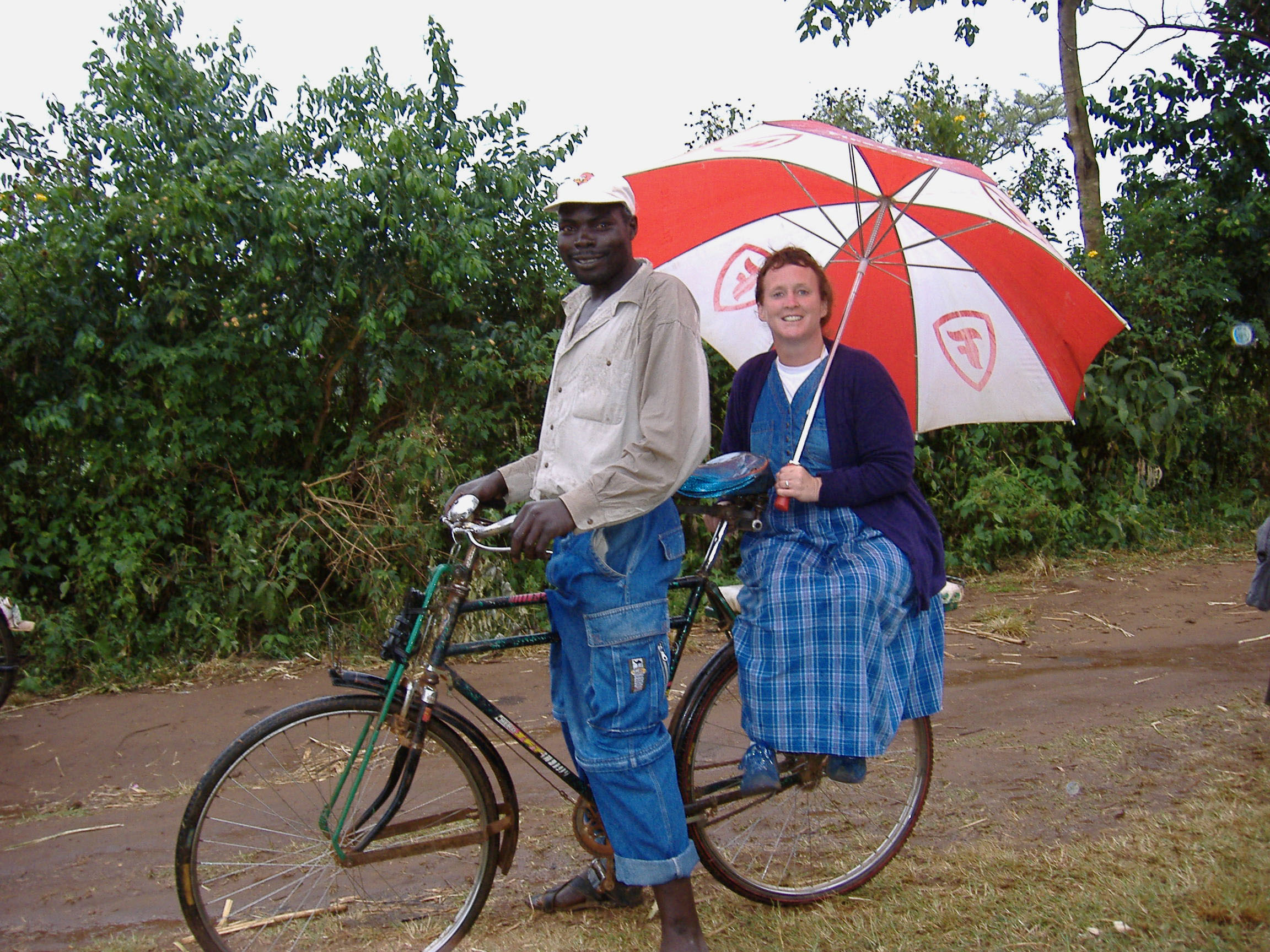 Figure 1.
 Joan Johnson traveling in Ndivisi, Kenya, via
boda boda, 2005. All photos courtesy Fred Johnson.
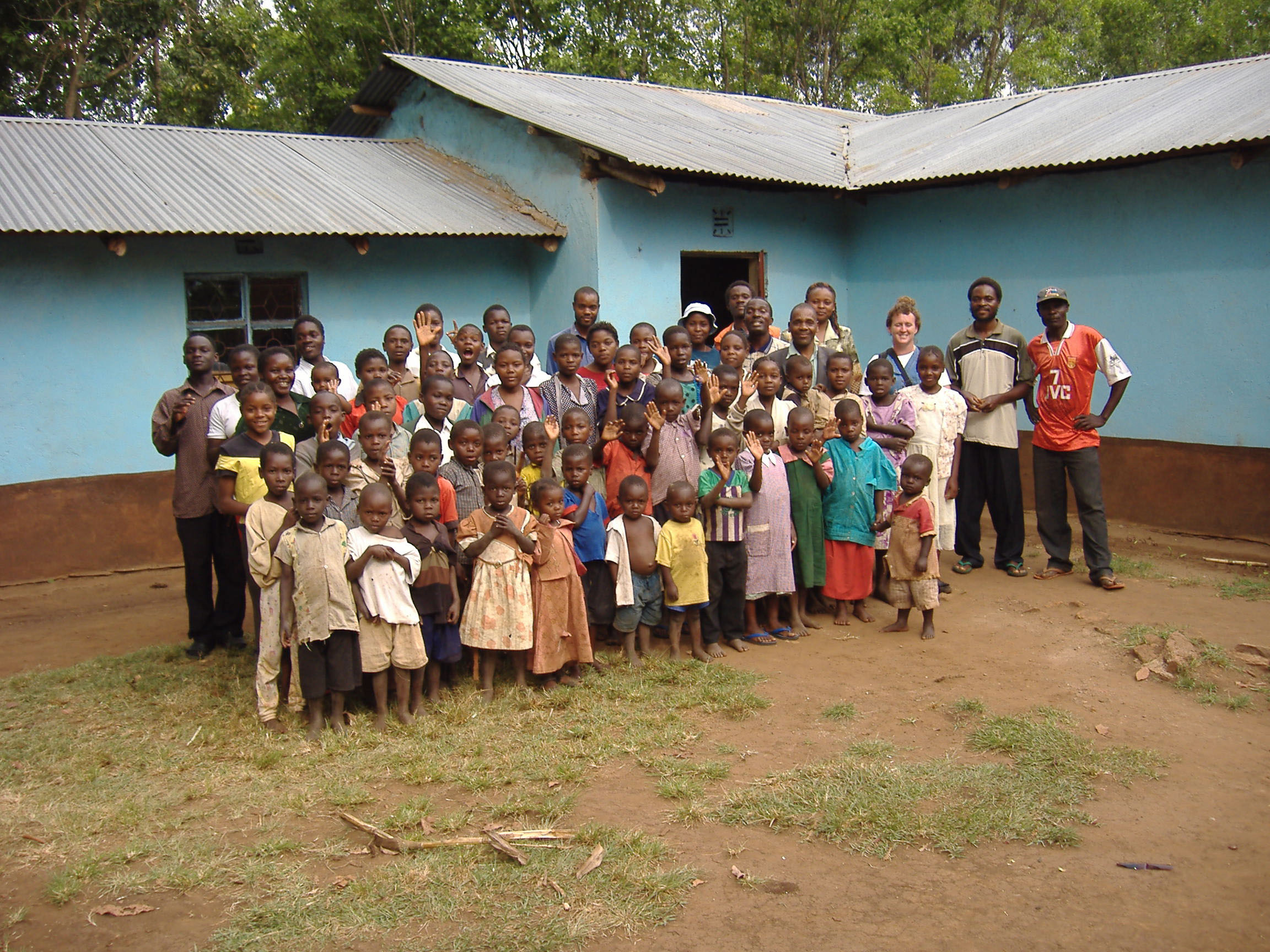 Figure 2.
 Part of the group of orphans and other children living at the Lillywhite Education Center for Orphans in 2005.
The practice of the Lillywhite Center was to help the children become self-reliant, and Fred and Joan agreed wholeheartedly with that goal. All One People funded the leasing of ten acres for the children to plant and raise maize, the installation of solar panels to provide electricity, and the building of a green house in which to grow tomatoes. All One People also worked with another donor to fund the building of a fish farm. The Kisembes taught the children the gospel, with regular scripture study, family home evening, and weekly attendance at sacrament meetings. The branch was soon moved to Misikhu, five miles away, and the children and the Kisembes walked there and back each week for Sunday services.
The next project All One People undertook at the Lillywhite Center was to construct four classrooms as well as bookshelves that would hold the many books that had been donated by the South Sanpete School District. They also built bunk beds for the children, who before had been sleeping on the hard concrete floor (figs. 3, 4). Fred and Vickie particularly remember the hour-long drive in the rain with the windows open with twenty of the foam-pad mattresses tied to the roof of their car.
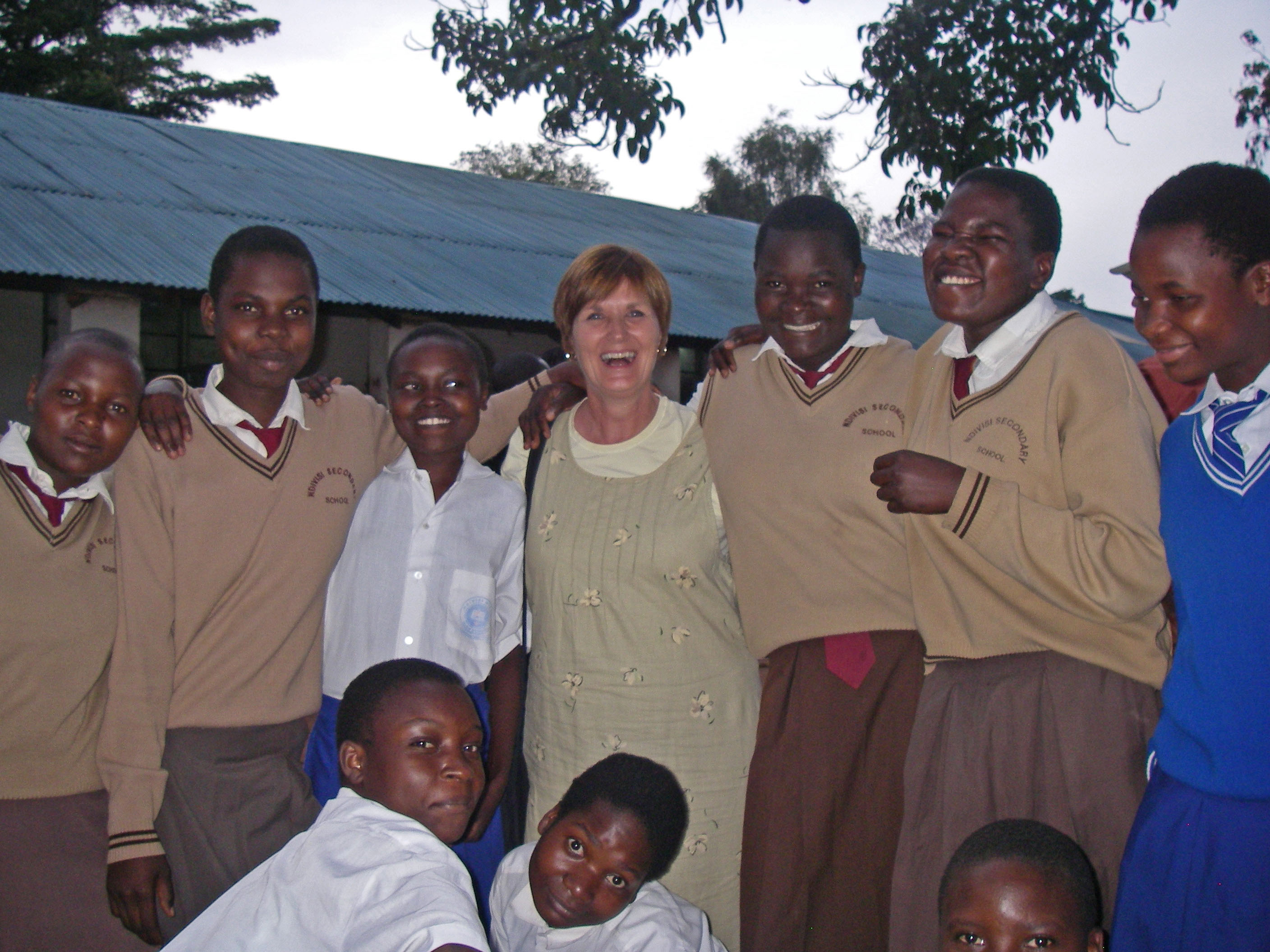 Figure 3.
 Vickie Anderson with a group of girls (mostly LDS) from the Lillywhite Education Center for Orphans who were in uniform and attending Ndivisi Girls High School with help from All One People, 2009.
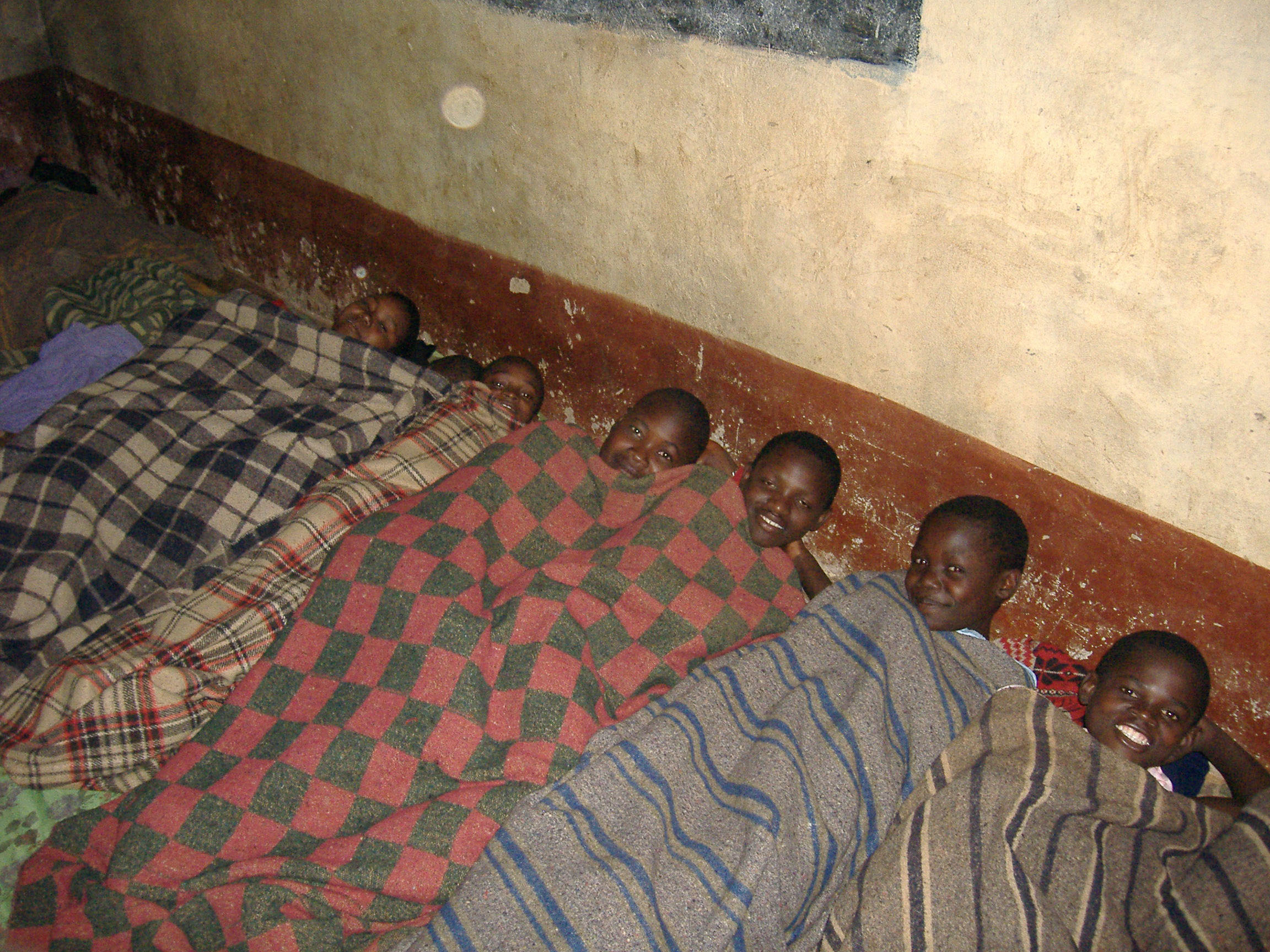 Figure 4.
 Youth from the Lillywhite Education Center for Orphans, whose beds were on the concrete floor prior to All One People providing bunkbeds and mattresses, 2007.
Since 2007, the major work of All One People has been to enable the orphans and other children from two wards in Nairobi to attend high school. The high-school system is modeled on the English educational system of boarding schools. To attend, the students have to pay for their travel both to and from the school, tuition, fees, room and board, and standard uniforms. These expenses are far greater than not only the orphans but also many of the children in the Nairobi wards can afford.
In addition to about twenty-five students a year from the orphanage, Fred and Vickie thought that they could afford to send four more students. They drove the eight hours back to Nairobi to meet with two Latter-day Saint bishops and see if there were any youth there who needed help to go to high school. They planned to select two students from each ward. The first bishop they met with, Bishop Charles Gesimba, had Fred and Vickie meet young people at the Buruburu chapel. He brought six youth, whom Vickie and Fred interviewed and then had write letters about their circumstances, their preparation for further study, and their goals. The leaders of All One People were impressed by all of these youth and found it very difficult to choose any two over the others. The next day they went to the Upper Hill Ward, and Bishop Moses Alumanda brought eight young members of the Church. Again, the young people were very impressive and had no hope of attending high school without help. In a leap of faith, Fred, Joan, and Vickie said they would help all fourteen instead of the four they had planned on.
The three All One People directors returned to Sanpete County and were miraculously able to raise enough funds to support all thirty-nine kids. It is difficult to ask people to give money, even for worthy causes, but their hope for these children and the children’s great need overcame their diffidence. They went door to door looking for donors, sitting in living rooms to explain the situation of these young people. Vickie held a yard sale with donations provided by residents throughout her Ephraim, Utah, community. The directors also held a dinner and invited potential donors to contribute.
As the wards in Nairobi grew and new units were created, more and more youth needed assistance, and in 2009 and for a few years after, All One People was supporting about sixty school students each year. Now they average between forty-five and fifty (figs. 5, 6).
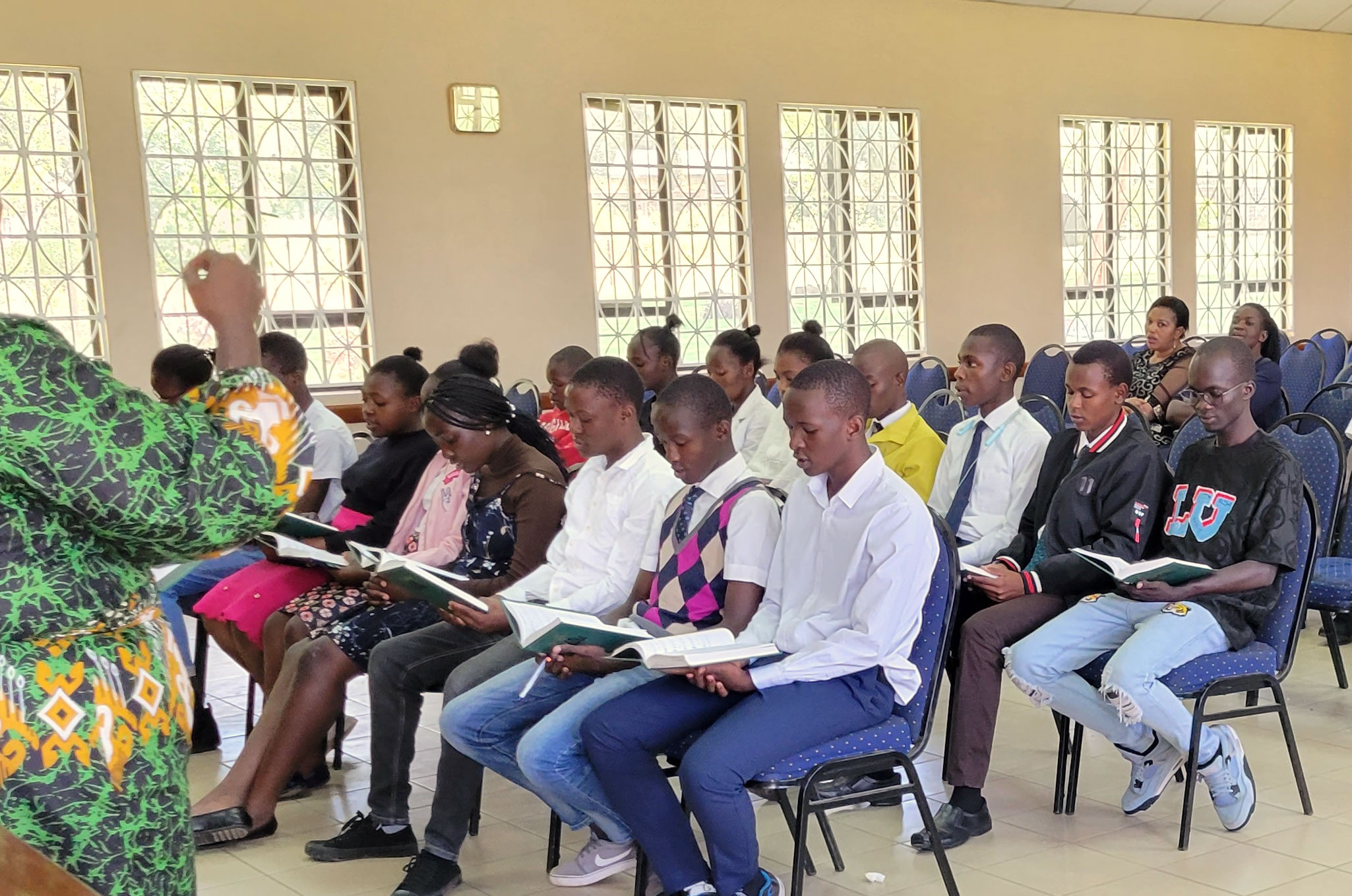 Figure 5.
 A group of LDS students from the Lucky Summer and Zimmerman wards in Nairobi who are part of the All One People program, 2023.
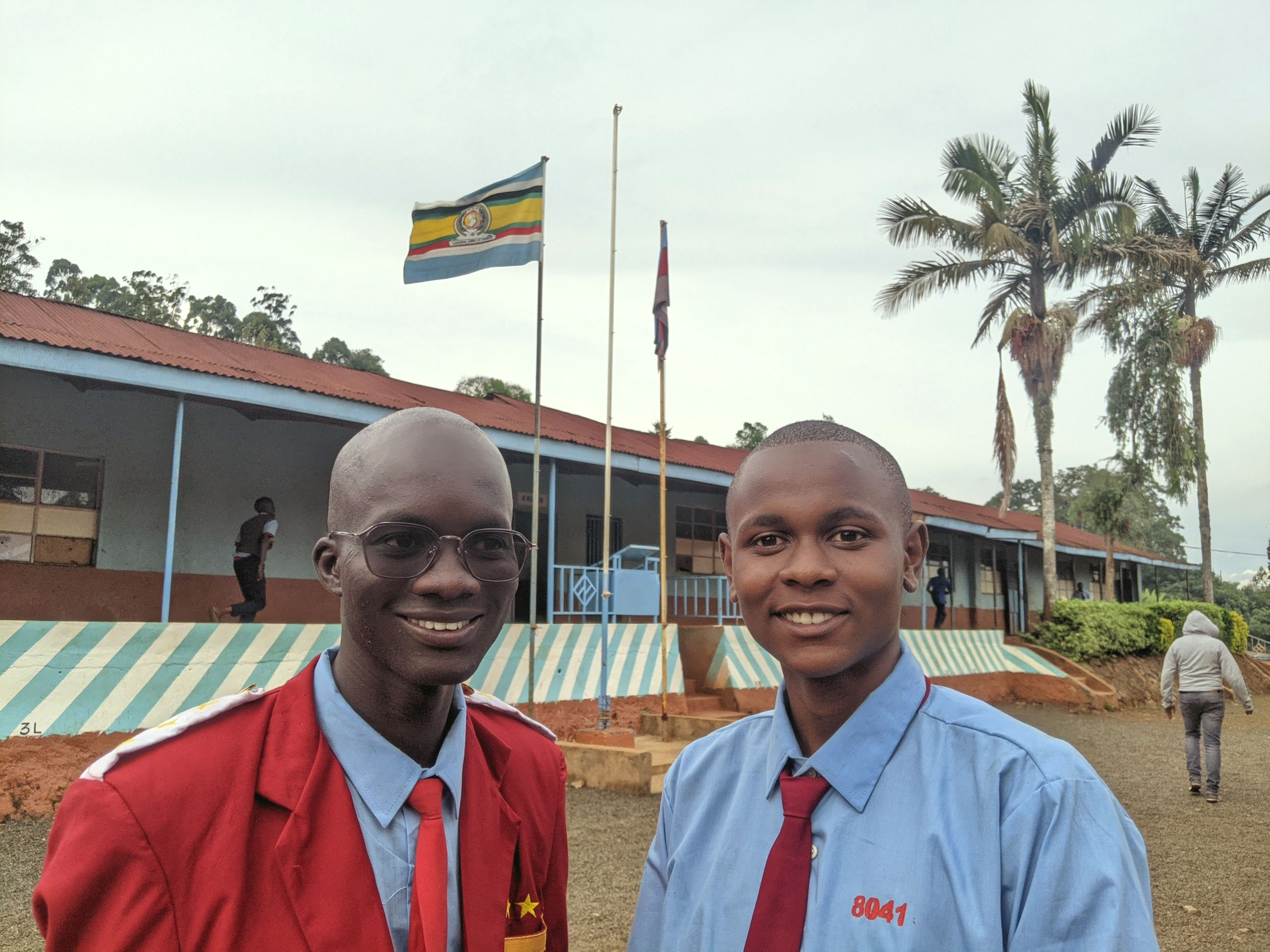 Figure 6.
 Mayom and Robert, two students from Nairobi wards who attend Kigumu Bendera High School with assistance from All One People, 2023. Like most of the organization’s students, each is committed to serving an LDS mission and furthering his education using either the Perpetual Education Fund or BYU Pathway.
The goal of the organization has been to help these needy young people finish high school, go on missions, and then continue their studies through the Church’s Perpetual Education Fund and BYU–Pathway. Fred is very enthusiastic about these particular programs, calling them “inspired.” The best students have also received university scholarships.
In the twenty years of operation, the directors have seen these young people grow and become leaders in the Church. When Fred and Joan visited Nairobi in March 2023, many of the people they met with, now adults with young families, had been in the program. These young people are now serving in their wards in a variety of callings, including leadership positions. In 2016, Fred and Joan attended a baptism and were very impressed by a young man’s talk. Fred thought he looked familiar and learned that he was Tony Lime (fig. 7), one of their former students and at the time the elders quorum president in his ward. Since then he has become a member of the bishopric. Tony also told Fred that his brother Edgar had become a nurse.
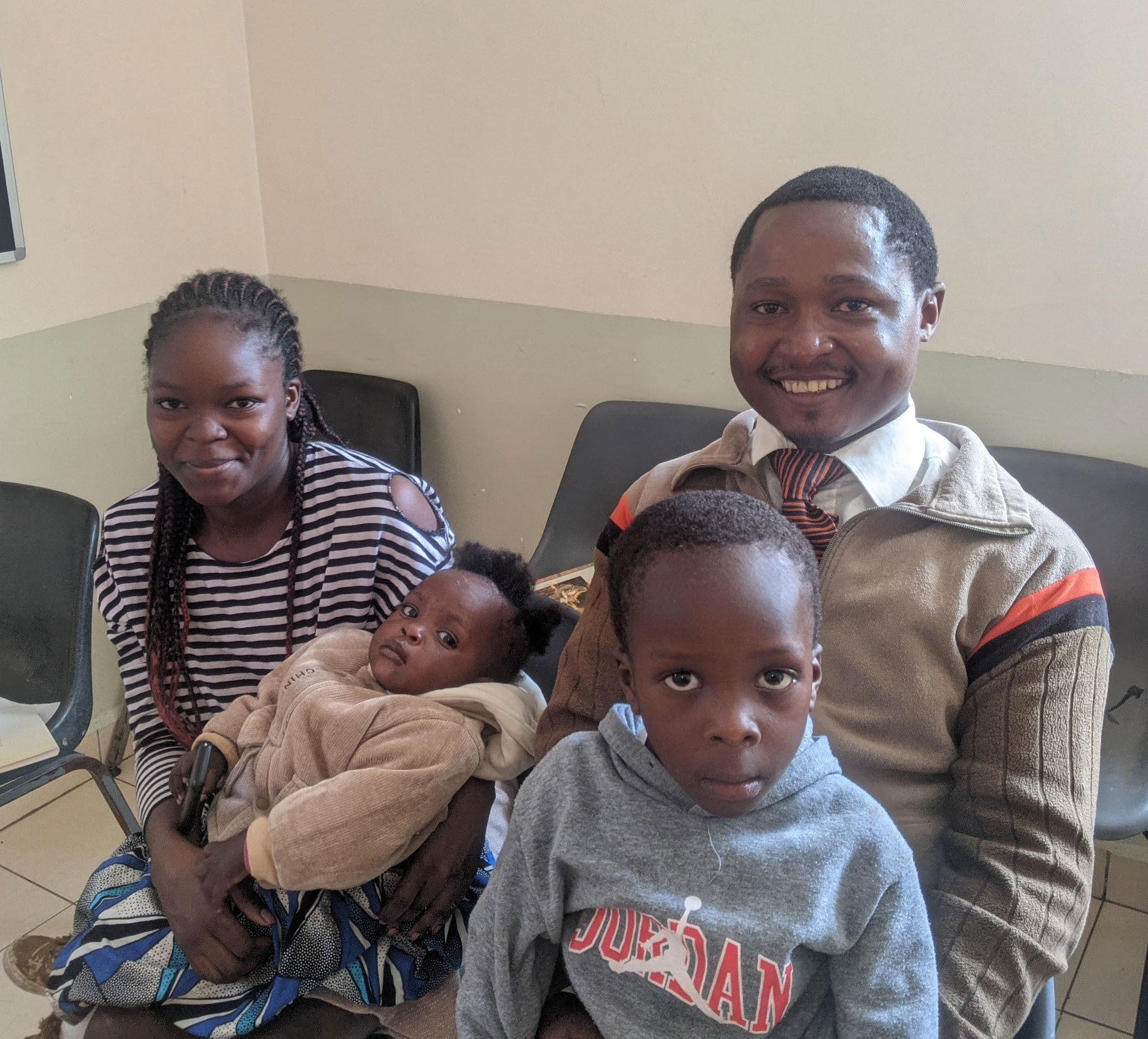 Figure 7.
 Former All One People student Tony Lime, now serving as a member of the South B Ward bishopric, and his family, 2023.
In January 2018, Fred felt impressed that there was work All One People needed to do in Ethiopia. He received this feeling with consternation, because he felt that the resources of All One People were stretched to the limit, and he knew almost nothing about Ethiopia. But it turned out that in 2011, Fred and Joan had met an elder serving in Kenya who came from Ethiopia: Eyob Teffera (fig. 8). Fred’s son Stephen had kept in touch with this young man on Facebook and, upon request, sent an inquiry to Teffera. It also happened that that same year, Elder Teffera came to Nairobi to translate general conference into Aramaic. Fred and Vickie met with him there and asked if he knew anyone who could help them. He said he was the district president of the only district in Ethiopia. Fred and Vickie felt blessed that these arrangements all fell into place. Now All One People is helping four students in Ethiopia attend college (high school in Ethiopia is funded by the government).
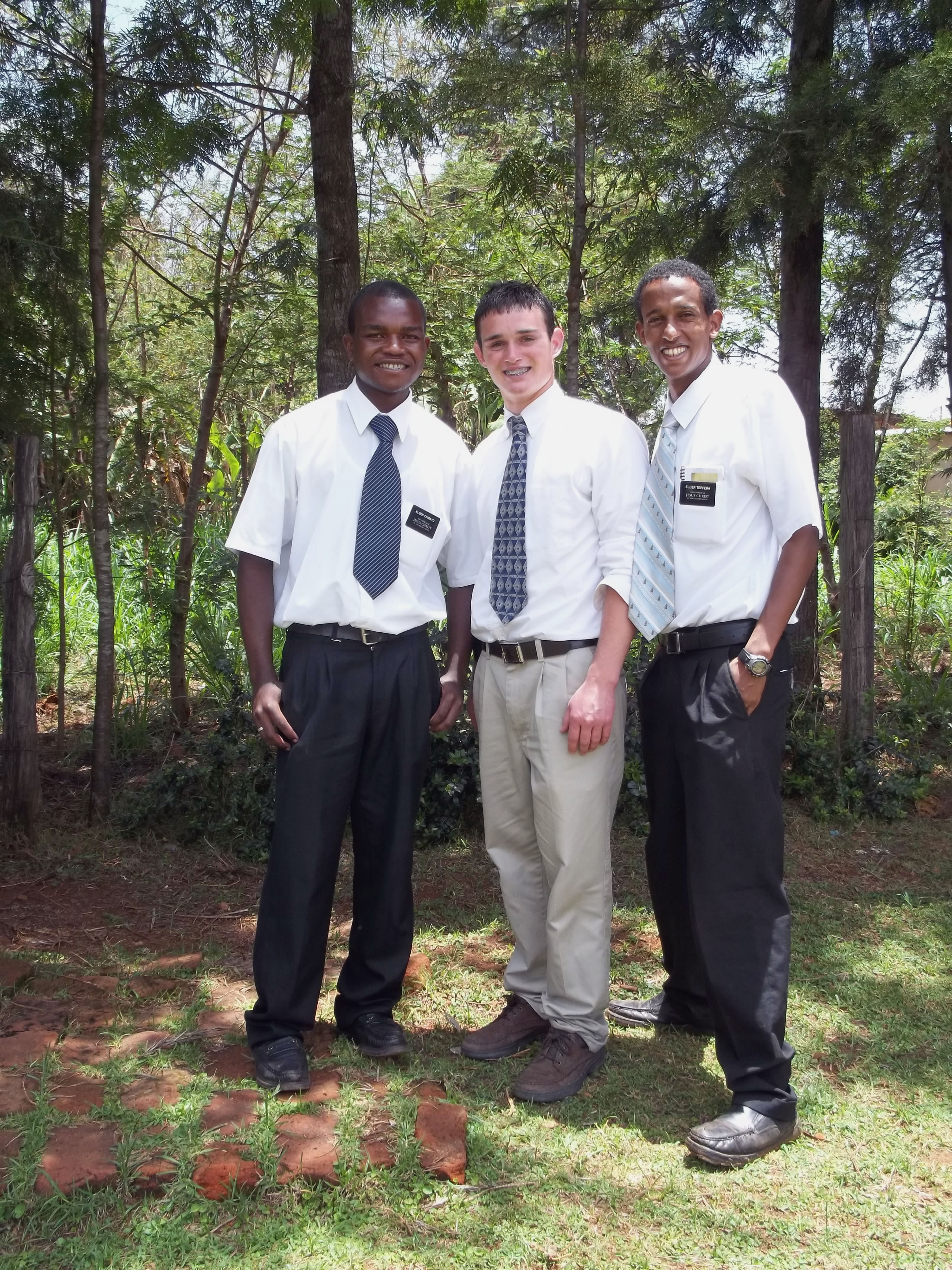 Figure 8.
 Eyob Teffera as an elder in 2011.
Left to right: Elder Chgayo, Stephen Johnson, and Elder Teffera.
There are many other touching individual stories. One is the story of Wilson Odunga. He was placed in the Lillywhite Center because his family couldn’t afford to care for him. With the assistance of All One People, he graduated from high school in 2012 and then was able to attend the University of Eldoret on an academic scholarship. When he was near graduation, the university offered him a job. He wanted to go on a mission, so he declined the offer. The university said that they wouldn’t hold the job for him and that they wouldn’t hire him again after his two-year mission. His father also put pressure on him to accept the job so he could help support his parents, but he resisted his father’s pressure too.
When he returned from his mission, Wilson graduated with a BS degree in education and an MS in genetic engineering and now teaches near Bungoma at the Atundo Boys’ High School. He married another returned missionary, Esther Masitsa, in the Kinshasa Temple, aided in travel by the General Temple Patron Assistance Fund (fig. 9). Wilson was able to build their first house himself, and the Odungas now have a new baby girl named Norah.
 Figure 9.
 Wilson Odunga and his newly wedded wife, Esther, at the Kinshasa temple in 2022.
Another inspiring story is of three sisters aided by All One People: Stacey, Pauline, and Alma Natasha (fig. 10). Stacey began high school with the organization’s assistance in 2015. She graduated from high school, went on to college through the Church’s Perpetual Education Fund, and is now a schoolteacher. Her sister Pauline is in her second year of university education, and the youngest sister, Alma Natasha, has just graduated from high school. She will begin university study in the fall and hopes to become a surgeon.
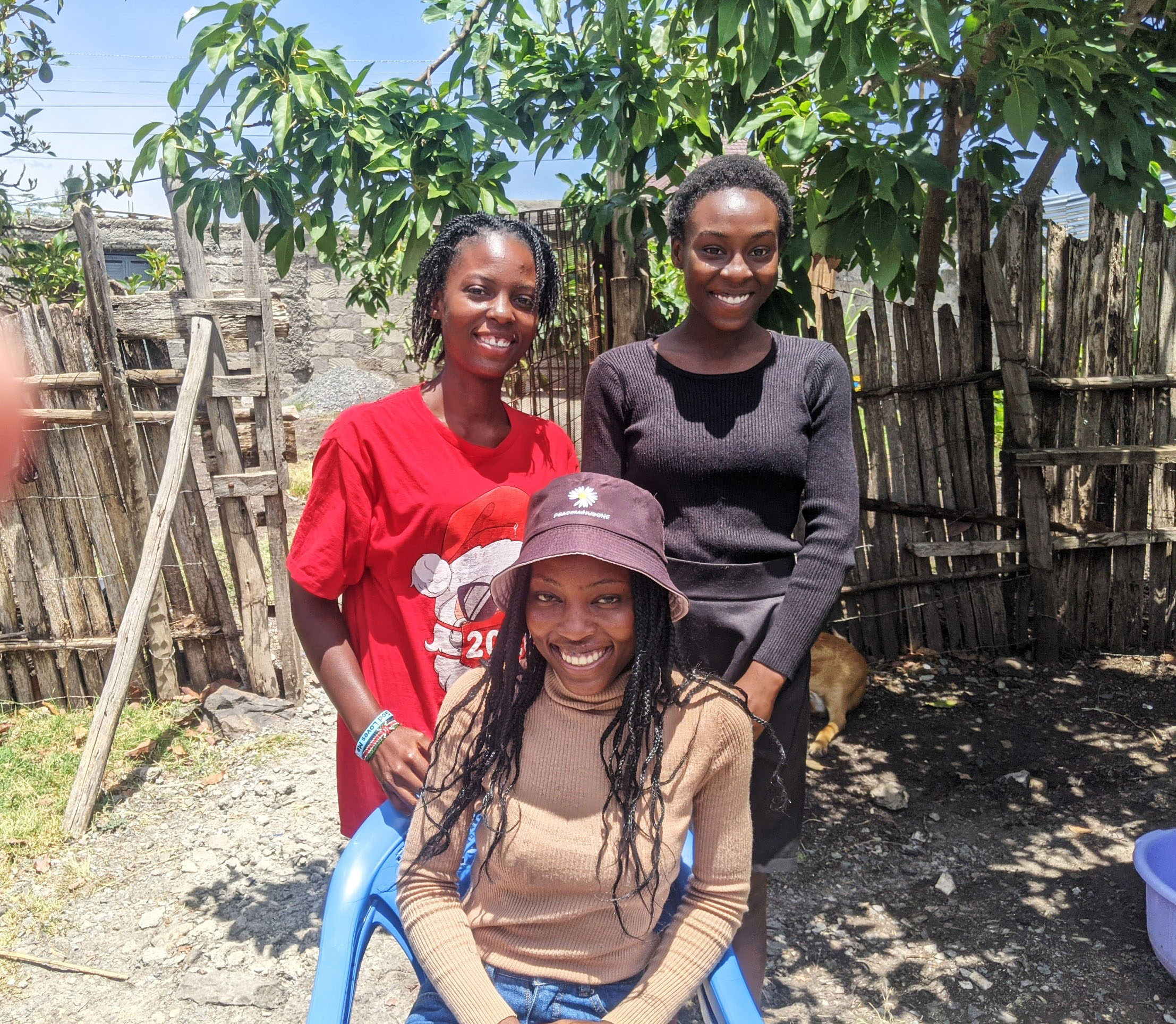 Figure 10.
 Three sisters from a Nairobi ward who were part of the All One People education program: Stacy sitting, Pauline and Alma Natasha standing, 2023.
The students are incredibly grateful. Jairus Okwakau Kalamu, who graduated from university with a degree in nutrition, sent the directors his “sincere and utmost thanks” for the support All One People gave him, adding, “Your generosity . . . transformed my life.” Certainly, many lives have been transformed, which has benefited not only the individuals involved but also those around them. These young people are becoming leaders who will strengthen the Church, and as their children grow up in the gospel, that strength will increase through the generations.
All One People is a modest organization, with a budget of about thirty-five thousand dollars a year. Virtually all the money raised goes to helping the children, all those who work with All One People are volunteers, and the directors pay their own airfare. The return on their investment is enormous. A donation of merely one hundred dollars a month will keep two students in school for a year, and the growth in these young lives provided by that modest donation is amazing. All One People is one of many independent Latter-day Saint proactive groups that are serving those in need throughout the world. They follow the Savior in doing good and bringing about better lives for so many throughout the world who would be severely limited without the generous assistance these groups provide.


