“The wisdom of life consists in the elimination of non-essentials.” —Lin Yutang1
The soft, muted lighting reflected off wooden pews in a local church building, casting a glow on the faces of leaders gathered for a stake meeting. Among those on the stand was the young bishop of the Sixth-Seventh Ward in the Temple View Stake. Tall, with a commanding presence, he was known for his dedication, but tonight, he felt restless. He had promised to visit an older ward member in the hospital right after this stake meeting was over. As the meeting progressed, he felt a strong impression to leave the meeting and rush to the hospital. The feeling became urgent. However, the stake president was speaking, and this bishop worried his early departure would appear disrespectful.
After what must have felt an eternity, he couldn’t ignore the prompting any longer. The moment the talk was over and before the benediction, he “bolted for the door” and drove to the hospital. When he arrived, he ran down the corridor. A nurse approached, recognizing him, and told him the patient had just passed away. She told this bishop that the patient was calling for him by name in his last moments. Devastated, Bishop Thomas S. Monson retreated into the night and wept.2
Who of us cannot empathize with this young bishop?
Have you ever felt the pressure to try to do it all? Have you ever felt being righteous means being stretched too thin at home, at church, or at work? Do you ever feel busy but not productive? Has your day ever been hijacked by other people’s agenda for you?
If you answered yes to any of these, the way out is the way of the essentialist.
I learned this the hard way.
The Way of the Nonessentialist
One bright, winter day in California, I visited Anna in the hospital. She lay propped up in the large, medical bed. I sat on the chair by the window. Even in the hospital, Anna was radiant. But I also knew she was exhausted. It was hours after our precious, healthy daughter was born.
Yet, what should have been one of the happiest, most serene days of my life was actually filled with tension. Even as my beautiful new baby lay in my wife’s tired arms, I had my phone on and my laptop open. I was also feeling pressure to go to a client meeting. My colleague had written, “Friday between 1–2 would be a bad time to have a baby because I need you to come be at this meeting.” It was now Friday, and though I was pretty sure (or at least I hoped) that the email had been written as a jest, I still felt pressure to attend.
Instinctively, I knew what to do. It was clearly a time to be with my wife and child. So when asked whether I planned to attend the meeting, I said “yes” with all the conviction I could muster. To my shame, while my wife lay in the hospital with our hours-old baby, I went to the meeting. Afterward, my colleague said, “The client will respect you for making the decision to be here.” But the look on the clients’ faces did not evince respect. Instead, they mirrored how I felt. What was I doing there? I attended the meeting simply to please, and in doing so, I hurt my family, my integrity, and even the client relationship.
As it turned out, exactly nothing came of the client meeting. But even if it had, surely I would have made a fool’s bargain. In trying to keep everyone happy, I sacrificed what mattered most. On reflection, I discovered this important lesson: if you don’t prioritize your life, someone else will. In the end, anything but a disciplined pursuit of the essential will lead to an undisciplined pursuit of the nonessential.
The difference between the way of the essentialist and the way of the nonessentialist can be seen in figure 1. In both images, the same amount of effort is exerted. In the image on the left, the energy is divided into many different activities. The result is our unfulfilling experience of making a one-millimeter progression in a million directions. In the image on the right, the energy is given to fewer activities. The result of investing in fewer things is our satisfying experience of making significant progress in the things that matter most.
Figure 1. Choices
In my professional work, I have seen people all over the world who are consumed and overwhelmed by the social pressures around them. I have coached successful people in quiet pain as they try desperately to do everything perfect right now. I have seen people trapped by controlling managers, who are unaware that they do not have to do what they’re doing. And I have worked tirelessly to understand why so many bright, smart, and capable individuals remain snared in the death grip of the nonessential.
I coined the term essentialism to define the discipline of discovering what is essential, eliminate what is not, and make it possible to do what matters most.3 The word “discipline” partly stems from the Latin root disciplina, which means “instruction” or “teaching.”4 The word “disciple” partly stems from the Latin root discipulus, meaning “pupil” or “learner.”5 Both words share the essence of learning and training. From a gospel perspective, we strive for the discipled pursuit of less.
In this discipled pursuit, how can we know what matters most? President Russell M. Ballard said, “What matters most is our relationships with Heavenly Father and His Beloved Son, our families, and our neighbors.” He described that when his wife passed away, one of the sayings engraved on her headstone was the following: “What matters most is what lasts longest.” Ballard claimed that nurturing eternal relationships “is a choice. A choice to be part of a family requires commitment, love, patience, communication, and forgiveness.” He adds that what matters most is “following the promptings of the Spirit in our most important relationships and in our efforts to love our neighbors as ourselves.”6 With this as the basis for what is essential in our lives, I will show how we can decide what is nonessential and then choose the essential.
The Discipled Pursuit of Less
The discipled pursuit of less is a systematic way to discern what is important, eliminate what is not, and make doing the essential as effortless as possible. You can think of this as doing for your life, family, and work what a professional organizer can do for your closet. Think about what happens to your closet when you never organize it. Does it stay neat and tidy with just those few outfits you love to wear hanging sparsely on the rack? Of course not. When you make no conscious effort to keep it organized, the closet becomes cluttered and stuffed with clothes you rarely wear. Sometimes it gets so out of control that you attempt to purge the closet. But unless you have a disciplined system, you will either (a) end up with as many clothes as you started with because you can not decide which to give away, (b) end up with regrets because you accidentally gave away clothes you wear and want to keep, or (c) end up with a pile of clothes you do not want to keep but never actually get rid of because you do not know where to take them or what to do with them.
The discipled pursuit of less is not about just haphazardly saying “no,” but purposefully and deliberately asking for guidance from the Holy Ghost to eliminate the nonessentials. During this process, we can easily get rid of the obvious time-wasters, but cutting out some really terrific opportunities is where we need divine guidance. Instead of reacting to the social pressures pulling you in a million directions, we can learn a way to focus on what is personally essential and eliminate everything else.
Most well-intended commitments and activities we agree to do not come with an expiration date. Unless we have a system for purging them, once adopted, they can live on in perpetuity. In the same way that our closets accumulate clothes we never wear, so do our lives get cluttered as well-intended commitments and activities pile up. Here’s how an essentialist would approach that closet.
Explore
Instead of asking, “Is there a chance I will wear this someday in the future?” you ask these disciplined, tough questions: “Do I love this?” and “Do I look great in it?” and “Do I wear this often?” If the answer is no to any of these questions, then you know it is a candidate for elimination. Applied to your family, church, or professional life, you could ask yourself: “Will this activity or effort contribute to my eternal goal of relationships that last?” and “Does this activity or effort feed my relationship with God, or does it make God feel more distant?” and “Will this activity or effort build trusting, eternal relationships with the people around me?”
Eliminate
Let’s say you have your clothes divided into piles of must keep and remove. But are you really ready to stuff the remove pile in a bag and send it off? After all, there may be a feeling of sunk cost bias. If you have invested a lot of time and effort, even made sacrifices, for a particular activity or effort, it will be much harder to eliminate it because of the cost you have already invested. Studies have found that we tend to value things we already own more highly than they are worth, and thus, we find them more difficult to eliminate.7 If you are still unsure, ask the powerful question: “If I didn’t already own this, how much would I spend to buy it?” Applied to our life, we could ask, “If I had not already pursued this effort and invested this money, would I start pursuing it now?” Or, “If I had not already been doing this activity for this number of years, would I start this activity now?”
Asking these questions, we see that part of determining which activities and efforts will bring you closer to your eternal goals is to actively eliminate what takes you farther away or distracts you from from your eternal goals. Why is it so hard for us to do this? Especially in Western cultures, material possessions and wealth are often intrinsically tied to one’s sense of self—our self-image, self-efficacy, and authenticity.8 In a real sense, we come to see the stuff in our closet as part of who we are.
Expanding the metaphor beyond the closet, it may be the case that in evaluating and reprioritizing our relationships, hobbies, goals, and work, we may feel like we are giving up parts of ourself. It’s not a coincidence that one of the hardest things for us to do—give up parts of ourself—is exactly what being a disciple requires: “For whosoever will save his life shall lose it: and whosoever will lose his life for my sake shall find it” (Matt. 16:25).
Execute
If you want your closet to stay tidy, you need a regular routine for organizing it. You have one large bag for items you need to throw away and a very small pile for items you want to keep. You know the drop-off location and hours of your local thrift store. You have a scheduled time to go there. In other words, once you’ve figured out which activities and efforts to keep (the ones that help you focus on relationships), you need a system to make executing them as effortless as possible.
Of course, our lives aren’t static like the clothes in our closet. Our clothes stay where they are once we leave in the morning. But in the closet of our lives, new clothes (or new demands on our time) constantly appear. Imagine if every time you open the doors to your closet, you find people shoving their clothes in there. Maybe you tidy it up every morning, but by every afternoon, it is messy again. Unfortunately, most of our lives are much like this. How many times have you started your day with a schedule, and by 10:00 a.m., you’re already completely off track or behind? Or how many times have you written a to-do list in the morning, and by 5:00 p.m., the list is even longer? How many times have you looked forward to a quiet weekend at home with the family, but by Saturday morning, you’re inundated with errands and playdates and unforeseen calamities? Here’s the good news: there is a way out.
Essentialism is about creating a system for handling the closet of our lives. This is not a process you undertake once a year, once a month, or even once a week, like organizing your closet. It is a discipline you apply each and every time you are faced with a decision about whether to accept or politely decline. It’s a method for making the tough trade-off between lots of good things and a few really great things. It’s about learning how to do less, but better, so you can successfully create eternal relationships, or do what matters most during these precious moments of your life.
The Way of the Essentialist
There are three simple steps that comprise this method. Each are outlined below.
Step 1. Explore: How to Discern the Trivial Many from the Vital Few
One paradox of essentialism is the idea that essentialists actually explore more options than their nonessentialist counterparts. Whereas nonessentialists commit to everything without ever saying no (see the “Nonessentialist” column in table 1), essentialists systematically explore and evaluate a broad set of options before committing to any. Because they will commit and go big on one or two ideas or activities, they explore more options at first to ensure they pick the right one.
Table 1. What Matters Most
The Model
Nonessentialist
Essentialist
Thinks
All Things to All People
“I have to.”
“It’s all important.”
“How can I fit it all in?”
Less but Better
“I choose to.”
“Only a few things really matter.”
“What are the trade-offs?”
Does
The Undisciplined Pursuit of More
Reacts to what’s most pressing.
Says “yes” to people without really thinking.
Tries to force execution at the last moment.
The Disciplined Pursuit of Less
Pauses to discern what really matters.
Says “no” to everything except the essential.
Removes obstacles to make execution easy.
Gets
Lives a Life That Does Not Satisfy
Takes on too much, and work suffers.
Feels out of control.
Is unsure of whether the right things got done.
Feels overwhelmed and exhausted.
Lives a Life That Really Matters
Chooses carefully in order to do great work.
Feels in control.
Gets the right things done.
Experiences joy in the journey.
Step 2. Eliminate: How to Cut Out the Trivial Many
Many of us say yes to things because we are eager to please and make a difference. Yet, the key to eliminiating what is nonessential will be saying no. Speaking of those who patiently wait for the right opportunities, Warren Buffett explained, “They say no more often than yes.”9 To eliminate nonessentials means saying no often. It means pushing against social expectations. To do it well takes courage and compassion. We must have the mental and emotional discipline necessary to say no to social pressures and people pleasing.
Given the reality of trade-offs, we can’t choose to do everything. The real question is not how can we do it all, it is who will get to choose what we do and don’t do. Remember, when we forfeit our right to choose, someone else will choose for us. So we can either deliberately choose what not to do, or we can allow ourselves to be pulled in directions we don’t want to go. Saying no to activities and efforts that will not allow us enough time for our relationships will earn us the time to achieve what is essential. The only way to effectively make these choices about the demands on our time is to follow the promptings of the Spirit. We must pause to discern before we decide (see the “Essentialist” column in table 1). Only then will correct execution be possible.
Step 3. Execute: How to Remove Obstacles and Make Execution Effortless
Whether our goal is to complete a project at work, reach the next step in our career, or plan a birthday party for a loved one, we tend to think of the process of execution as something hard and full of friction—something we need to use force to make happen. But the essentialist approach is different. Instead of forcing execution, it means making the right choice more easily. I have spent years teaching essentialism to businesses and organizations all over the world. However, in my professional work, I can only teach people about essentialism from a telestial and terrestrial perspective.
Telestial Essentialism: Turning Away from What Matters Most
Nonessentialism is the opposite of essentialism. It means we have fallen into the trap of doing more for its own sake. It means we have become blind to what matters and set our hearts upon things that do not matter from an eternal perspective.
In Lehi’s vision of the tree of life, the people in the “great and spacious building” are telestial students of nonessentialism (1 Ne. 8:26). They “choose the mortal perks with their short shelf life.”10 Possibly, they believe false doctrines about what matters in life, such as pursuing personal gain or looking perfect. Nonessentialist people are often miserable because, to use President Jeffrey R. Holland’s words, their thinking is “one life wide, one life deep.”11
Nonessentialism can be a telestial mindset. In making choices, a telestial mindset only considers what affects them in this world. People may learn this mindset unknowingly. To use President Julie Beck’s phrase, “it’s just seeping in, almost through their pores.”12 Some may believe that the things that really matter are completely meaningless. Some may believe that what doesn’t matter at all is what you should set your heart on. Nonessentialists are often confused about what matters most.
Terrestrial Essentialism: Blinded by Distractions
Terrestrial thinking is the mindset of the good verses the better that Elder Dallin H. Oaks talked about.13 It leads many to live a good life. It’s good people doing good things. But doing good things is where some people get lost. It may be that some terrestrial thinkers do not stray from the straight and narrow path (1 Ne. 8:20) because they are doing bad things but because the distractions get in the way. They may know what matters most but get distracted. They may be so focused on the less important portions of their Church calling that they forget to foster relationships with their family. They may be so focused on a checklist of what to do that they forget to learn how to forgive their neighbor. It’s the tyranny of the good that keeps many from discovering the Lord’s higher ways and thoughts (Isa. 55:8–9). We may need to sacrifice good things in order to put our relationships first.
What concerns me is that the culture of doing more may be so pervasive that it can affect how we read or interpret scripture. If I put on nonessentialist glasses, I might read the scriptures through the lens that tells me, “You’ve got to do more,” and I might ignore all of the scriptures that illustrate the necessity of choosing relationships. An example of this is JST Matthew 5:41. The King James Version of Matthew 5:41 reads “Whosoever shall compel thee to go a mile, go with him twain.” However, the JST makes a significant change. Joseph translated it as “And whosoever shall compel thee to go a mile, go with him a mile; and whosoever shall compel thee to go with him twain, thou shalt go with him twain” (JST Matt. 5:43). For me the significance is straightforward. The Lord is not telling us to break our backs and go the extra mile all the time. Instead, he is telling us to simply do what matters most.14
Celestial Essentialism: Christ Is The Way
In his teachings and actions, Christ demonstrates that we can “think celestial”15 about essentialism. Christ gave us the perfect example of living an essential life. But Christ does more than show us the way of the essentialist. He is the essentialist; he is the way (John 14:6). Throughout his perfect life, I believe Jesus Christ modeled essentialism. He (1) always put his relationships with God and people first, (2) eliminated activities that would not feed those relationships, and (3) simplified his service. While we are familiar with what Jesus did, equally important to understanding his divine mission is to look at what Jesus did notdo.
Explore: How Jesus Learned What Was Essential
Jesus knew from a young age what was essential. The scriptures tell us that he “waxed strong in spirit, filled with wisdom: and the grace of God was upon him” (Luke 2:40). How did he wax “strong in the spirit”? We are told one possible component in Doctrine and Covenants 121:45, which reads, “Let thy bowels also be full of charity towards all men . . . then shall they confidence wax strong in the presence of God; . . . the Holy Ghost shall be they constant companion.” To be strong in the Spirit, Jesus filled his heart and mind with charity for all people around him. Considering the warring factions of Jews,16 the Roman occupation,17 and the poverty of his family,18 Jesus would have had ample opportunity to feel charity for different types of people and beliefs. His charity for all allowed him to easily prioritize relationships.
Eliminate: What Jesus Did Not Do
Jesus Christ is everything to us because he did not try to be everything or do everything, despite being under extraordinary pressure to do what others expected him to do. With a perfect understanding of what was essential to his mission and purpose, Jesus knew exactly what to do and, equally important, what not to do.
Think for a moment about all the things Jesus did not do. In his mortal ministry, he did not succumb to the pressure to be the political messiah that so many expected him to be. He did not end Roman rule (Matt. 22:21).19 He did not call down legions of angels (Matt. 26:53). He did not preach to everyone in Jerusalem, or Israel, or take the gospel to the whole world. He did not heal everyone. He did not find value in being busy. President Dieter F. Uchtdorf said it this way:
Isn’t it true that we often get so busy? And, sad to say, we even wear our busyness as a badge of honor, as though being busy, by itself, was an accomplishment or sign of a superior life.
Is it?
I think of our Lord and Exemplar, Jesus Christ, and His short life among the people of Galilee and Jerusalem. I have tried to imagine Him bustling between meetings or multitasking to get a list of urgent things accomplished.
I can’t see it.
Instead I see the compassionate and caring Son of God purposefully living each day. When He interacted with those around Him, they felt important and loved. He knew the infinite value of the people He met. He blessed them, ministered to them. He lifted them up, healed them. He gave them the precious gift of His time.20
Jesus removed everything nonessential because he understood how important his mission was. As we seek wisdom and fill our hearts with charity, as we seek the Spirit’s guidance, what is nonessential will become more and more clear.
Execute: How Jesus’s Way Is Light and Easy
Jesus said: “Come unto me, all ye that labour and are heavy laden, and I will give you rest. Take my yoke upon you, and learn of me; for I am meek and lowly in heart: and ye shall find rest unto your souls. For my yoke is easy, and my burden is light” (Matt. 11:28–30, emphasis added). It is an extraordinary statement. Is “light” and “easy” how most people would describe their lives in the Church? If not, what do we need to change, to repent of?
It seems that many members, some who struggle with scrupulosity (being overly strict or obsessive about what is considered right or proper),21 may think that easy equals lazy. It literally doesn’t: lazy means not being willing to put in effort; easy means doing something that does not require great effort. Yet, in a nod to inherited Puritan thought, some overachieving disciples distrust the easy.
Kim
“4:00 a.m. and I’m up photoshopping pictures?? Really?!”
Kim Jenkins wanted to do what really mattered. But it was hard not to feel overwhelmed. For one thing, her organization was undergoing an immense expansion. The client base had doubled in the last few years but they were operating with virtually the same staff and resources as before. With the expansion of the organization had come an expansion of complexity. There were new and confusing internal policies. There was a tedious new system for handling compliance. Processes had grown cumbersome and now all of their projects and programs took more effort and time. Well-intentioned people had added but never subtracted. They had taken work that used to be simple and made it maddeningly, unnecessarily complicated. As a result, the effort required to get her work done had become Herculean. And Kim had a tendency to be really hard on herself. She said, “I thought if I wasn’t putting in tremendous effort, sacrificing any time for myself, then I was being incredibly selfish.”
Meanwhile, Kim really wanted to make progress on earning her masters’ degree. It was a goal she’d always dreamed of achieving. She believed it could catapult her to a new level in her career, and yet, she was underinvesting in it. Between working sixty-plus hours every week and endless volunteer hours with a youth group she mentored, she would get to the end of the day so mentally exhausted that working on her thesis felt impossible to her.
Then one day, it hit her. This was all so much harder than it ought to be. And with that realization, she said, “I could see it all for what it was: layers and layers of unnecessary complexity. I could see how it was expanding all the time and how I was suffocating underneath all of it.” She decided it was time to make some changes. Instead of skipping lunch almost every day because it felt “selfish,” she made time for it. Instead of cramming her morning full of meetings, she shifted as many as possible to the afternoon. Instead of running her team the way she always had, she simplified their processes by removing several nonessential steps and authorizations. She added new routines that forced her to prioritize those tasks that always seemed to get harder the longer she procrastinated. She started delegating more and second-guessing herself less. When faced with an overwhelmingly complex project, instead of simply pushing through it, she would look for an easier, simpler way. Soon, her team was running better than ever, and she was leaving work at a more reasonable hour.
Instead of writing her thesis in sporadic spurts (hours in one day and then avoiding it for days), she vowed to work on the thesis for just thirty minutes every day—no more and no less. She started meeting with her advisor weekly. Each meeting took five to ten minutes but saved her hours of work. She started to make meaningful progress, which made it easier to keep going.
Pretty soon, it got easier to devote time and attention to the things that mattered beyond her career too. She was more present and at peace at home. She visited her grandmother, who was in the hospital, and was there to hold her grandmother’s hand as she slept, just days before she died. “I’m so grateful I followed the inspiration I received that the most important thing I could do that week was to be with her,” Kim said. “The burden of her death is lighter because I had that final goodbye.”22
•
As you learn to trust what is easy and prioritize what is essential, consider whether you are making something harder than it needs to be. When the Lord sent flying serpents among the Israelites, he prepared a way for them to be healed. Note why many of them were not: “The labor which they had to perform was to look; and because of the simpleness of the way, or the easiness of it, there were many who perished” (1 Ne. 17:41, emphasis added). Invert your thinking by asking, “How could prioritizing this [essential thing] become light and easy?” Below are some practical and immediate ways to put the answer to this question into practice. There is no need to try to do all of them at once.
Define Your Priority
The word “priority” came into the English language in the 1400s. It was singular. It meant the very first or priorist thing. It stayed singular for the next five hundred years. It was only in the 1900s that we pluralized the term and started talking about priorities.23 What does this word even mean? Can we have many first priorities, before all other things? And yet, haven’t you been to a meeting where someone said, “Here are my fifty-seven priorities!”24
When we have a clear view of what to put first, everything else falls into place. As President Ezra Taft Benson said, “When we put God first, all other things fall into their proper place or drop out of our lives. Our love of the Lord will govern the claims for our affection, the demands on our time, the interests we pursue, and the order of our priorities. We should put God ahead of everyone else in our lives.”25
President Nelson has taught,
Part of this endeavor will require you to put aside many things of this world. Sometimes we speak almost casually about walking away from the world with its contention, pervasive temptations, and false philosophies. But truly doing so requires you to examine your life meticulously and regularly. As you do so, the Holy Ghost will prompt you about what is no longer needful, what is no longer worthy of your time and energy.
As you shift your focus away from worldly distractions, some things that seem important to you now will recede in priority. You will need to say no to some things, even though they may seem harmless. As you embark upon and continue this lifelong process of consecrating your life to the Lord, the changes in your perspective, feelings, and spiritual strength will amaze you!26
When we consistently put Christ’s gospel and our relationship with him first, only a few things matter. Not everything that seems important today will still seem important a year from now. Even fewer of those things will matter one hundred years from now. Almost none of them will matter in a thousand years. All that matters eternally—the only thing—is our relationship with Christ. He leads us to our heavenly parents. He leads us and our relationships to transformation.27
Hold a Personal Quarterly Off-Site
Holding what I call “personal quarterly off-sites” is a way to see what is happening in our lives, why it matters, and what we need to focus on next. It’s a chance to get away from the reactive, meeting-to-meeting pulse that can lead to intelligent people being tricked by the trivial. Every ninety days, take a day to go somewhere away from the deafening digital noise and usual routine of your busy life and reflect on what really matters. If you can’t take a day, try devoting a few hours on the weekend to think about three big questions:
What is essential that I am underinvesting in?
What is nonessential that I am overinvesting in?
How can I make it more effortless to get my most important things done?
When we don’t take time to ask these more strategic questions, we become a function of other people’s agendas. We are left to react to the latest email and can become rudderless, blown about by every wind of change (see Eph. 4:14).
Make Disproportionate Deposits
In 1978, Thomas F. Fogarty used the bank account metaphor to describe the health of relationships.
The emotional climate in any family [or relationship] . . . reacts like a financial bank account. If one gets an unexpected bill, it can be very small in the context of a positive bank balance. This is not so with no money in the bank or if one is already in debt. Here it could become the straw that breaks the camel’s back. A disruptive emotional climate of jealousy, bitterness, hurt, etc. arising from some incident becomes less prominent if played against a substantial emotional bank account built up over many years. It has less duration and is more easily absorbed into the emotional system. It becomes worthwhile to build such an account of fond memories, warm experiences, and shared feelings.28
The concept of disproportionate deposits stems from the understanding that not all contributions in a relationship have equal weight. Some actions, though seemingly small, might hold immense significance for the other party involved. This principle encourages us to identify and prioritize actions that yield the highest emotional or strategic value in our interactions, ensuring that our efforts are not just noticed but deeply appreciated. In other words, not all deposits are made equal. Have you ever invested one thousand dollars of effort into a relationship and found it only made a one-dollar deposit in the relationship bank account? I have.
Since I was ten years old, when I did my first job cleaning cars, I have liked to have clean cars. I often felt that cleaning our family cars was a win-win because it would show my family and, especially my wife, Anna, that I cared about them. Surely, I thought, it would make a deposit of trust into our emotional bank account. However, sometimes Anna would thank me for doing it; sometimes she didn’t even notice. We talked about this recently, and she told me that sometimes it can actually make a withdrawal from our relationship, especially if I get a bit obsessed with it. So what I thought would make a deposit could actually be a withdrawal. That’s the fool’s bargain: You put in the effort but instead of the result you want, it actually makes the relationship worse.
What if you could invest one dollar of effort into a relationship and make a one-thousand-dollar deposit in the relationship bank account? The key to making a valuable deposit is understanding the people involved. If there is a superpower in this world, it is the ability to feel empathy and compassion for another person (see D&C 50:17–24). This leads us to understand what is essential in any situation. It’s also a relationship superpower: perceiving what is essential to others.
The most essential things in life are our relationships. At the end of our lives, it will not be our awards and accolades that matter. Titles will fade into insignificance. Our accumulated goods will offer little solace. But our relationships will endure. So, today, ask yourself these three essentialism questions:
Who is the most important person to you?
What is the most important thing to them?
What is the first, tiniest thing you can do to prioritize that?
Investing in your essential relationships will do more for the quality of your life than anything else. It’s by far the best deposit you can make.
Discover the Graceful No
The word decision is borrowed from the Latin word decisio, which means “the action of cutting off,” “division,” and “separation.”29 To decide, therefore, is to cut off or eliminate other options. We haven’t truly made a decision until we’ve said no to something. For instance, choosing to focus on a single project means cutting off other potential projects that could distract from the main goal. Similarly, deciding to spend time with family might mean saying no to additional work, or even Church, commitments. In essence, every decision involves a commitment to one path and the rejection of others.
Cynthia
Cynthia once told me about the time her father had made plans to take her on a night out in San Francisco. Twelve-year-old Cynthia and her father had been planning the “date” for months. They had a whole itinerary: take a trolley car to Chinatown, see Alcatraz, “catch a flick,” grab food from the street vendors, go back to the hotel where they’d be staying, eat an ice cream sundae, and maybe watch another movie.
The plan was for her father to attend a conference during the day. Then in the evening, she would meet him and they would commence their date. This was all going according to plan until, as her father was leaving the convention center, he ran into an old college friend and business associate. It had been years since they had seen each other, and Cynthia watched as they embraced enthusiastically. His friend said, in effect, “I am so glad you are doing some work with our company now. When Lois and I heard about it, we thought it would be perfect. We want to invite you, and of course Cynthia, to get a spectacular seafood dinner down at the Wharf!” Thinking it would be rude to turn down his friend’s generous offer, Cynthia’s father replied, “Dinner sounds just terrific!”
What would this mean for Cynthia’s daydreams of trolley rides and ice cream? She hated seafood and she could just imagine how bored she would be listening to the adults talk all night. But her father added, “But not tonight. Cynthia and I have a special date planned, don’t we?” He winked at Cynthia and grabbed her hand. They ran out of the door and continued with what was an unforgettable night in San Francisco.
As it happens, Cynthia’s father was the management thinker Stephen R. Covey (author of The Seven Habits of Highly Effective People)30 who had passed away only weeks before Cynthia told me this story. So it was with deep emotion she recalled that evening in San Francisco. His decision “bonded him to me forever because I knew what mattered most to him was me! Just meant everything to me!”31
Stephen Covey, one of the most respected and widely read business thinkers of his generation, was a true essentialist. Not only did he routinely teach essentialist principles like “the main thing is to keep the main thing the main thing”32 to important leaders and heads of state around the world, he lived them. And in this moment of living them with his daughter, he made a memory that outlasted his lifetime.
Give Yourself Permission to Be More Selective
Everything changes when we give ourselves permission to be more selective in what we choose to do. At once, we hold the key to unlock the next level of achievement in our lives. There is tremendous freedom in learning that we can eliminate the nonessentials. We are no longer controlled by other people’s agendas. We choose. With that invincible power, we can discover the best path toward creating and prioritizing eternal relationships.
What if we stopped celebrating being busy as a measurement of importance? What if instead we celebrated how much time we spent listening to the Spirit, ministering to our relationships, and serving our eternal family in the temple? The word “essential” appears only once in the standard works, and it is reserved for eternal relationships: “And now, my dearly beloved brethren and sisters, let me assure you that these are principles in relation to the dead and the living that cannot be lightly passed over, as pertaining to our salvation. For their salvation is necessary and essential to our salvation, as Paul says concerning the fathers—that they without us cannot be made perfect—neither can we without our dead be made perfect” (D&C 128:15).
What if we traded off our worldly ambitions and instead became the finest husbands and fathers, mothers and wives, sons and daughters, and friends the Lord can make of us? What if we valued deep connection over social media followers? It takes courage to live a life true to an eternal goal instead of the life others expect of us.
I invite you to ask the Lord to help you become more of a celestial essentialist. It’s not about eschewing all email or disconnecting from the web or living like a hermit. That would be backwards movement. It is about giving our lives anew to Christ and putting our relationship with him first. Just imagine what would happen to our world if every person eliminated one nonessential activity and replaced it with an essential relationship.
This brings us back to Bishop Thomas S. Monson. After that tearful moment in the hospital, he made a solemn vow to never again let social awkwardness get in the way of following the guidance of the Holy Ghost. Relationships became the hallmark of his whole life and ministry. We can also choose to let go of what is not essential and instead, choose the way of the essentialist.
Greg McKeown and his wife, Anna, are the proud parents of four children. McKeown is the author of two New York Times bestsellers, Essentialism: The Disciplined Pursuit of Less and Effortless: Make It Easier to Do What Matters Most, which together have sold three million copies and been published in forty languages. He’s the host of the top business podcast, The Greg McKeown Podcast, and creator of the 1-Minute Wednesday newsletter. He holds an MBA from Stanford University and is conducting doctoral research at the University of Cambridge. He has served in many callings including bishop, stake Young Men presidency, and in the Los Angeles Mission presidency.
Notes
1. Lin YuTang, The Importance of Living (John Day, 1937), 10.
2. Jeffrey R. Holland, “President Thomas S. Monson: Man of Action, Man of Faith, Always ‘on the Lord’s Errand,’” Ensign 16, no.2 (February 1986): 11.
3. See Greg McKeown, Essentialism: The Disciplined Pursuit of Less (Crown Business, 2014).
6. M. Russell Ballard, “Remember What Matters Most,” Liahona 47, no. 5 (May 2023): 105–6. In this talk, President Ballard also relates a time when he wept because he missed an opportunity to serve a widow in his ward.
7. Keith M. Marzilli Ericson and Andreas Fuster, “The Endowment Effect,” Annual Review of Economics 6 (2014): 555–80; Sara Loughran Dommer and Vanitha Swaminathan, “Explaining the Endowment Effect through Ownership: The Role of Identity, Gender, and Self-Threat,” Journal of Consumer Research 39, no. 5 (February 2013): 1034–50.
8. Stephen Zavestoski, “The Social–Psychological Bases of Anticonsumption Attitudes,” Psychology & Marketing 19, no. 2 (January 2002): 149–65, https://doi.org/10.1002/mar.10007.
9. Robert G. Hagstrom, The Warren Buffett Way, 2nd ed.(John Wiley & Sons, 2005), 179.
10. Neal A. Maxwell, “The Tugs and Pulls of the World,” Ensign 30, no. 11(November 2000): 37.
14. See also Robert A. Cloward, “The Sermon on the Mount in the JST and the Book of Mormon,” in The Joseph Smith Translation: The Restoration of Plain and Precious Truths, ed. Monte S. Nyman and Robert L. Millet (Religious Studies Center, Brigham Young University, 1985), 163–200.
15. Russell M. Nelson, “Think Celestial,” Liahona 47, no. 11 (November 2023): 117–20.
16. F. F. Bruce, New Testament History (Doubleday, 1969), 69–100.
17. Michael R. Trotter, “Judea as a Roman Province, AD 6–66,” in New Testament History, Culture, and Society: A Background to the Texts of the New Testament, ed. Lincoln H. Blumell (Religious Studies Center, Brigham Young University; Deseret Book, 2019), 141–59; see also Trevan G. Hatch, “Messianism and Jewish Messiahs in the New Testament Period,” in Blumell, New Testament History, Culture, and Society, 71–85.
18. “That Mary, and subsequently the holy family, lived in poor circumstances is made clear by Luke’s report of the temple offering made by Mary and Joseph when Jesus was presented in the temple at forty days of age ([Luke] 2:22–24). As provided by the Mosaic law, the poor who could not afford a larger animal for the sacrificial offering could give a pair of turtledoves or two young pigeons (Leviticus 1:14; 5:7; 12:8).” Andrew C. Skinner, “The Life of Jesus of Nazareth: An Overview,” in Blumell, New Testament History, Culture, and Society, 247.
19. See John F. Hall, “The Roman Province of Judea: A Historical Overview,” in “Masada and the World of the New Testament,” ed. John W. Welch, special issue, BYU Studies 36, no. 3 (1996–97): 319–36.
20. Dieter F. Uchtdorf, “Of Regrets and Resolutions,” Ensign 42, no.11 (November 2012): 21–24.
21. See Debra Theobald McClendon, Freedom from Scrupulosity: Reclaiming Your Religious Experience from Anxiety and OCD (Religious Studies Center, Brigham Young University; Deseret Book, 2023).
22. Kim’s story is taken from Greg McKeown, Effortless: Make It Easier to Do What Matters Most (Currency, 2021), 27–28.
24. One study found the top five priorities for people were (1) finances and standard of living, (2) relationships with family and friends, (3) personal health, (4) the health of close others, and (5) social life and leisure activities. Ann Bowling, “What Things Are Important in People’s Lives? A Survey of the Public’s Judgements to Inform Scales of Health Related Quality of Life,” Social Science & Medicine 41, no. 10 (Nov. 1995): 1447–62, https://doi.org/10.1016/0277-9536(95)00113-L. See also Efua Poku-Amanfo, Jamie O’Halloran, and Chris Thomas, “What Are the People’s Priorities?” in Healthy Places, Prosperous Lives (Institute for Public Policy Research, 2024): 17–22, https://www.jstor.org/stable/resrep57154.5.
25. Ezra Taft Benson, “The Great Commandment—Love the Lord,” Ensign 18, no.5 (May 1988): 4, emphasis original.
26. Russell M. Nelson, “Spiritual Treasures,” Ensign 49, no.11 (November 2019): 76–80.
27. Perhaps a key purpose of Jesus’s Atonement was to create and heal relationships. Eugene England said that atonement means “a bringing to unity, a reconciliation of that which is estranged: man and man, man and God, or man and himself.” England further stated, “We have no greater need than that there be a force of healing in all our public and inner strife: that there be some source of forgiveness and change for the oppressor as well as help for the oppressed; that there be something large enough in love to reach past the wrongs we have done . . . ; that there be hope in the possibility that man can be renewed . . . to a life of greater justice and mercy toward others.” Eugene England, “That They Might Not Suffer: The Gift of the Atonement,” Dialogue: A Journal of Mormon Thought 1, no. 3 (Autumn 1966): 141–55. Benjamin Keogh also concludes that with Jesus being “the fulness of both humanity and divinity,” there are “two significant implications: first, that the righting of human relations truly matters to God; and second, that right relation is not only possible, it is integral to the fulfillment of God’s purposes.” Benjamin Keogh, “Relational Atonement: Groundwork,” in Latter-day Saints Perspectives on Atonement, ed. Deidre Nicole Green and Eric D. Huntsman(University of Illinois Press, 2024), 224–25.


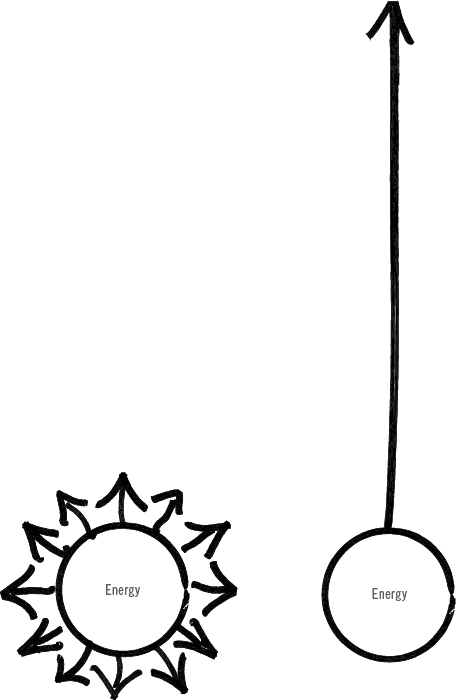 Figure 1. Choices