“Be ye therefore perfect, even as your Father which is in heaven is perfect” (Matt. 5:48).
Perfectionism has been a frequent topic of interest to members of The Church of Jesus Christ of Latter-day Saints. In official Church material and in other sources aimed at a Latter-day Saint audience (such as podcasts and blogs), the problems of toxic perfectionism have continued to receive attention in scholarly and clinical literature. The concept has been addressed several times in general conference addresses, including by members of the Quorum of Twelve Apostles.1 The Church has produced official videos and articles for youth,2 young adults,3 and adults.4 The topic has been addressed officially at Brigham Young University5 and at BYU’s Education Week.6 It is often addressed in unofficial channels aimed at Latter-day Saints—both in faith-affirming7 and non-faith-affirming ways.8 Clearly, perfectionism is an issue that many believe is important for members of the Church to understand.
Even with regular and increasing emphasis that the scriptures, such as Matthew 5:48 quoted above, were never intended to infer the need for current flawlessness, some Christians, including Latter-day Saints, feel “self-loathing and misery-making”9 when they make any mistake. Some individuals perceive the high standards of many religions as a natural source of toxic perfectionism. Although religions are not the only source of high standards and expectations, most religions do indeed encourage members to live up to high standards. An argument often heard is that religion’s standards, when coupled with teachings that speak of eternal consequences for our thoughts and actions, are a powerful source of toxic perfectionism. High standards, even if intended as aspirational, can be interpreted by some as what is necessary now and that we should harshly judge ourselves and others if mistakes are made. And this is particularly problematic given few of us fully live up to our personally set standards (religious or otherwise).
Some see high standards that are attached to perceived serious consequences as a recipe for toxic perfectionism. Indeed, most of us know some religious individuals who suffer from toxic perfectionism: those of us who are religious have likely, at some point, felt burdened by some religious standards. This seems to affirm the conclusion of many that religion and toxic perfectionism go hand in hand. However, as discussed in “Understanding Perfectionism” herein, high standards are not the defining characteristic of toxic perfectionism; instead it’s feeling worthless when we make mistakes. Conversely, healthy perfectionism includes having high standards for oneself. The question about religion and perfectionism is, therefore, not about the standards of a religion but rather about whether not meeting those standards creates feelings of worthlessness. While there certainly are religious individuals who experience toxic perfectionism, do the majority of religious people experience toxic perfectionism? Another important question is how do religious individuals compare to nonreligious individuals?
Further, are there some religious denominations that seem to have more toxic perfectionism among their members? For some, this may feel like a logical conclusion. But is it true? And what is the direction of causation? Does increased religiosity lead to more toxic perfectionism? Or does toxic perfectionism impact a person’s religiosity? This article will seek to address these questions using both past and current research with a special focus on perfectionism among Latter-day Saints.
Perfectionism Versus Obsessive-Compulsive Disorder
Before looking at past and current research into perfectionism and religion, it may be helpful to differentiate perfectionism from obsessive-compulsive disorder (OCD). Given that recent research has had much more to say about religion and OCD, it will be helpful to understand how OCD connects with perfectionism. In fact, it was surprising how little research has been done on perfectionism’s relationship with religion. Perfectionism has received significant attention from both the scholarly and clinical world. A search of the American Psychology Association’s (APA) database PsycINFO for the last twenty years produces a list of over four thousand peer-reviewed articles. The attention appears to be picking up, with over 60% of those articles being published in the last decade alone. However, far less attention has been given to the connection between perfectionism and religion. A search of that same database produced only 105 studies connecting the two constructs, and the majority of those were theological, theoretical, or primarily focused on OCD.
The APA has defined perfectionism as “the tendency to demand of others or of oneself an extremely high or even flawless level of performance, in excess of what is required by the situation.”10 However, when individuals hyper-focus on feelings of inadequacy because of their mistakes, it can also be a sign of obsessive-compulsive disorder. “Obsessive-compulsive disorder (OCD) is a disorder in which people have recurring, unwanted thoughts, ideas or sensations (obsessions).”11 There are several subtypes of OCD, including hoarding and fear of harm. In all cases of OCD, the obsessive thoughts usually lead to a drive to do something repetitively in order to overcome them. In the case of hoarding, a person feels compelled to keep even useless items; and in the case of fear of harm, a person may obsessively check to make sure doors are locked or the stove is off. Scrupulosity is another type of OCD, but one that is religiously oriented. “Scrupulosity is a subtype of obsessive-compulsive disorder . . . involving religious or moral obsessions. Scrupulous individuals are overly concerned that something they thought or did might be a sin or other violation of religious or moral doctrine.”12 For example, an individual with scrupulosity may say their evening prayer and get into bed but then have an obsessive thought that they did not pray quite right. They may then compulsively get out of bed to try again, which may repeat itself over and over, going on for quite some time.
Though perfectionism and OCD/scrupulosity have commonalities, they are not the same thing. Only OCD is included in the Diagnostic and Statistical Manual of Mental Disorders (DSM). In other words, OCD is considered a diagnosable mental health disorder, but scrupulosity is not. That does not mean scrupulosity does not impact mental health. Just as toxic perfectionism impacts mental health in negative ways, scrupulosity can likewise have a profound impact on mental health. So what is the relationship between them?
Like OCD, perfectionism can have religious or nonreligious overtones. While OCD is generally not related to unhealthy efforts to achieve, toxic perfection results from striving for a flawless performance and feeling worthless when mistakes are made. Though OCD/scrupulosity and perfectionism are not the same, a person may experience a combination of the two.13 One study found that toxic perfectionism may mediate the impact of causal factors on OCD,14 meaning that those things that cause OCD may do so because they increase perfectionism. In the study, negative parenting styles were related to greater toxic perfectionism, which, in turn, was related to more OCD symptoms.
Though research has shown a link between religiosity and OCD/scrupulosity, few studies have looked at how they are linked. One study examined this link by looking at three specific dysfunctional thought processes: (1) an inflated sense of responsibility and over-estimation of ability, (2) intolerance of uncertainty and perfectionism, and (3) an emphasis on the importance of and the need to control thoughts. The study found that these three thought processes mediated the relationship between religion and OCD/scrupulosity.15 Interestingly, perfectionism had the weakest association with OCD/scrupulosity, though it was still significant.
Research Findings on Religion and Perfectionism
Again, there has been far more research exploring the connection between OCD (especially scrupulosity) and religion than exploring the connection between perfectionism and religion. The rest of this article will examine the extant (currently published) research findings as well as research findings from the Foundations data to better understand the relationship between religion and perfectionism.
We will examine the two types of perfectionism spoken of in previous articles: discrepancy and social perfectionism. Discrepancy perfectionism is experiencing disappointment and dissatisfaction with even one’s best efforts. Social perfectionism is perceiving that only perfection is good enough, and so not living up to high standards will cause people to not respect or love the person. Unfortunately, the Foundations data did not measure healthy perfectionism (a desire to succeed or do well that leads to positive outcomes), so we focused instead on these two aspects of toxic perfectionism. However, past studies have found that Latter-day Saints often rate highly on healthy perfectionism.16
Our analysis focuses on two overarching aspects of religion: religious affiliation and religious dimensions. We divide religious affiliation into the following categories: Latter-day Saints, other Christian, other religions, “nones” who still believe in God, atheists and agnostics, former Latter-day Saints, and former members of any other religious denomination. The religious dimensions we examined include salience, attachment to God, intrinsic versus extrinsic religious orientation, religious coping, legalism, and attendance.
For our examination of both religious affiliation and religious dimensions, we started by looking at the relationship between religion and perfectionism in prior research where such literature exists (unfortunately, many aspects of religious affiliation and religious dimensions have not yet been researched). Then, using the Foundations survey data, we examined the relationship between religion and perfectionism. Finally, we investigated “chicken and egg” questions about perfection and religiosity over time. Beyond simply knowing that there is a connection between the two, these analyses will allow us to better understand whether perfectionism may impact religious dimensions, whether religious dimensions may impact perfectionism, or whether they mutually impact each other.
Religious Identity and Perfectionism
Prior Research
Very little research has looked at whether adherents of various religious denominations differ in toxic perfectionism. Several studies look at OCD or scrupulosity across religious denominations, some of which include perfectionism, though not usually as the primary purpose of the study. Out of all the studies, only a few compare religious denominations’ influence on perfectionism, and none look at perfectionism’s influence on religious denominational membership. Most draw their sample from a specific denomination rather than looking at how denomination may or may not influence perfectionism. Interestingly, members of The Church of Jesus Christ of Latter-day Saints make up a good share of these studies based on specific denominational samples.
Kawika Allen from BYU and Kenneth Wang from the Fuller Theological Seminary are two prominent researchers who have looked at Latter-day Saints. In two separate studies examining scrupulosity and perfectionism, they found that the majority of Latter-day Saints have high levels of healthy perfectionism (the kind of perfectionism that connects with higher levels of well-being).17 However, given they surveyed only Latter-day Saints, it is not clear if similar levels of perfectionism may be found in other denominations. One study of college students (not necessarily Latter-day Saints) by Jeffrey Ashby and Judy Huffman found that the more religious students were, the higher their religious perfectionism—meaning they had and strove to live up to high standards, but they didn’t suffer from discrepancy perfectionism.18
There was a minority of Latter-day Saint participants in the Allen and Wang studies that did experience toxic perfectionism, and Allen and Wang found that scrupulosity partially mediated the relationship between toxic perfectionism and its negative outcomes of depression, anxiety, and life satisfaction. In other words, it appears that toxic perfectionism may relate to poorer mental health primarily because it increases the likelihood a person will experience scrupulosity (OCD connected to religious activities and beliefs). A later study also showed that toxic perfectionism was positively associated with scrupulosity for Latter-day Saints and that both were associated with feeling anxiety about one’s relationship with God.19
Another study by Marleen Williams compared Latter-day Saint women with Protestant women on levels of perfectionism as well as attitudes about family and depression.20 The researchers found no difference in levels of perfectionism between the two groups. However, they did find that perfectionism correlated to higher levels of depression for both groups of women.
Finally, two other studies compared religious denominations on measures of OCD and scrupulosity.21 Neither study had much to say about perfectionism. They both found that Catholics had higher levels of either OCD or scrupulosity than Protestants, Jews, and those with no religion. However, a separate study found the inverse: that Catholics had lower levels of scrupulosity.22
Our Findings
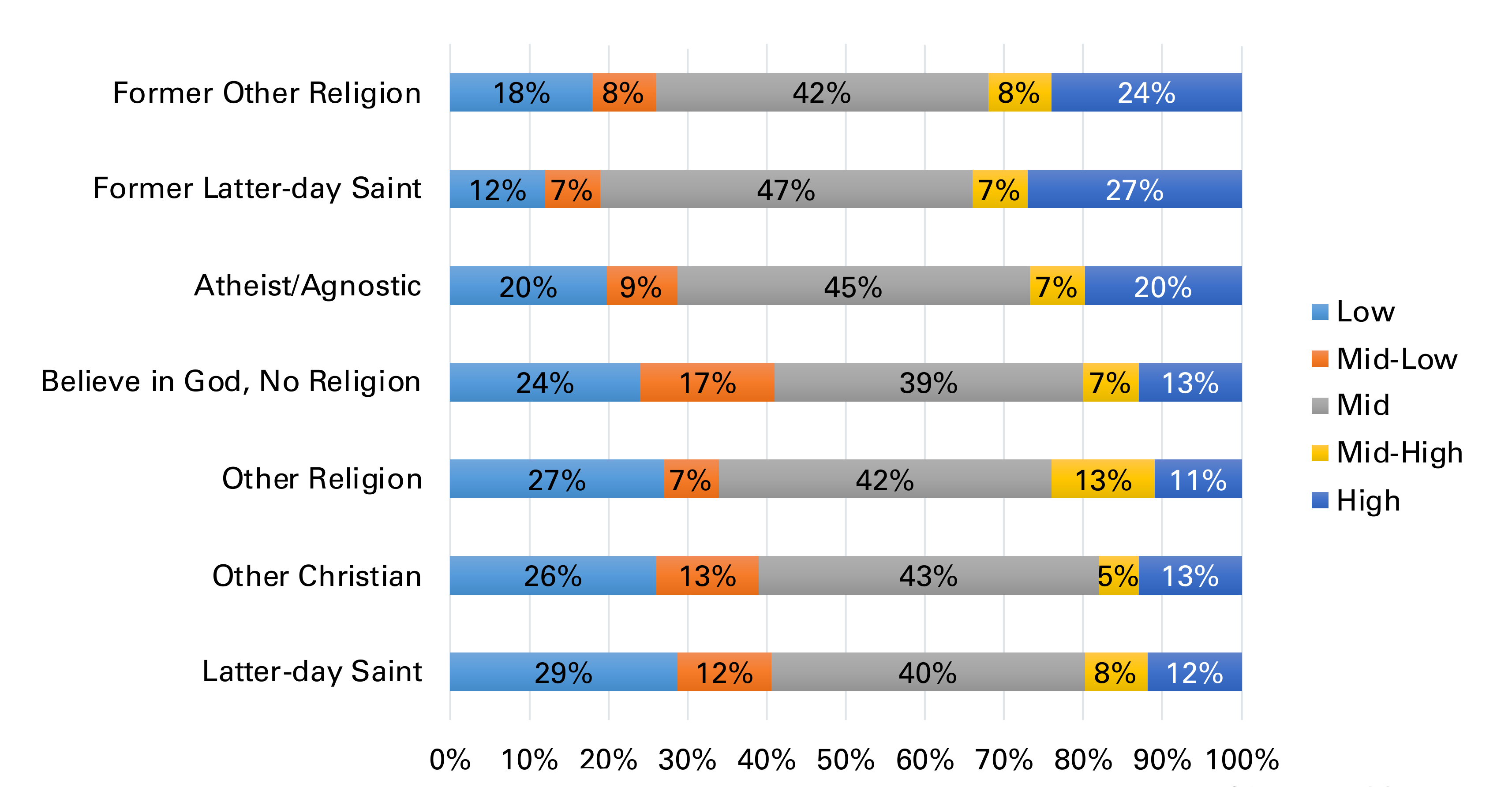
Unfortunately, this scant research tells us little about how individuals of various religions may differ in their perfectionism. And there is no research we are aware of that compares the perfectionism of religious and nonreligious individuals. The Foundations data therefore provides us with the most detailed look at religion and perfectionism to date (details of the analyses can be found in the appendix). Figure 1 shows a detailed comparison of how individuals from various religious (or nonreligious) affiliations compare when it comes to perfectionism.
Figure 1. Perfectionism (Socially, Prescribed, and Discrepancy) by Religious Identity.
Perfectionism as measured includes both discrepancy and social perfectionism. Discrepancy and social perfectionism were combined to show whether individuals were low on both types (low), low on one type and mid on the other (mid-low), mid on both types (mid), mid on one type and high on the other (mid-high), or high on both types (high). In this figure are (1) current Latter-day Saints, (2) those who are of other Christian religions (Catholics and Protestants, for example), (3) those of other religions (Jews, Muslims, and so forth), (4) those who believe in God but don’t affiliate with a religion, (5) atheists and agnostics, and finally (6) former Latter-day Saints and (7) former members of other religions. Individuals of this last category were not affiliated with any religion at the time of the study. For example, a Latter-day Saint turned Catholic would be included in the “Other Christian” category but a Latter-day Saint who was not affiliated with any religion would be included as “Former Latter-day Saint.”
The first four religious identities in figure 1 had very similar levels of toxic perfectionism. Regarding the last three, former Latter-day Saints and former members of other religions track closely with atheists and agnostics on perfectionism. Of everyone, Latter-day Saints were the most likely to be low on both types of toxic perfectionism. While the difference between them and members of other denominations (as well as those who believe in God but who were unaffiliated) was not statistically significant, Latter-day Saints and those of “Other Religions” were statistically more likely to have low levels of toxic perfectionism than atheists and agnostics and former Latter-day Saints. Regarding those who were most likely to have high levels of toxic perfectionism, former Latter-day Saints were significantly higher than both current Latter-day Saints and other Christians.
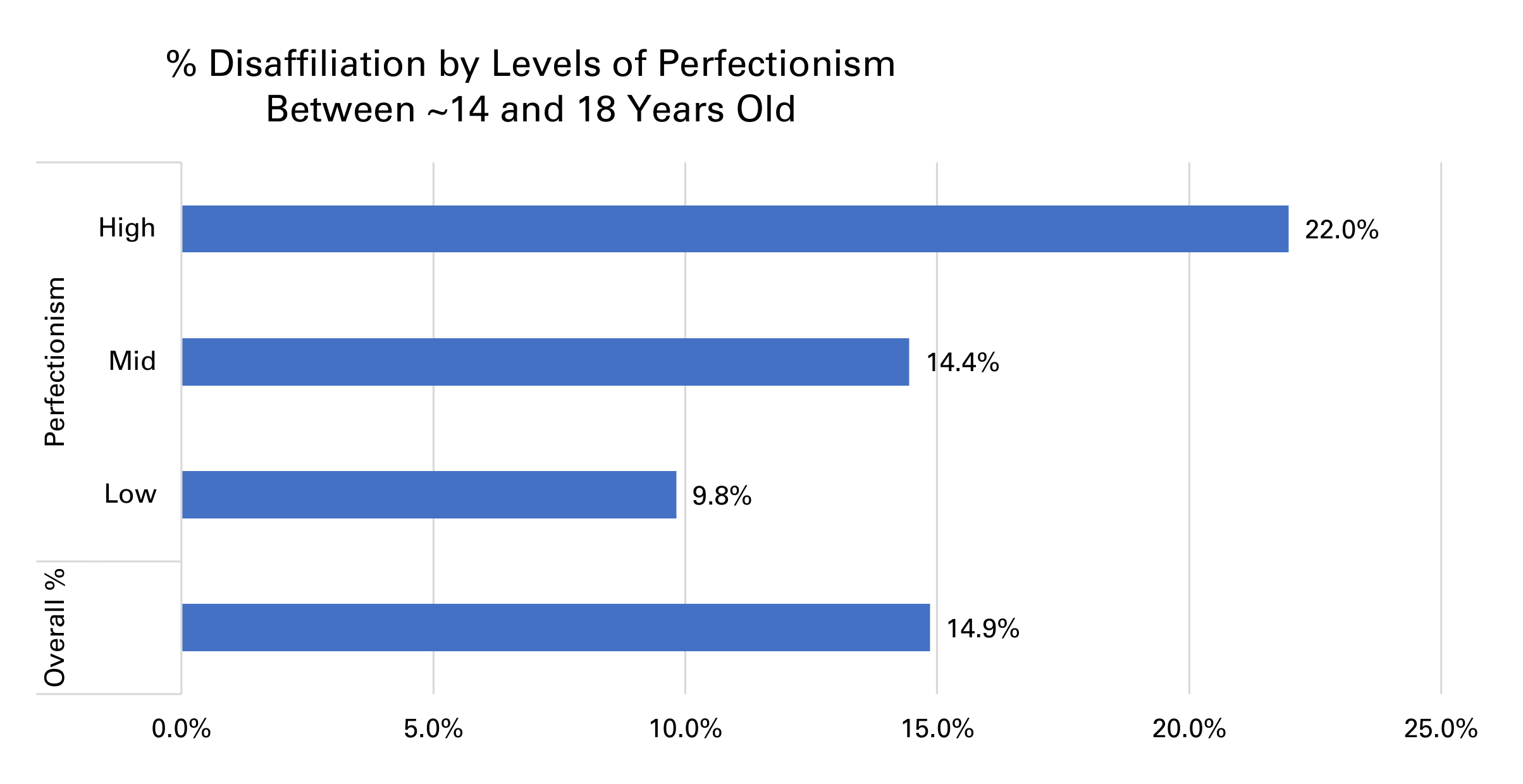
Figure 2 shows that individuals with higher levels of toxic perfectionism were far more likely to disaffiliate from their religious denomination than those who had low levels of toxic perfectionism. In fact, those with high levels of toxic perfectionism were more than twice as likely to disaffiliate than those with low toxic perfectionism.
Figure 2. Percent Disaffiliation by Levels of Perfectionism Between the Average Ages of Fourteen and Eighteen Years Old.
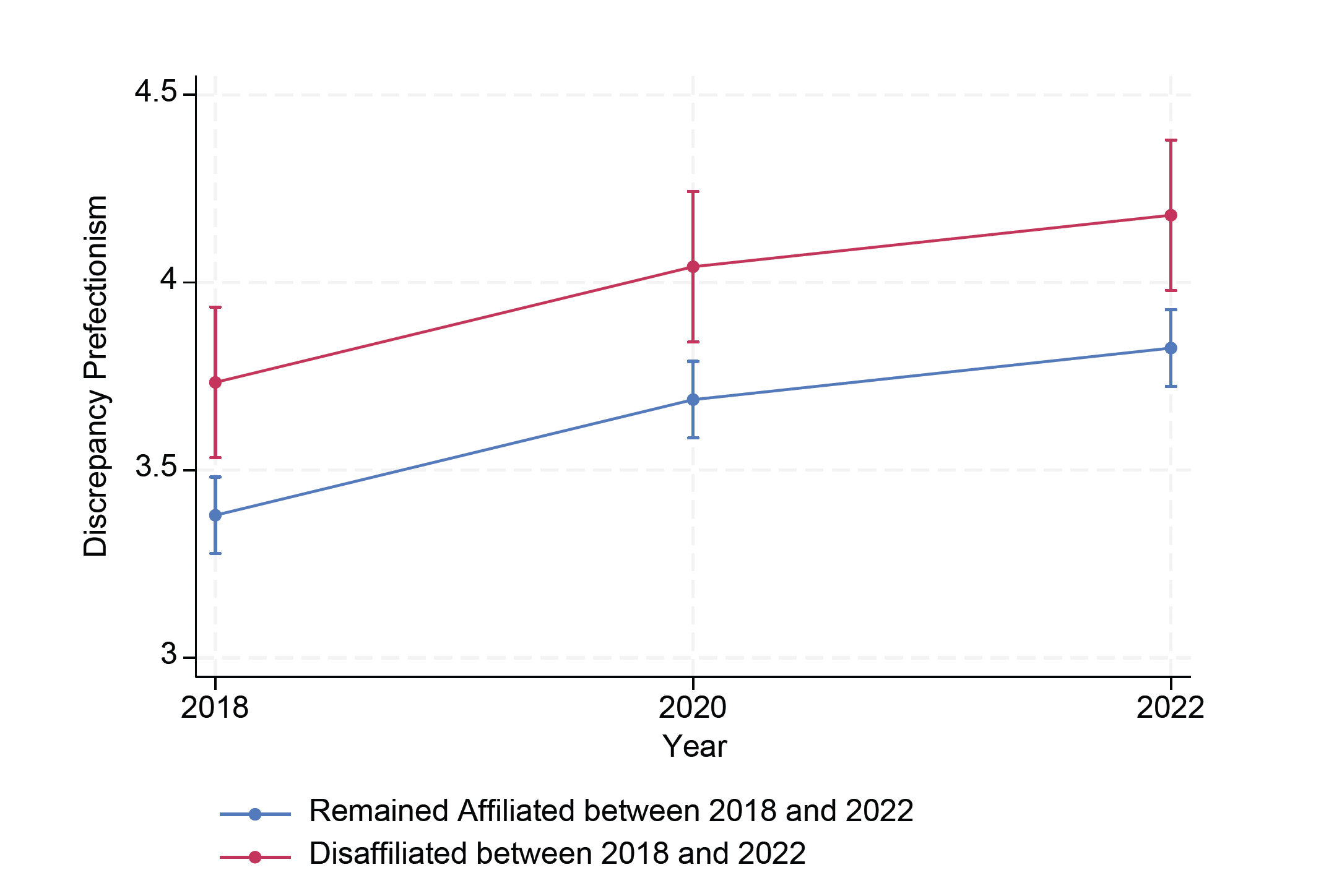
To get a sense of whether disaffiliation led to perfectionism or whether perfectionism led to disaffiliation (“chicken and egg” analyses), we examined the perfectionism of those who were disaffiliated between 2018 and 2022 (Waves 2 and 4 of the Foundations project). For discrepancy perfectionism, we found that those who disaffiliated were higher on discrepancy before and after they disaffiliated compared to those who remained affiliated. In other words, disaffiliation didn’t seem to increase or decrease their perfectionism.
Figure 3. Discrepancy Perfectionism over Time by Disaffiliation.
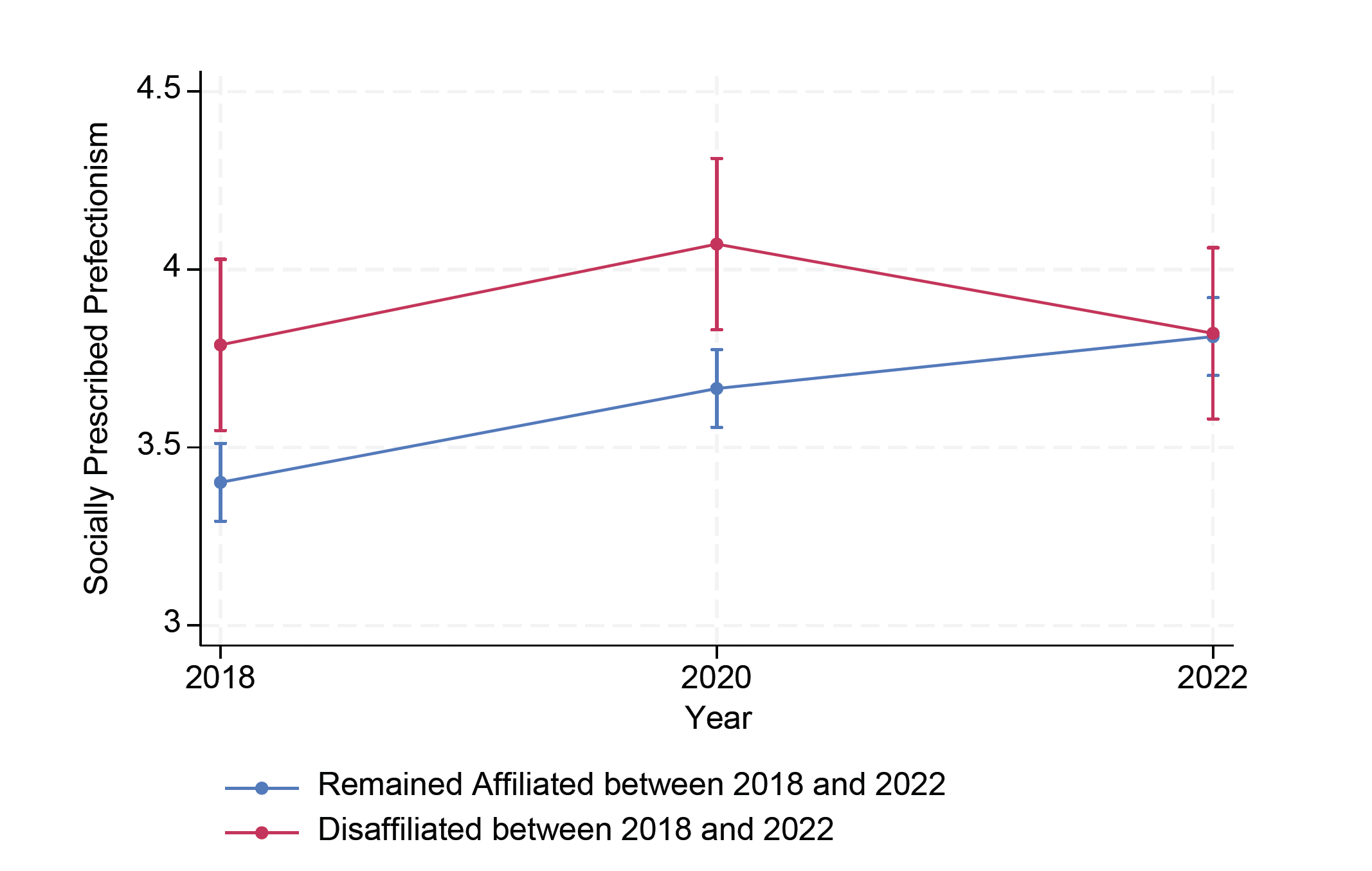
Socially prescribed perfectionism was something of a different story. Those who disaffiliated, meaning they were not currently affiliated with any religion, were significantly higher in socially prescribed perfectionism in 2018 and 2020. However, their socially prescribed perfectionism decreased from 2020 to 2022. Although it’s difficult to determine whether this is causal, it may be that by leaving their religion, they no longer affiliated with individuals who they felt were judging them harshly. Whatever the case may be, higher levels of perfectionism are connected to leaving one’s religion.
Figure 4. Socially Prescribed Perfectionism over Time by Disaffiliation.
Intrinsic Versus Extrinsic Religiosity
Prior Research
Perhaps the aspect of religion most frequently studied in relation to perfectionism is whether a person is more intrinsically or extrinsically motivated to be religious. Interestingly, most of these studies have focused on Latter-day Saints. An intrinsic approach to religion is one where “religious practice is an end itself, rather than a means to other ends,” as opposed to an extrinsic approach to religion, which is “a religious orientation in which religiosity is largely a means to other ends, such as social morality or individual well-being, rather than an end in itself.”23 Thus, an intrinsically motivated youth goes to church or reads scriptures or obeys commandments because they see such actions as fulfilling and correct in themselves. This youth would do these things without outside influences. An extrinsically motivated youth may do the same things, but they do so in hopes that such actions will bring about some other good in their life, such as peer acceptance or the bestowal of blessings (or avoidance of negative consequences, such as a parent getting mad at them). Six separate studies using nine separate samples examined the relationship between Latter-day Saint perfectionism in relation to intrinsic and extrinsic religiosity.
One of the earliest studies looking at these issues found that intrinsic religiosity was significantly associated with healthy perfectionism, while extrinsic religiosity was significantly associated with toxic religiosity.24 Results suggested that extrinsic religiosity may lead to (or be related to) a person being inflexible in their thinking, with that inflexibility leading to toxic perfectionism (see “Healing from Toxic Perfectionism,” pp. 133–41, for an extended discussion on how flexible thinking can reduce toxic perfectionism).
Similarly, a study of two separate samples of Latter-day Saint undergraduates found that the greater a student’s intrinsic religiosity, the less toxic perfectionism they had, while the more extrinsically motivated they were, the greater their toxic perfectionism.25 In a third study using three separate samples of Brigham Young University students, researchers found intrinsic religiosity, as well as spiritual maturity and self-transcendence, to be predictive of better mental health while at the same time not being predictive of shame, perfectionism, or eating disorders.26
A mixed-method study found that active Latter-day Saints were more likely to be intrinsically motivated than extrinsically motivated in following their religious standards and that such an orientation was associated with healthy rather than toxic perfectionism.27
This research suggests that religious expectations among active Latter-day Saints may be predominately internal rather than external. High levels of Latter-day Saint religiosity were related to lower levels of self- and other-oriented perfectionism (though not socially prescribed perfectionism). Beyond replicating prior evidence that higher Latter-day Saint religiosity predicts greater adaptive perfectionism,28 these quantitative results further evince that devout Latter-day Saints may be more intrinsically motivated, rather than externally or socially motivated, to follow religious standards. These results echo earlier findings by Allen and Wang29 that perfectionism in active Latter-day Saints is more—but not solely—likely to be healthy rather than toxic.
Another study of Latter-day Saint undergraduates at BYU examined the impact of intrinsic religiosity on seeking help for mental health. Researchers found that higher levels of intrinsic religiosity predicted more seeking help from religious sources and was related to healthy perfectionism but not toxic perfectionism.30 Finally, in the study of BYU students previously referenced above, researchers found that toxic perfectionism was significantly related to more scrupulosity and anxiety about God. It also found that higher levels of toxic perfectionism were associated with lower levels of intrinsic religiosity.31 In other words, higher levels of intrinsic religiosity were related to less toxic perfectionism and less scrupulosity.
Our Data
We used the three constructs drawn from self-determination theory to measure intrinsic and extrinsic religious motivation.32Identified regulation is related to acting because we believe it is right and value it (that is, intrinsic motivation). External regulation is concerned with how other people will see us (that is, extrinsic motivation). Introjected regulation is the fear of failure or not measuring up (that is, intrinsically motivated, though in a negative way). We also found each aspect of motivation associated with perfectionism in the expected ways: Correlations found that those high in external and introjected regulation were likely to have high levels of toxic perfectionism. Conversely, those high in identified regulation were less likely to have high toxic perfectionism.
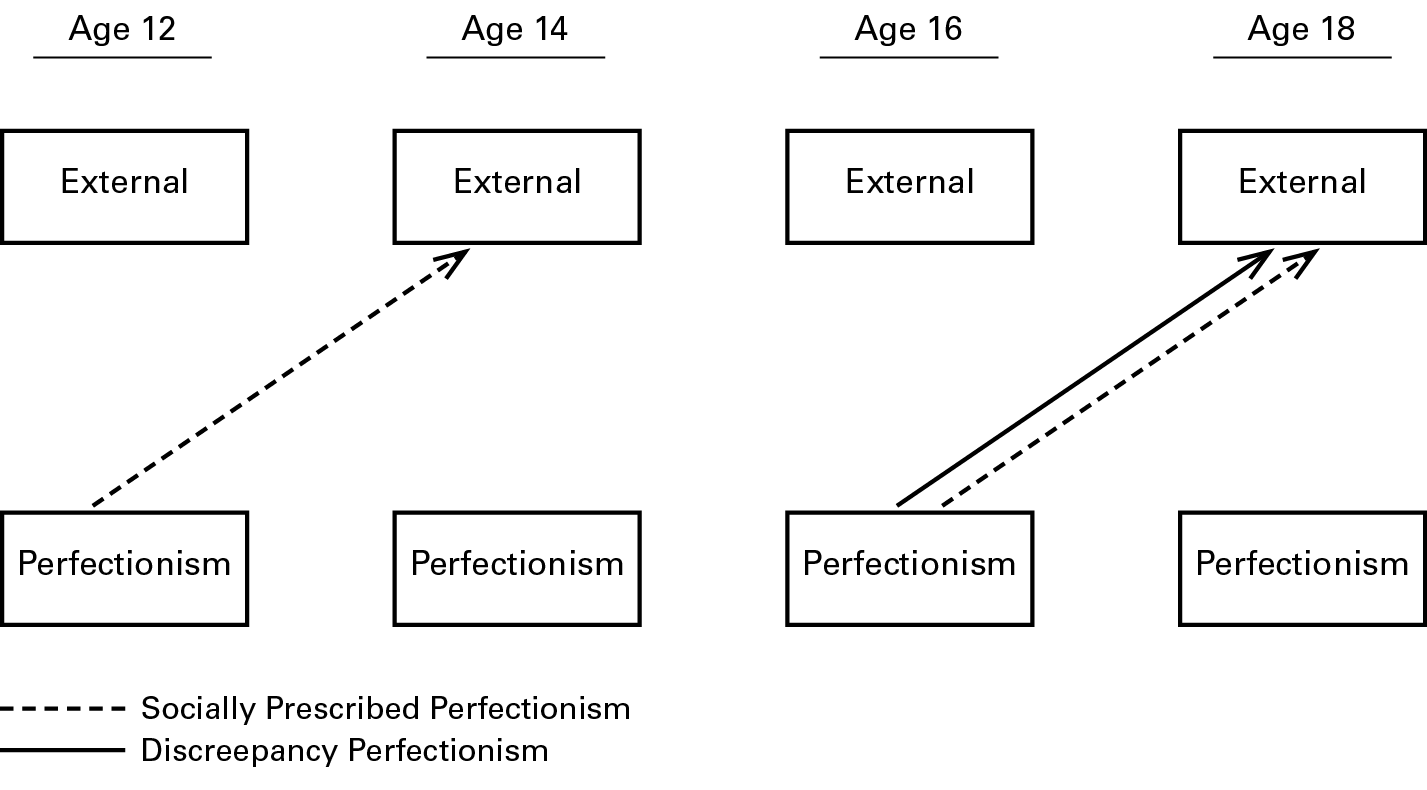
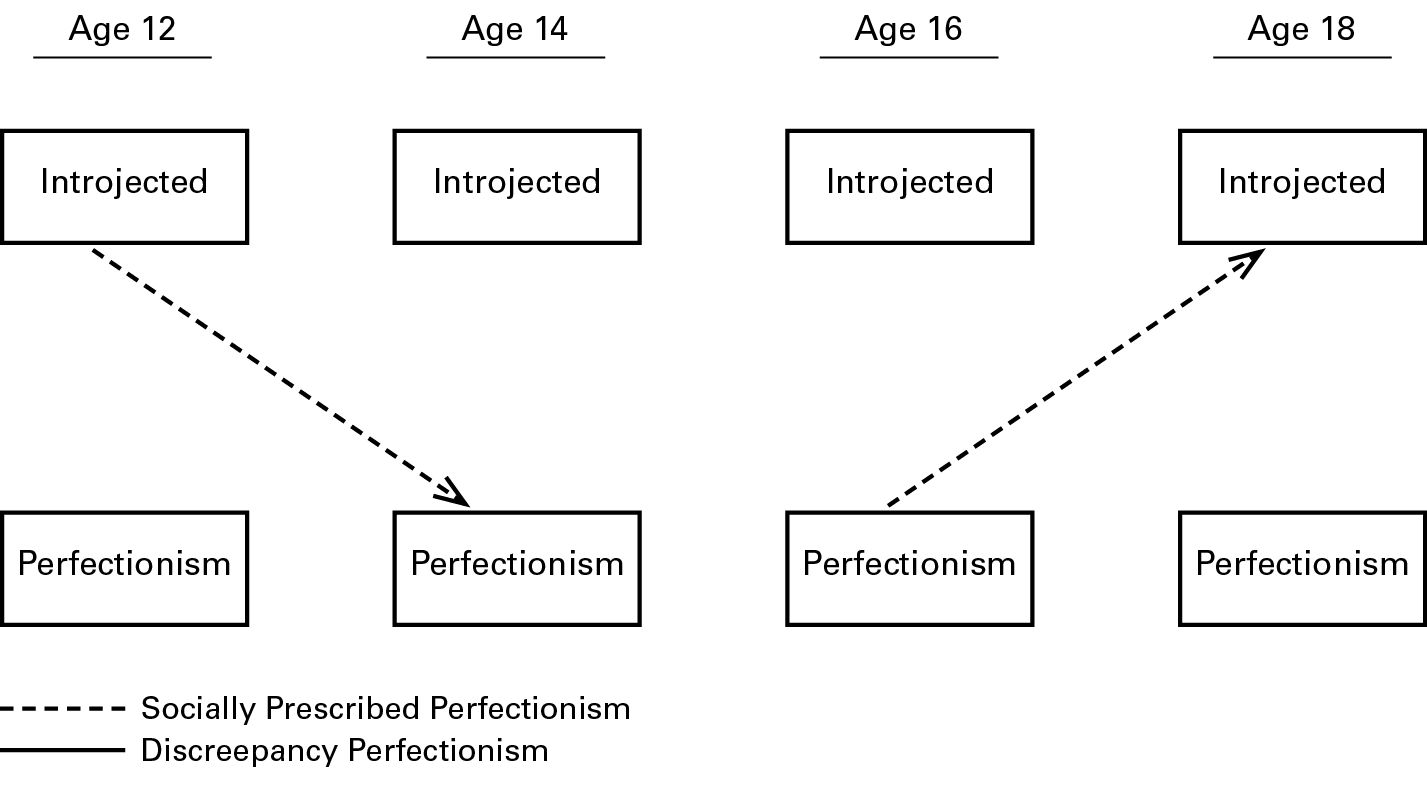
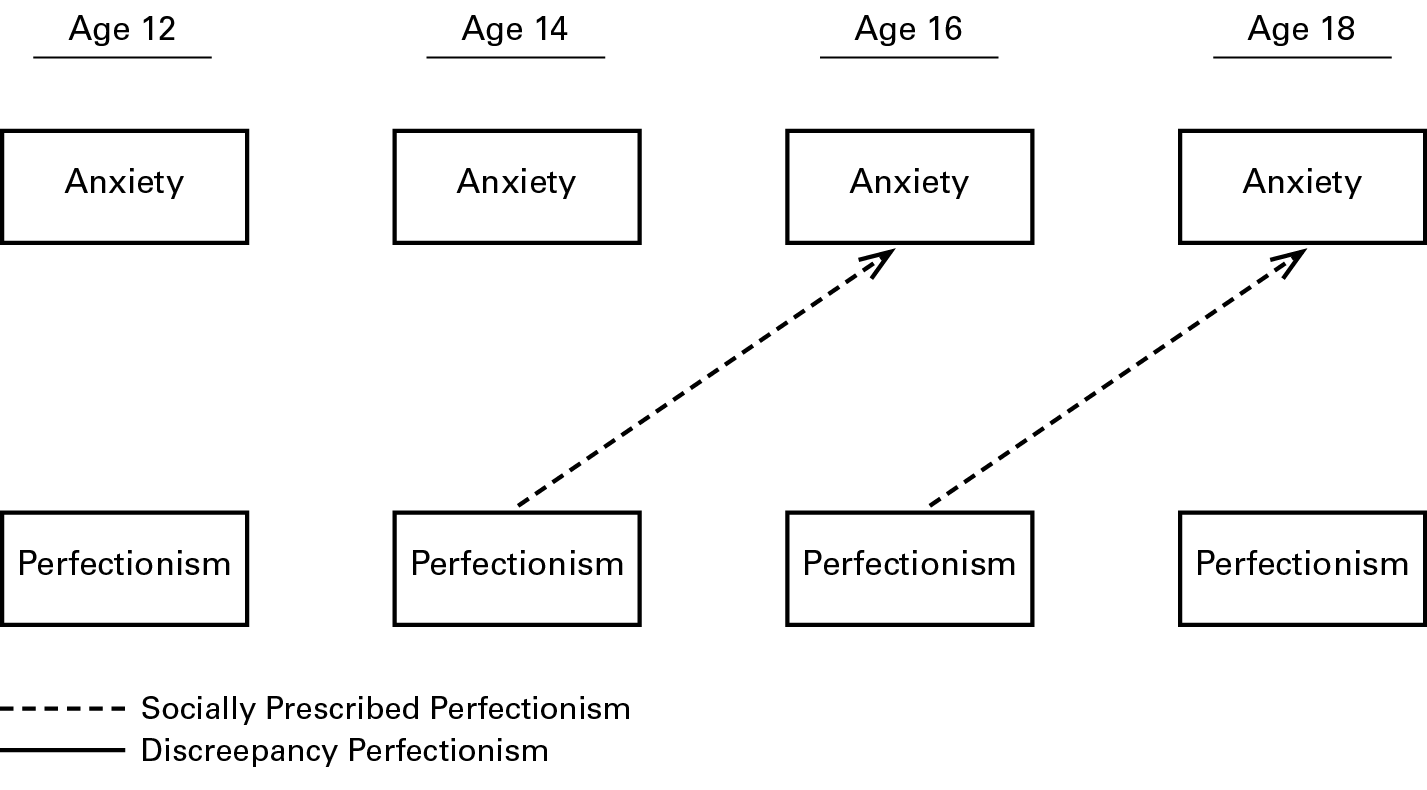
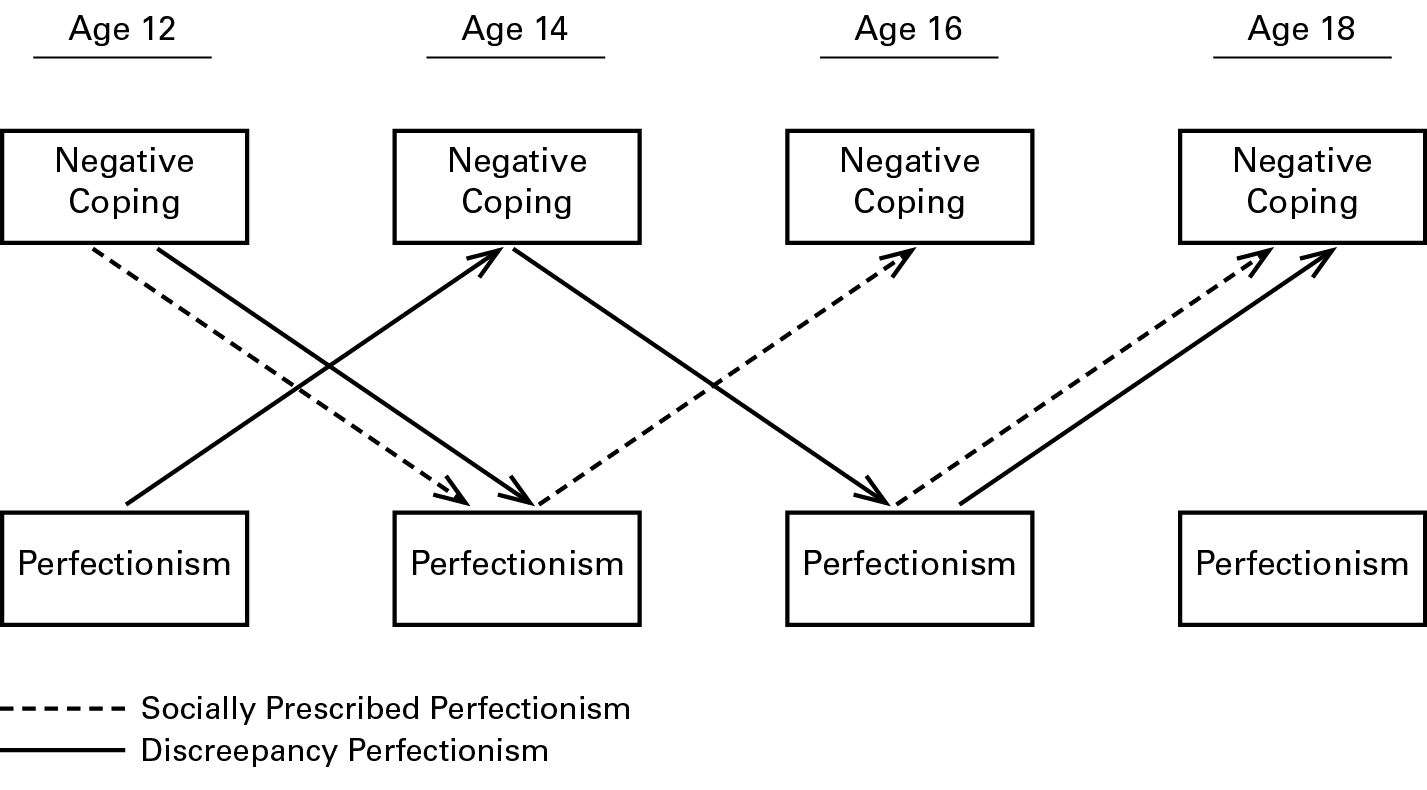
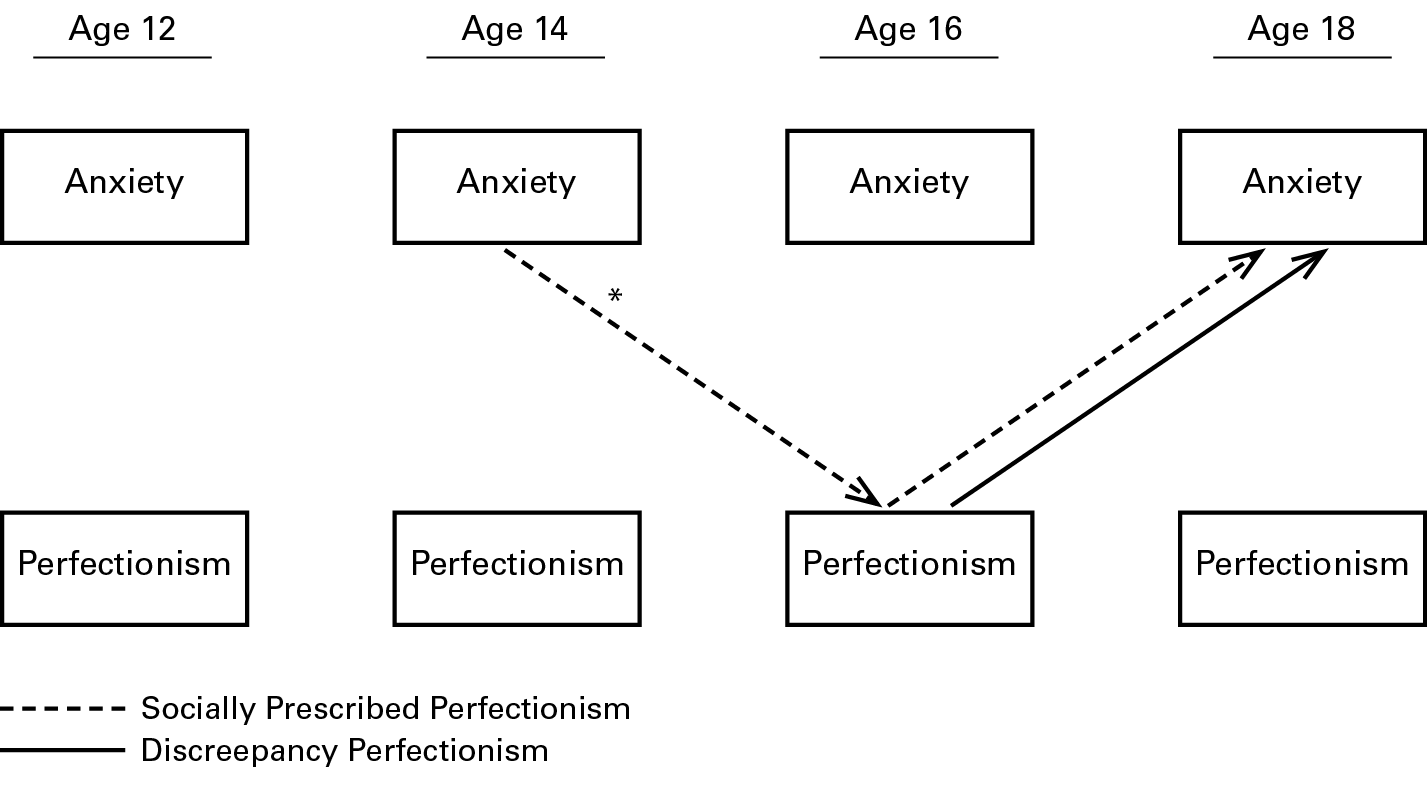
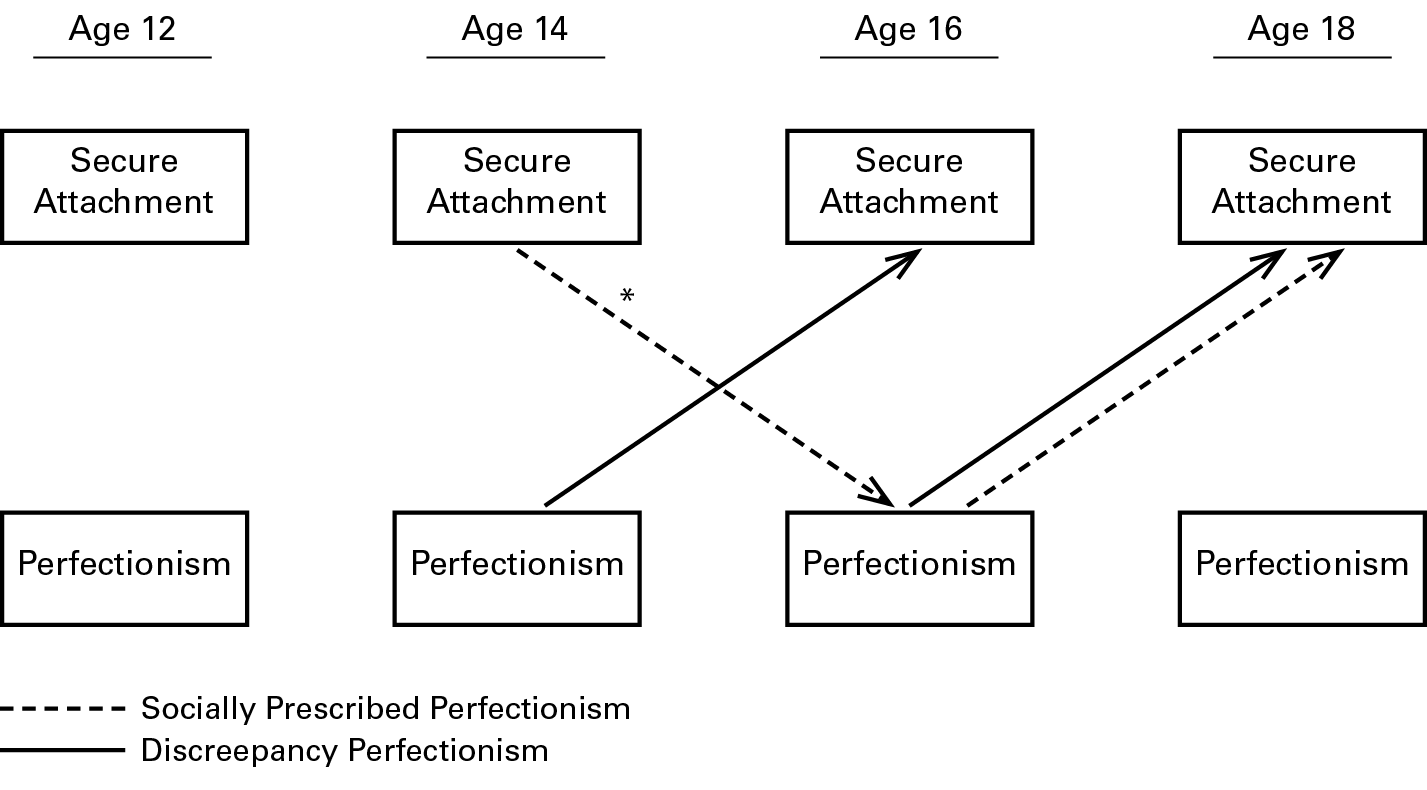
The following three charts, figures 5, 6, and 8, show the results of our “chicken and egg” analyses, examining whether the various religious motivations (external, introjected, and identified) affect perfectionism or whether perfectionism affects religious motivations. In this and each figure looking at religiosity constructs and perfection over time, solid arrows represent a relationship between mental health and discrepancy perfectionism, whereas dashed arrows represent a relationship between mental health and socially prescribed perfectionism, often called social perfectionism.
Figure 5. External Regulation and Perfectionism over Time.
Figure 6. Introjected Regulation and Perfectionism over Time.
We found that the relationship between social perfectionism and externalized regulation flowed in a single direction, from perfectionism to greater external regulation (age twelve to fourteen and age sixteen to eighteen). Discrepancy perfectionism at age sixteen was related to more external regulation at age eighteen. In other words, the more social and discrepancy perfectionism youth experience, the more likely they are to develop motivations for going to church that are purely to please others.
Social perfectionism and introjected regulation had a reciprocal influence on each other at older ages. What makes this interesting is that introjected regulation has discrepancy perfectionism as part of its definition, which leads to the question of why there was no relationship between the two over time, unless they were simply so highly correlated that one could not be differentiated from the other.
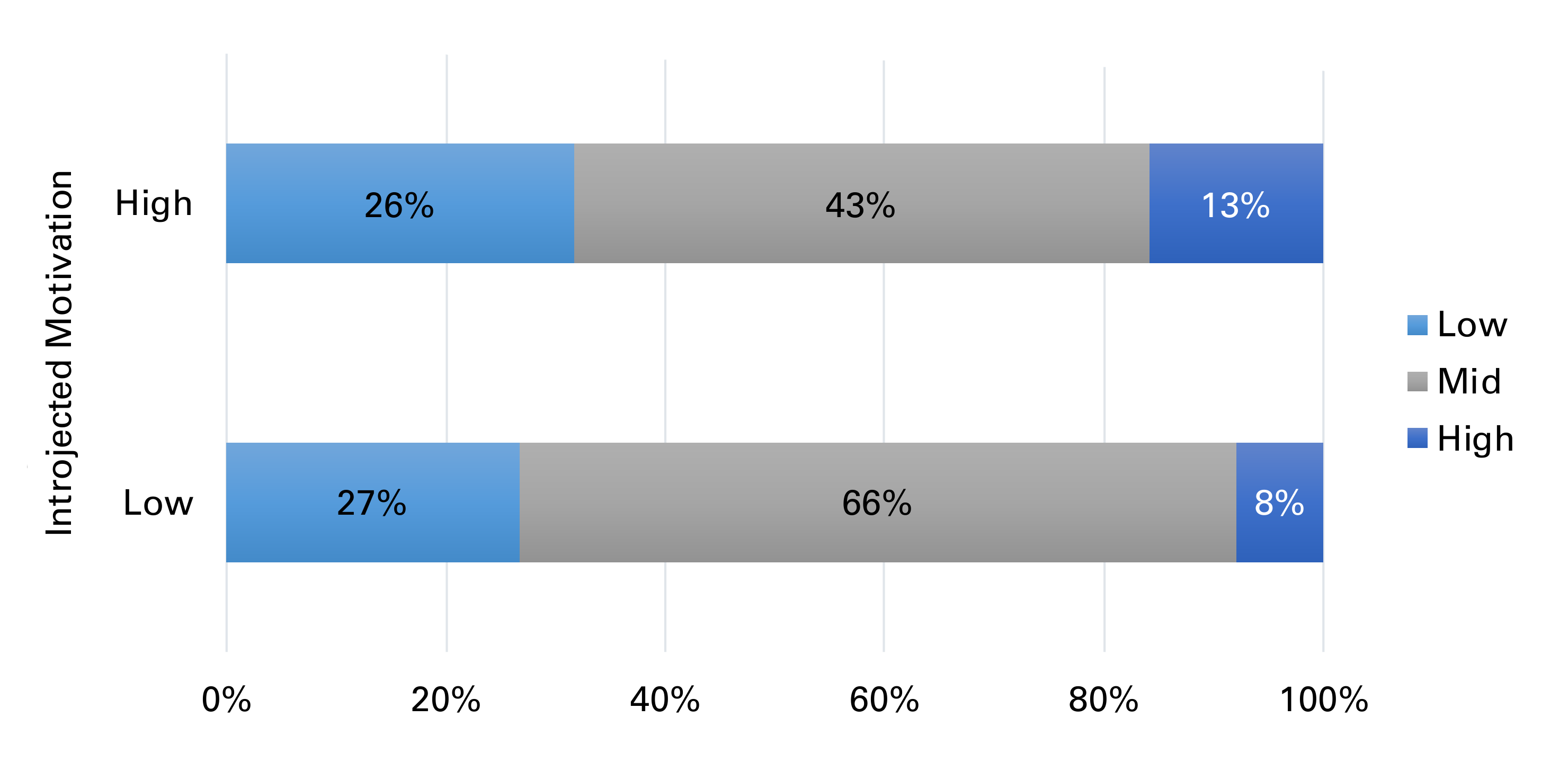
Before moving on to the relationship between identified regulation, let’s examine the relationship between introjected regulation and the combination of discrepancy and social perfectionism. As can be seen in figure 7, those with low levels of introjected regulation were almost twice as likely to be in the lower category of overall toxic perfectionism and more than twice as likely to be in the higher category of overall toxic perfectionism. In fact, one in five of those high in perfectionism were also motivated by shame to be religious (that is, introjected motivation). This speaks to individuals who are fearful of the judgments of others and likely experience their religion as highly stressful.
Figure 7. Youth Perfectionism by Introjected Motivation
Finally, as can be seen in figure 8, the direction of influence between identified regulation and discrepancy perfectionism was such that identified regulation was related to lower levels of discrepancy perfectionism in mid-adolescence, and greater discrepancy perfectionism was related to lower levels of social perfectionism in late adolescence.
Figure 8. Identified Motivation and Perfectionism over Time.
* The line from identified motivation to socially prescribed perfectionism indicates that the more identified the motivation at age fourteen, the greater the socially prescribed perfectionism at age sixteen, something counter to hypotheses. However, this is an artifact of those who have high levels of identified motivation and are very low on socially prescribed perfectionism at age fourteen. Because they start so low on the scale, there is nowhere for them to go but up. Even though those high on identified motivation increase more from age fourteen to sixteen, they are still lower in socially prescribed perfectionism than those who are low on identified motivation. All other pathways are as expected: greater identified motivation related to a decrease in discrepancy perfectionism (age fourteen to sixteen) and greater discrepancy perfectionism leading to lower identified motivation (age sixteen to eighteen).
Religious Salience
Prior Research
A regularly studied aspect of religiosity is religious salience. Religious salience is the importance a person places on religion in their life. It includes how religion impacts an individual’s beliefs and behaviors. In relation to perfectionism, it could be asked whether the degree of perfectionism (toxic or adaptive) is different for people who consider religion to be an important part of their lives. In other words, are people whose religion permeates their lives at greater risk for perfectionism? Little extant research has investigated the relationship of religious salience to perfectionism. In a study mentioned above, the strength of faith was measured and was related to higher symptoms of scrupulosity (a related though distinct construct from toxic perfectionism).33 Strength of faith is a concept related to the depth and intensity of a person’s religious faith, which is highly related to, though somewhat different from, religious salience. Thus, some previous research suggests there may be a connection between religious salience and toxic perfectionism.
Our Data
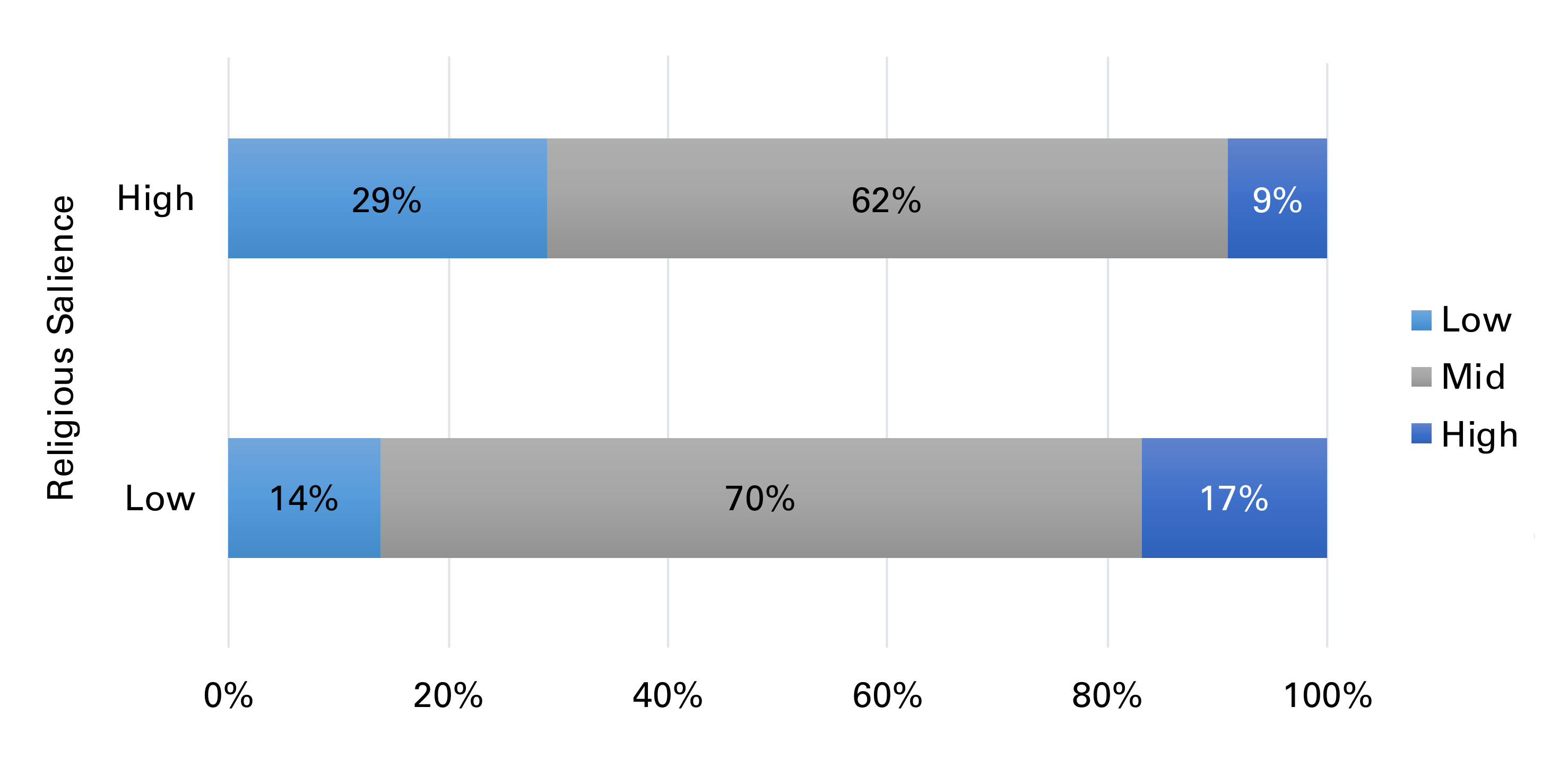
Figure 9 shows a large difference in toxic perfectionism between those who have high and low religious salience. Those individuals with low religious salience were approximately twice as likely to experience high levels of toxic perfectionism. They were also half as likely to have low levels of perfectionism. Because our data are longitudinal, we can look at the possible direction of influence between religion and perfectionism. Without an experimental design, it is not fully possible to claim causation. However, due to the longitudinal nature of the data, we can examine which construct (religiosity or perfectionism) precedes which. That is, does salience decrease perfectionism, or does perfectionism decrease salience? This is our “chicken and egg” analysis as we try to determine what comes first. These analyses are critical because they can tell us where we should focus our efforts. If perfectionism causes lower salience, then we would want to target perfectionism. But if salience causes lower perfectionism, then we would want to target the salience to lower perfectionism.
Figure 9. Youth Perfectionism by Religious Salience
When we examined the relationship between perfectionism and salience, salience was related to perfectionism even after accounting for other religiousness variables. Higher levels of religious salience were associated with lower levels of toxic perfectionism. The strongest association was an inverse relationship between religious salience and high toxic perfectionism. The strength of this association was double the strength of the association between religious salience and low and medium levels of toxic perfectionism.
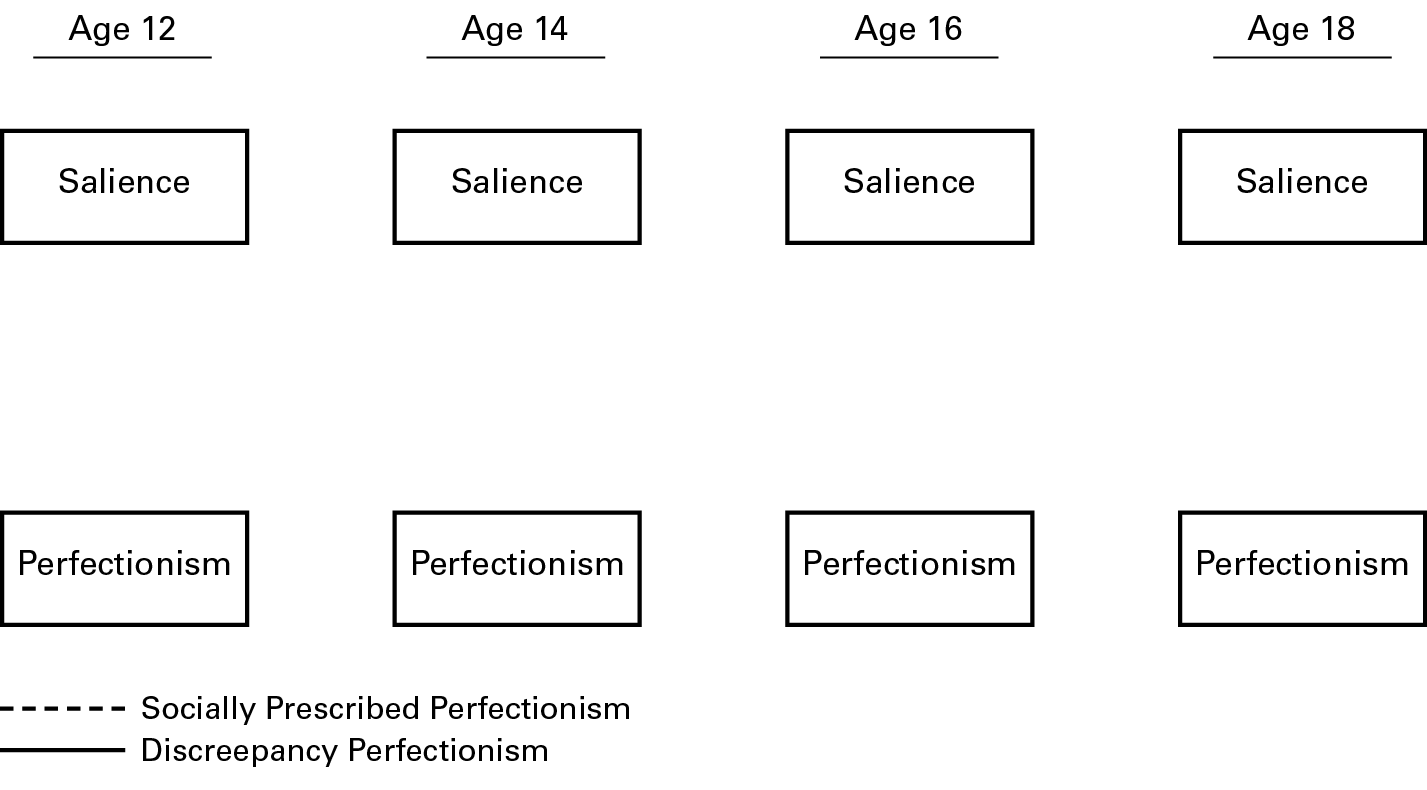
However, when we conducted a “chicken and egg” analysis (see fig. 10), there was no significant influence of religious salience on toxic perfectionism or vice versa. In other words, although there is a significant correlation between the two, they seem to simply “bundle together” rather than one causing the other.
Figure 10. Salience and Perfectionism over Time.
Legalism or Grace
Prior Research
A concerning aspect of a person’s religious experience is how “legalistic” they are in their thinking and beliefs. A person who has a legalistic attitude about their religion has a “strict, literal, or excessive conformity to the law or to a religious or moral code.”34 Legalistic individuals feel that God’s love, his help, and his influence cannot be experienced unless they are earned. And, for the legalistic person, the price for such divine help is very high. This contrasts with recognizing the grace of God, which can be defined as a “benevolent divine influence acting upon humanity to impart spiritual enrichment or purity, to inspire virtue, or to give strength to endure trial and resist temptation.”35 Through the perspective of the restored gospel, such help is available at any point in our journey and is something that is not earned, but received.36
One study of Latter-day Saint students examined the connection between legalism, grace, and perfectionism.37 Researchers found that experiencing grace related to more healthy perfectionism and less toxic perfectionism. Legalism was related to a lower likelihood of experiencing God’s grace and was also related to more anxiety, depression, and shame. It was clear from the survey findings that legalistic thinking (which does not acknowledge God’s grace) was related to substantial problems for Latter-day Saint students.
Our Data
In the Foundations data, those who were low in legalism were also likely to have low levels of toxic perfectionism. As can be seen in figure 11, over time legalistic toxic perfectionism was associated with more legalism in the older ages. In other words, as youth enter their mid- to late-teen years, their socially prescribed perfectionism is linked to increasing legalism.
Figure 11. Legalism and Perfectionism over Time.
Religious Coping
Prior Research
There was no prior research on the relationship between religious coping, whether positive or negative, with perfectionism. Yet these constructs seem likely to be related, as our data seems to indicate. By way of definition, the Encyclopedia of Behavioral Medicine defines religious coping as “religiously framed cognitive, emotional, or behavioral responses to stress, encompassing multiple methods and purposes as well as positive and negative dimensions.”38 Some individuals use religion to cope with life’s difficulties in positive ways, finding strength and purpose through their religious faith to help them overcome challenges. However, negative religious coping is defined as “encompass[ing] interpersonal, intrapersonal, and divine categories, including conflict with religious others, questioning, guilt, and perceived distance from or negative views of a higher power.” Positive religious coping “include[s] the collaborative style, benevolent reappraisal of the stressor, and seeking spiritual support from God, clergy, or members of one’s religious group.”39 A person who uses religion to cope with life’s difficulties in negative ways finds that their religious approach to overcoming challenges further exacerbates those challenges and leaves them feeling less able, rather than more able, to cope.
Our Data
When we examined the relationship between perfectionism and negative religious coping, negative religious coping was related to higher levels of toxic perfectionism even after accounting for other religiousness variables. In fact, it had the highest correlation of any religiosity construct. As shown in figure 12, those individuals with low levels of negative religious coping are more than ten times more likely to have low toxic perfectionism as well as ten times more likely to have high toxic perfectionism.
Figure 12. Youth Perfectionism by Negative Religious Coping.
And as can be seen in figure 13, negative religious coping and perfectionism (both discrepancy and social) reinforced each other throughout adolescence. However, in late adolescence (age sixteen to eighteen), it seems perfectionism was more likely to drive negative coping than negative coping was to drive perfectionism. In early adolescence (age twelve to fourteen), negative coping was related to increases in both kinds of toxic perfectionism.
Figure 13. Negative Religious Coping and Perfectionism over Time.
When we examined the relationship between perfectionism and positive religious coping, positive religious coping was related to lower levels of toxic perfectionism. However, when entered into regression analysis (a statistical test to better understand the relationship between two or more variables) with the other religiosity constructs, positive religious coping was no longer significantly related to perfectionism. However, as can be seen from figure 14, positive religious coping had a significant inverse relationship with toxic perfectionism in the middle ages of adolescents, and then, interestingly, toxic perfectionism seemed to encourage positive religious coping at age eighteen.
Figure 14. Positive Religious Coping and Perfectionism over Time.
* The line from positive coping at fourteen to perfectionism at sixteen indicates that the greater the positive coping, the greater the socially prescribed perfectionism. However, as with the identified analyses (fig. 8), this is an artifact of those with high positive coping having such low socially prescribed perfectionism at age fourteen that, statistically, they can only increase.
Attachment to God
Prior Research
It is unsurprising that negative or positive religious coping is related to how a person relates to God. Negative religious coping, by definition, includes “conflict with religious others, questioning, guilt, and perceived distance from or negative views of a higher power.”40
How an individual views God can have a profound impact on how they see his expectations of them. Attachment to God, like human attachment, refers to how secure (or insecure) we feel in our relationships. Secure attachments, whether to people or God, have been shown to be associated with greater psycho-social health and relationships that are close and rewarding. In the prior research, it is not always apparent which direction the influence goes, but the association is clear. In the aforementioned study of Brigham Young University students, it was found that toxic perfectionism was associated with anxiety concerning God. Though the data didn’t show this definitively, the person may feel anxious about God because they feel the discrepancy between their standards and their behavior.41 Another study involving BYU students found that those who view God as a harsh taskmaster experience more scrupulosity symptoms (different than but related to toxic perfectionism), while those who see God as a loving father experience fewer scrupulosity symptoms.42
Our Data
When we examined the relationship between perfectionism and secure attachment, secure attachment was related to lower levels of toxic perfectionism. As can be seen from figure 15, discrepancy perfectionism was related to a decreasing secure attachment from age fourteen to sixteen, and both discrepancy and social perfectionism were related to a decreasing secure attachment from age sixteen to eighteen. In other words, in mid- to late adolescence, our results suggest perfectionism may drive down a positive, warm relationship with God.
Figure 15. Secure Attachment and Perfectionism over Time.
* The line from secure attachment at fourteen to perfectionism at sixteen indicates that the greater the secure attachment, the greater the socially prescribed perfectionism. However, this is an artifact of those with high positive coping having such low socially prescribed perfectionism at age fourteen that, statistically, it can only increase (see also figs. 8 and 14).
Church Attendance
Prior Research
We were unable to find any prior research on the relationship between church attendance and perfectionism. This is true not only for church attendance but also for several other religious actions, such as prayer and scripture reading.
Our Data
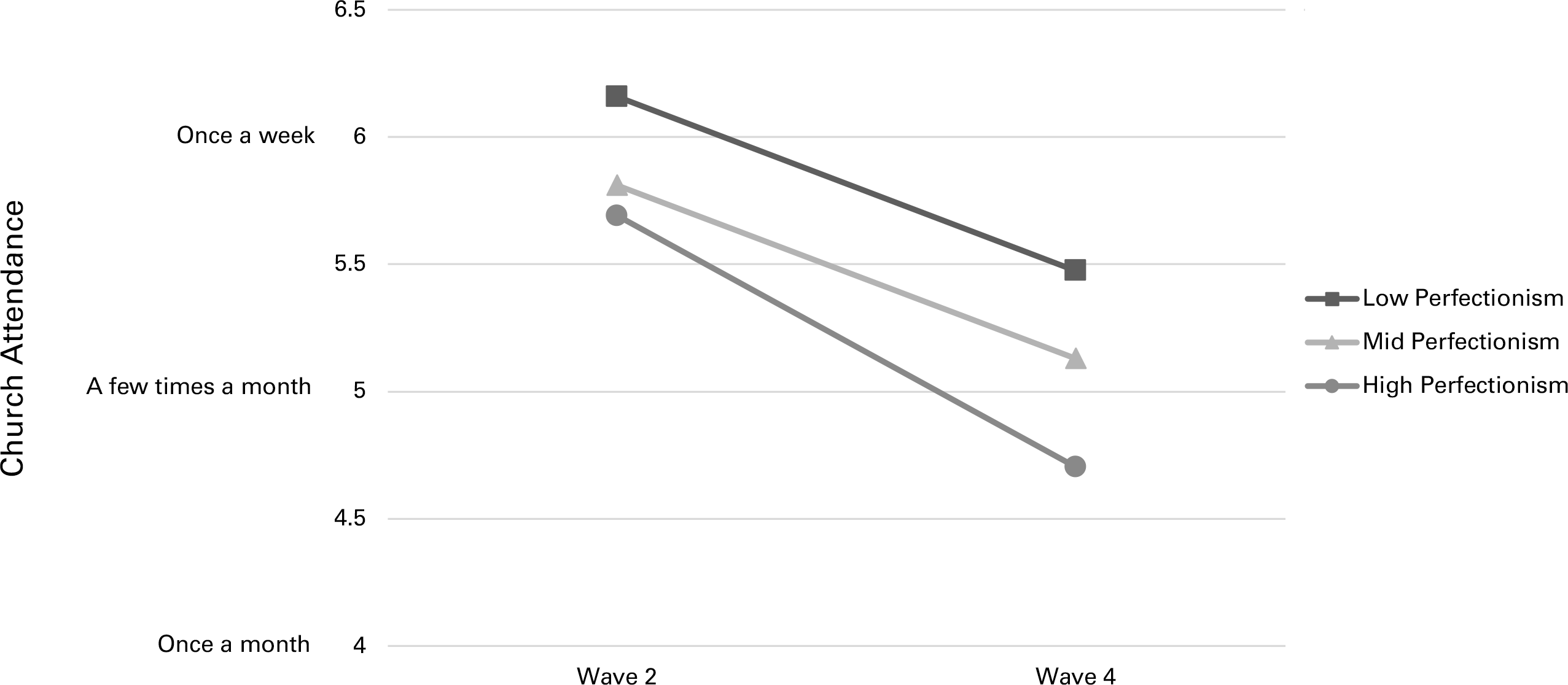
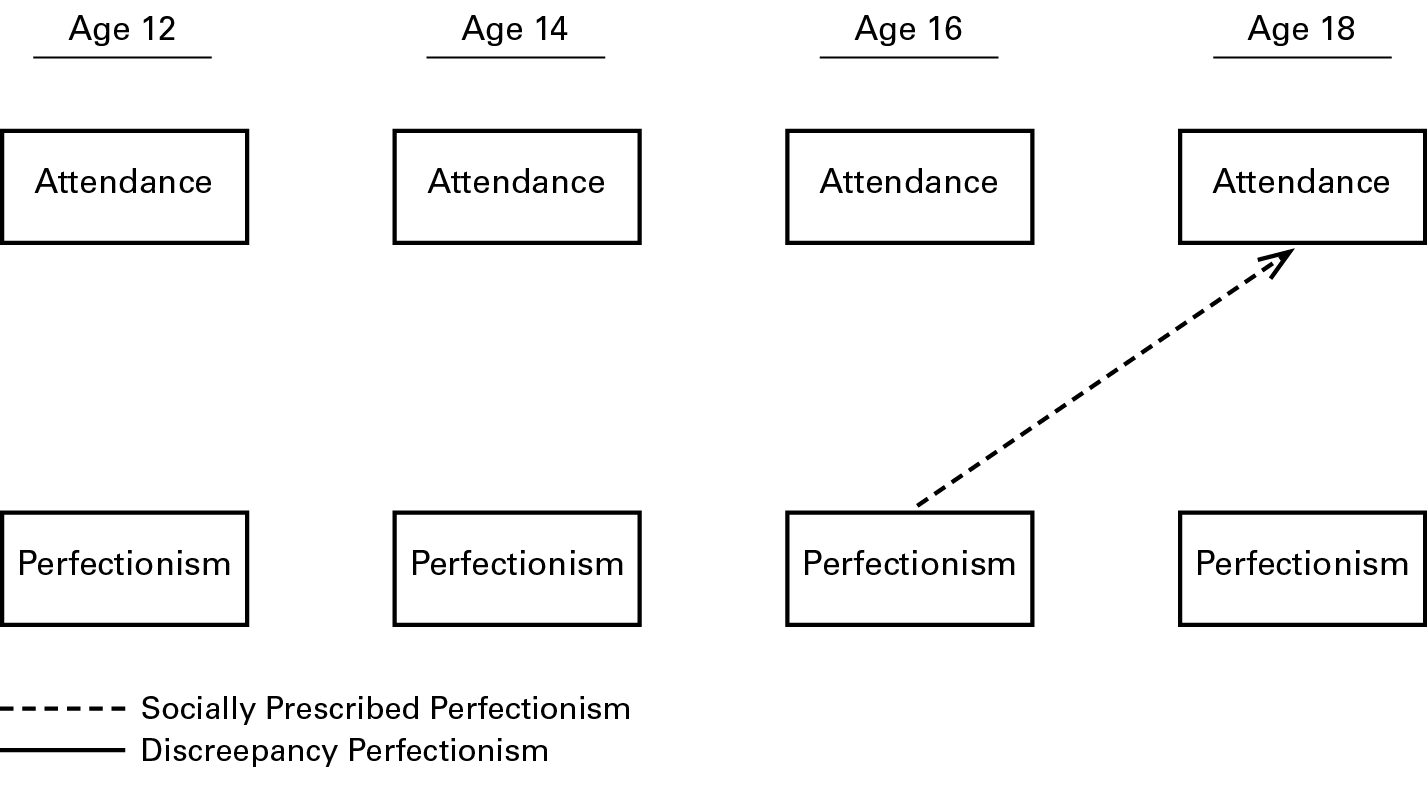
When we examined the relationship between perfectionism and church attendance, church attendance was related to lower levels of toxic perfectionism. However, as can be seen from figure 16, though church attendance declined for all youth, those in the high perfectionism group started with the lowest attendance and declined at a slightly faster rate than those in the low and mid group. Also, as can be seen from figure 16, high levels of socially prescribed perfectionism led to lower attendance for older adolescents.
Figure 16. Church Attendance and Perfectionism over Time 1
Figure 17. Church Attendance and Perfectionism over Time 2.
Conclusion
Contrary to what some may assume, religion overall is associated with lower levels of toxic perfectionism. When it comes to the association between religious denominations and toxic perfectionism, having a religious association or a belief in God (though not affiliated) tended towards lower levels of toxic perfectionism compared to those of no religion. Regarding statistically significant differences, Latter-day Saints and those of “Other Religions” had lower toxic perfectionism than atheists and agnostics and former Latter-day Saints. Though the difference of toxic perfectionism between those with any religious association was significantly lower than atheists or agnostics and especially lower than former members of any religious denomination. In addition to affiliation, how important religion is to a person is connected to perfectionism. For example, those who felt religion was important to them were more than twice as likely to be low in toxic perfectionism.
However, it is more complex than simply saying that religion is associated with low levels of toxic perfectionism. A person’s approach to religion is also crucial. For example, those who engaged in religion because it was meaningful to them (identified) had low levels of toxic perfectionism while those whose motivation was to avoid shame (introjected) had higher levels of toxic perfectionism.
Determining the direction of influence is also important in any effort to help individuals avoid the negative consequences of toxic perfectionism. Without a controlled experimental design, we cannot speak definitively of what causes what. However, given that the Foundations data tracked people over time, we can see how earlier aspects of religion and perfectionism relate to those same aspects later on. In the analyses, it was found that at times a religious construct seemed to lead to higher levels of toxic perfectionism, toxic perfectionism was also leading to lower levels of religiosity. In other words, their influence seemed to be reciprocal—influencing each other simultaneously.
At the same time, there were few instances when religiosity led to perfectionism. Most results suggested that perfectionism led to poorer connections with one’s church and one’s relationship with God. For instance, socially prescribed perfectionism is related to less church attendance between the ages of sixteen and eighteen. During this late-adolescent period, youth are gaining more independence, and those who feel they have to be perfect for other people may begin to distance themselves from church.
Regarding one’s relationship with God, discrepancy and socially prescribed perfectionism preceded a decreasing feeling that God is warm and responsive (secure attachment to God). Perfectionism was also related to a person being less likely to reach out to God for help (positive coping) and more likely to feel like God is punishing them (negative coping). Perfectionists are also more likely to increase in the feeling that God’s love and grace are contingent upon how well they are performing (legalism). Indeed, in nearly every way we examined, toxic perfectionism was related to a deteriorating relationship with church and God.
Another important question is which of these constructs has the strongest association with perfectionism when taken together. In other words, which aspects of religion are likely to most strongly influence toxic perfectionism in adolescents? There are statistical methods that allow us to know the answer to that question. When examining all the religiosity constructs together, we were able to see which constructs seemed to have the strongest impact. In this analysis, introjected (shame-based) religious motivation and negative religious coping both stayed statistically significant influences on high levels of toxic perfectionism even when combined with the other religious constructs being studied. Negative religious coping had far and away the strongest association with toxic perfectionism.
When considering what parents and religious leaders can do to help adolescents avoid the negative impact of toxic perfectionism, they would be wise to focus on strengthening the importance of religion to adolescents and encouraging a more intrinsic motivation for their religiosity. Helping adolescents establish a secure attachment to God is one way to accomplish this. Conversely, understanding the strong influence of a legalistic approach to religion, and especially the association between negative religious coping and toxic perfectionism, provides important red flags regarding how an adolescent’s approach to religion can be harmful. It is also important to realize that toxic perfectionism, which is associated with many issues that are not related to religion, can also lead to lower levels of unhealthy approaches to religion itself. Understanding these issues provides parents and Church leaders with important information that will hopefully help them in their attempts to help the adolescents within their influence thrive both emotionally and spiritually.
13. G. E. Kawika Allen, Abigail Norton, Sara Pulsipher, David Johnson, and Benson Bunker, “I Worry That I Am Almost Perfect! Examining Relationships Among Perfectionism, Scrupulosity, Intrinsic Spirituality, and Psychological Well-Being Among Latter-day Saints,” Spirituality in Clinical Practice 10, no. 4 (2021): 316–25, https://doi.org/10.1037/scp0000273.
14. Po Hu, Pengwei Liang, Xiaoyan Liu, Yuting Ouyang, and Jianping Wang, “Parenting Styles and Obsessive-Compulsive Symptoms in College Students: The Mediating Role of Perfectionism,” Front Psychiatry 14 (July 2023): article 1126689, https://doi.org/10.3389/fpsyt.2023.1126689.
15. Dakota Mauzay and Carrie Cuttler, “Dysfunctional Cognitions Mediate the Relationships Between Religiosity, Paranormal Beliefs, and Symptoms of Obsessive-Compulsive Disorder,” Mental Health, Religion & Culture 21, no. 8 (2019): 838–50, https://doi.org/10.1080/13674676.2019.1583176.
16. G. E. Kawika Allen and Kenneth T. Wang, “Examining Religious Commitment, Perfectionism, Scrupulosity, and Well-Being Among LDS Individuals,” Psychology of Religion and Spirituality 6, no. 3 (2014): 257–64, https://doi.org/10.1037/a0035197.
17. G. E. Kawika Allen, Kenneth T. Wang, and Hannah Stokes, “Examining Legalism, Scrupulosity, Family Perfectionism, and Psychological Adjustment Among LDS Individuals,” Mental Health, Religion & Culture 18, no. 4 (2015): 246–58, https://doi.org/10.1080/13674676.2015.1021312.
18. Jeffrey S. Ashby and Judy Huffman, “Religious Orientation and Multidimensional Perfectionism: Relationships and Implications,” Counseling and Values 43, no. 3 (2011): 178–88, https://doi.org/10.1002/j.2161-007X.1999.tb00141.x.
19. Allen and others, “I Worry That I Am Almost Perfect!,” 316–25.
20. Marleen Williams, “Family Attitudes and Perfectionism as Related to Depression in Latter-day Saint and Protestant Women,” in Religion, Mental Health, and the Latter-day Saints, ed. Daniel K. Judd (Religious Studies Center, Brigham Young University, 1999): 47–66.
21. Craig J. Gonsalvez, Alex R. Hains, and Gerard Stoyles, “Relationship Between Religion and Obsessive Phenomena,” Australian Journal of Psychology 62, no. 2 (2009): 93–102, https://doi.org/10.1080/00049530902887859; Jennifer L. Buchholz and others, “Scrupulosity, Religious Affiliation and Symptom Presentation in Obsessive Compulsive Disorder,” Behavioural and Cognitive Psychotherapy 47, no. 4 (2019): 478–92, https://doi.org/10.1017/S1352465818000711.
22. E. McIngvale, K. Rufino, M. Ehlers, and J. Hart, “An In-Depth Look at the Scrupulosity Dimension of Obsessive-Compulsive Disorder,” Journal of Spirituality in Mental Health 19 (March 2017): 295–305, https://doi.org/10.1080/19349637.2017.1288075.
24. Jesse M. Crosby, Scott C. Bates, and Michael P. Twohig, “Examination of the Relationship Between Perfectionism and Religiosity as Mediated by Psychological Inflexibility,” Current Psychology: A Journal for Diverse Perspectives on Diverse Psychological Issues 30, no. 2 (2011): 117–29, https://doi.org/10.1007/s12144-011-9104-3.
25. Patrick R. Steffen, “Perfectionism and Life Aspirations in Intrinsically and Extrinsically Religious Individuals,” Journal of Religion and Health 53 (February 2013) 945–58, https://doi.org/10.1007/s10943-013-9692-3.
26. Peter W. Sanders, G. E. Kawika Allen, Lane Fischer, P. Scott Richards, David T. Morgan, and Richard W. Potts, “Intrinsic Religiousness and Spirituality as Predictors of Mental Health and Positive Psychological Functioning in Latter-day Saint Adolescents and Young Adults,” Journal of Religion and Health 54 (2015): 871–87, https://doi.org/10.1007/s10943-015-0043-4.
27. Samuel O. Peer and James S. McGraw, “Mixed-Method Study of Perfectionism and Religiosity Among Mormons: Implications for Cultural Competence and Clinical Practice,” Issues in Religion and Psychotherapy 38, no. 1 (2017): 77–100, https://scholarsarchive.byu.edu/irp/vol38/iss1/12.
28. Crosby and others, “Relationship Between Perfectionism and Religiosity,” 117–29.
29. Allen and others, “Examining Legalism, Scrupulosity, Family Perfectionism, and Psychological Adjustment,” 246–58.
30. Kyler Ray Rasmussen, Niwako Yamawaki, Jamie Moses, Lindy Powell, and Brandon Bastian, “The Relationships Between Perfectionism, Religious Motivation, and Mental Health Utilisation Among Latter-Day Saint Students,” Mental Health, Religion & Culture 16, no. 6 (2013): 612–16, https://doi.org/10.1080/13674676.2012.706273.
31. Allen and others, “I Worry That I Am Almost Perfect!,” 316–25.
32. Bart Neyrinck, Maarten Vansteenkiste, Willy Lens, Bart Duriez, and Dirk Hutsebaut, “Cognitive, Affective and Behavioral Correlates of Internalization of Regulations for Religious Activities,” Motivation and Emotion 30 (November 2006): 321–32, https://doi.org/10.1007/s11031-006-9048-3.
33. Gonsalvez and others, “Relationship Between Religion and Obsessive Phenomena,” 93–102.
36. See Dieter F. Uchtdorf, “The Gift of Grace,” Ensign 45, no. 5 (May 2015): 107–10.
37. Daniel K. Judd, William Justin Dyer, and Justin B. Top, “Grace, Legalism, and Mental Health: Examining Direct and Mediating Relationships,” Psychology of Religion and Spirituality 12, no. 1 (2020): 26–35, https://doi.org/10.1037/rel0000211.
38. Jennifer Wortmann, “Religious Coping,” in Encyclopedia of Behavioral Medicine, ed. Marc D. Gellman and J. Rick Turner (Springer, 2013), 1647–48, https://doi.org/10.1007/978-1-4419-1005-9_665.
41. Allen and others, “I Worry That I Am Almost Perfect!,” 316–25.
42. Kenneth T. Wang, G. E. Kawika Allen, Hannah I. Stokes, and Han Na Suh, “Perceived Perfectionism from God Scale: Development and Initial Evidence,” Journal of Religion and Health 57 (May 2017): 2207–23, https://doi.org/10.1007/s10943-017-0405-1.